Cull Benjamin, Prado Godinho Joseane Lima, Fernandes Rodrigues Juliany Cola, Frank Benjamin, Schurigt Uta, Williams Roderick Am, Coombs Graham H, Mottram Jeremy C
a Wellcome Trust Center for Molecular Parasitology; Institute of Infection, Immunity and Inflammation; College of Medical, Veterinary and Life Sciences ; University of Glasgow ; Glasgow , UK.
Autophagy. 2014;10(12):2143-57. doi: 10.4161/auto.36438.
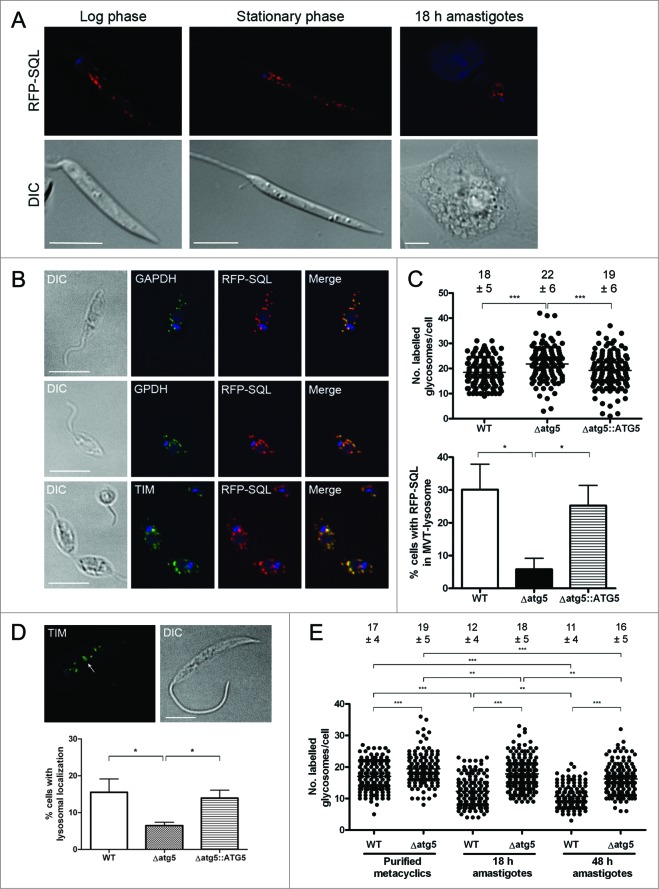
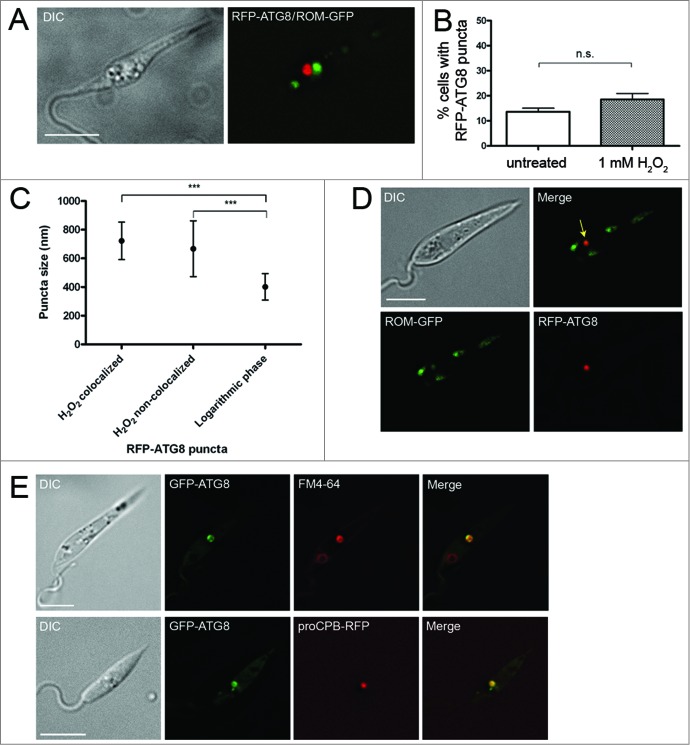
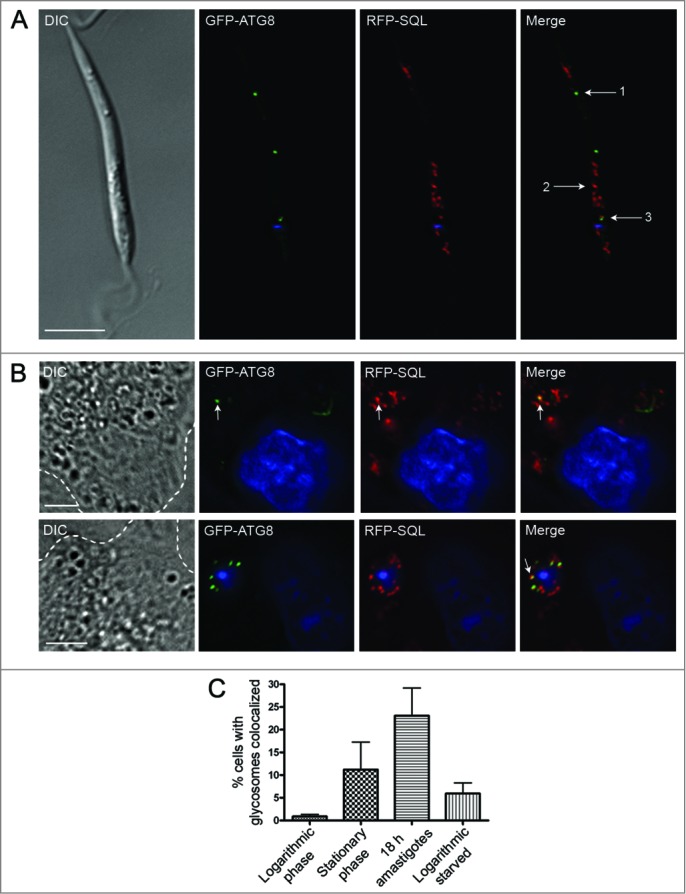
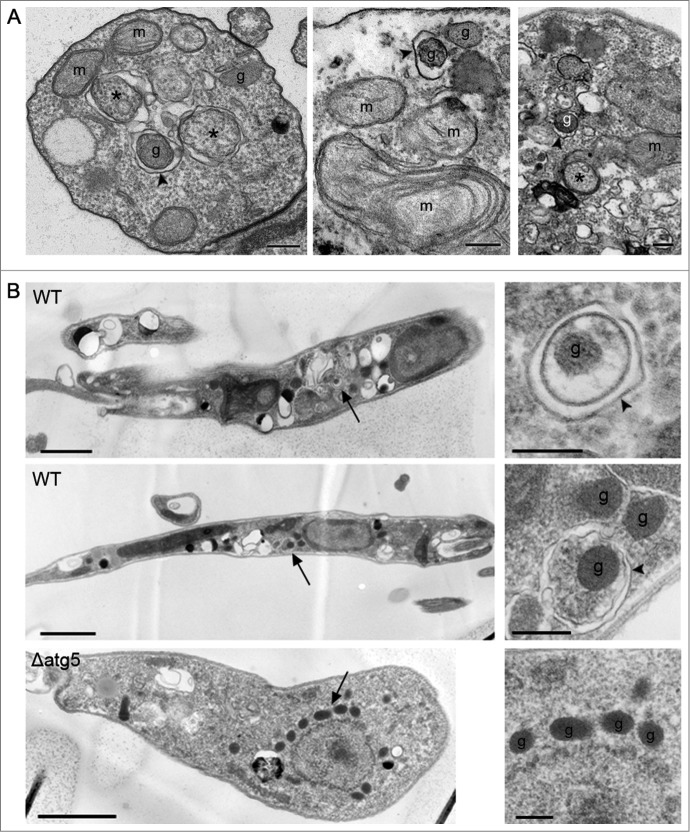
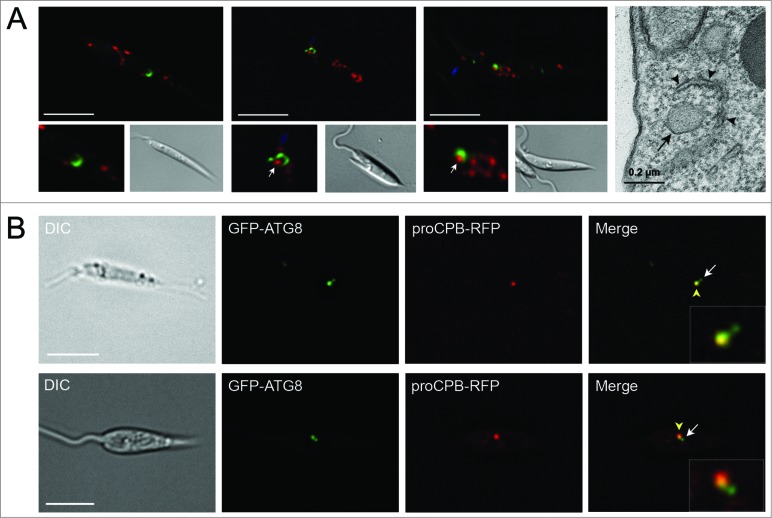
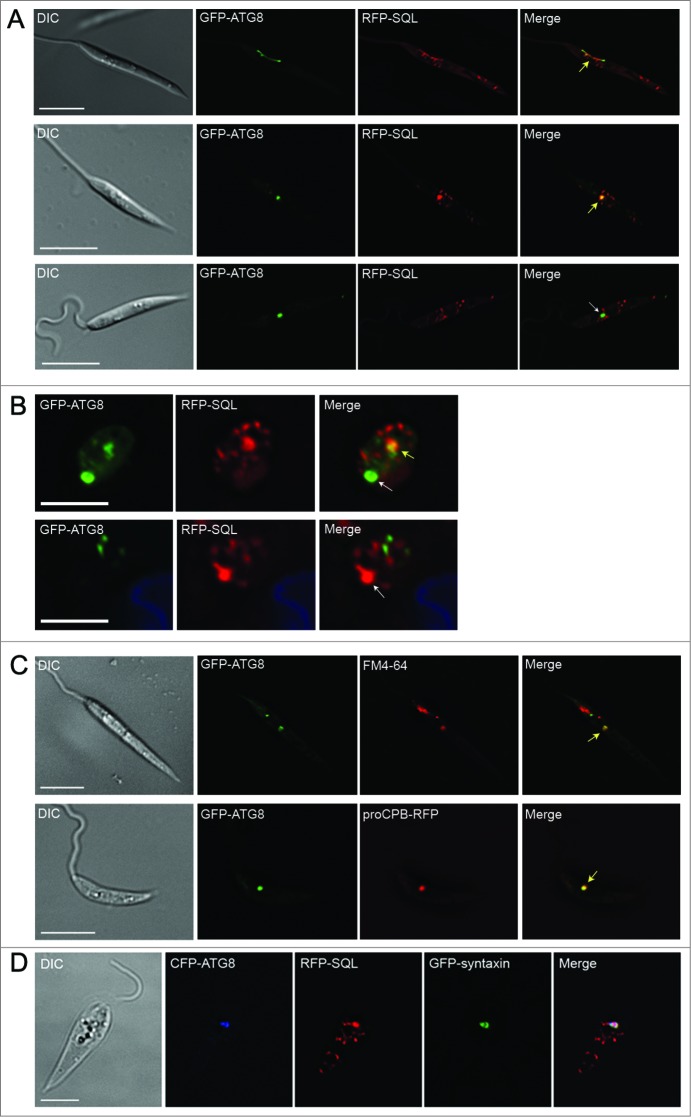
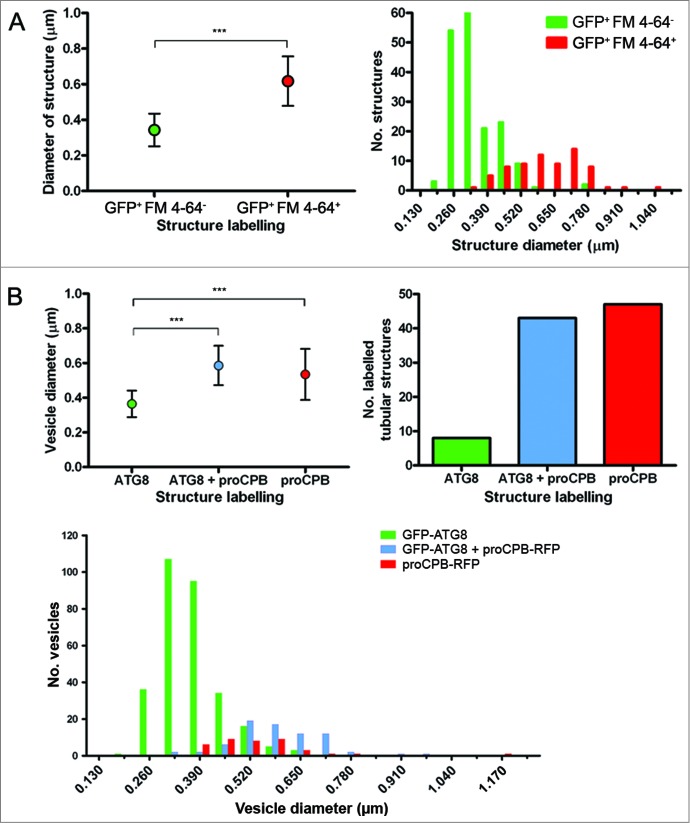
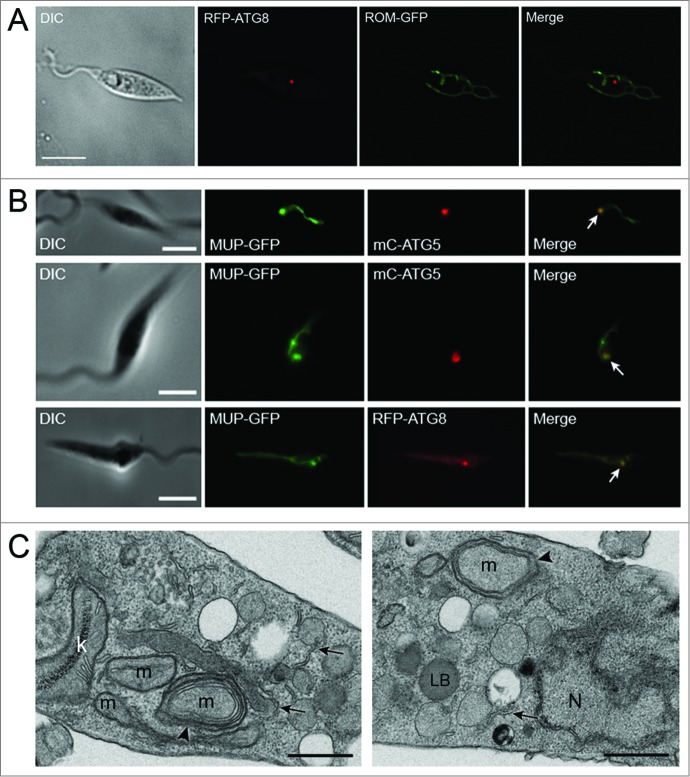
Autophagy is a central process behind the cellular remodeling that occurs during differentiation of Leishmania, yet the cargo of the protozoan parasite's autophagosome is unknown. We have identified glycosomes, peroxisome-like organelles that uniquely compartmentalize glycolytic and other metabolic enzymes in Leishmania and other kinetoplastid parasitic protozoa, as autophagosome cargo. It has been proposed that the number of glycosomes and their content change during the Leishmania life cycle as a key adaptation to the different environments encountered. Quantification of RFP-SQL-labeled glycosomes showed that promastigotes of L. major possess ~20 glycosomes per cell, whereas amastigotes contain ~10. Glycosome numbers were significantly greater in promastigotes and amastigotes of autophagy-defective L. major Δatg5 mutants, implicating autophagy in glycosome homeostasis and providing a partial explanation for the previously observed growth and virulence defects of these mutants. Use of GFP-ATG8 to label autophagosomes showed glycosomes to be cargo in ~15% of them; glycosome-containing autophagosomes were trafficked to the lysosome for degradation. The number of autophagosomes increased 10-fold during differentiation, yet the percentage of glycosome-containing autophagosomes remained constant. This indicates that increased turnover of glycosomes was due to an overall increase in autophagy, rather than an upregulation of autophagosomes containing this cargo. Mitophagy of the single mitochondrion was not observed in L. major during normal growth or differentiation; however, mitochondrial remnants resulting from stress-induced fragmentation colocalized with autophagosomes and lysosomes, indicating that autophagy is used to recycle these damaged organelles. These data show that autophagy in Leishmania has a central role not only in maintaining cellular homeostasis and recycling damaged organelles but crucially in the adaptation to environmental change through the turnover of glycosomes.
自噬是利什曼原虫分化过程中细胞重塑背后的核心过程,但这种原生动物寄生虫自噬体的货物尚不清楚。我们已确定糖体(在利什曼原虫和其他动基体寄生原生动物中独特地分隔糖酵解及其他代谢酶的过氧化物酶体样细胞器)为自噬体货物。有人提出,在利什曼原虫的生命周期中,糖体的数量及其内容物会发生变化,这是对所遇到的不同环境的关键适应性变化。对红色荧光蛋白标记的糖体进行定量分析表明,硕大利什曼原虫前鞭毛体每个细胞约有20个糖体,而无鞭毛体约有10个。在自噬缺陷型硕大利什曼原虫Δatg5突变体的前鞭毛体和无鞭毛体中,糖体数量显著更多,这表明自噬参与糖体稳态的维持,并为这些突变体先前观察到的生长和毒力缺陷提供了部分解释。使用绿色荧光蛋白标记的自噬相关蛋白8(GFP-ATG8)标记自噬体显示,约15%的自噬体中含有糖体;含有糖体的自噬体被运输到溶酶体进行降解。在分化过程中,自噬体数量增加了10倍,但含有糖体的自噬体百分比保持不变。这表明糖体周转率的增加是由于自噬的整体增加,而不是含有这种货物的自噬体的上调。在硕大利什曼原虫的正常生长或分化过程中未观察到单个线粒体的线粒体自噬;然而,应激诱导的线粒体片段化产生的线粒体残余物与自噬体和溶酶体共定位,表明自噬用于回收这些受损细胞器。这些数据表明,利什曼原虫中的自噬不仅在维持细胞稳态和回收受损细胞器方面具有核心作用,而且在通过糖体周转适应环境变化方面至关重要。