Oliveira Tatiane R, Fernandez-Becerra Carmen, Jimenez Maria Carolina S, Del Portillo Hernando A, Soares Irene S
Departamento de Análises Clínicas e Toxicológicas, Faculdade de Ciências Farmacêuticas, Universidade de São Paulo, Av, Prof, Lineu Prestes, 580, 05508-900, São Paulo, SP, Brazil.
Malar J. 2006 Oct 6;5:83. doi: 10.1186/1475-2875-5-83.
The naturally-acquired immune response to Plasmodium vivax variant antigens (VIR) was evaluated in individuals exposed to malaria and living in different endemic areas for malaria in the north of Brazil.
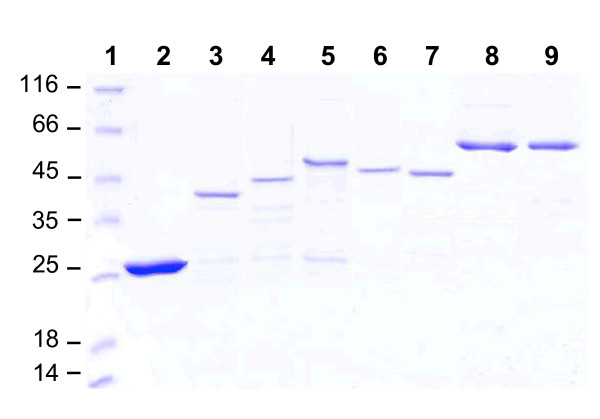
Seven recombinant proteins representing four vir subfamilies (A, B, C, and E) obtained from a single patient from the Amazon Region were expressed in Escherichia coli as soluble glutathione S-transferase fusion proteins. The different recombinant proteins were compared by ELISA with regard to the recognition by IgM, IgG, and IgG subclass of antibodies from 200 individuals with patent infection.
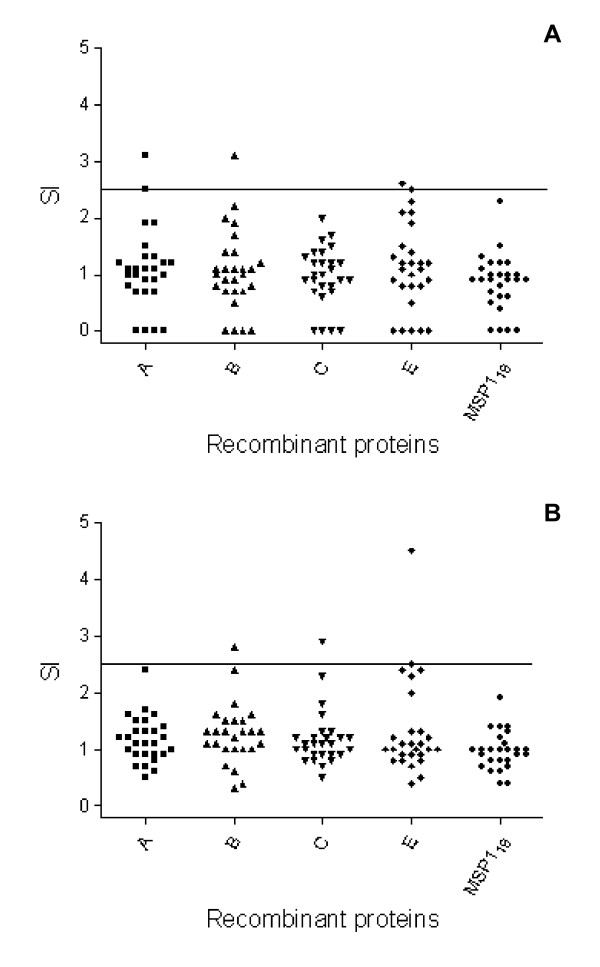
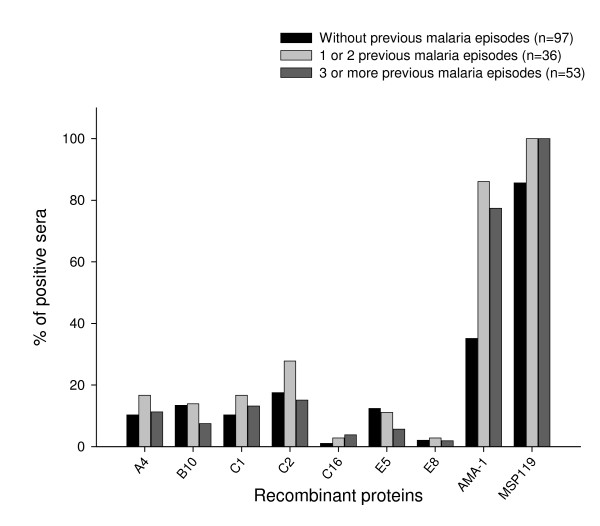
The frequency of individuals that presented antibodies anti-VIR (IgM plus IgG) during the infection was 49%. The frequencies of individuals that presented IgM or IgG antibodies anti-VIR were 29.6% or 26.0%, respectively. The prevalence of IgG antibodies against recombinant VIR proteins was significantly lower than the prevalence of antibodies against the recombinant proteins representing two surface antigens of merozoites of P. vivax: AMA-1 and MSP119 (57.0% and 90.5%, respectively). The cellular immune response to VIR antigens was evaluated by in vitro proliferative assays in mononuclear cells of the individuals recently exposed to P. vivax. No significant proliferative response to these antigens was observed when comparing malaria-exposed to non-exposed individuals.
This study provides evidence that there is a low frequency of individuals responding to each VIR antigens in endemic areas of Brazil. This fact may explain the host susceptibility to new episodes of the disease.
在巴西北部接触疟疾并生活在不同疟疾流行地区的个体中,评估了对间日疟原虫变异抗原(VIR)的自然获得性免疫反应。
从亚马逊地区一名患者获得的代表四个VIR亚家族(A、B、C和E)的七种重组蛋白在大肠杆菌中表达为可溶性谷胱甘肽S-转移酶融合蛋白。通过酶联免疫吸附测定(ELISA)比较了200例显性感染个体的抗体中IgM、IgG和IgG亚类对不同重组蛋白的识别情况。
感染期间出现抗VIR抗体(IgM加IgG)的个体频率为49%。出现抗VIR IgM或IgG抗体的个体频率分别为29.6%或26.0%。针对重组VIR蛋白的IgG抗体患病率显著低于针对代表间日疟原虫裂殖子两种表面抗原的重组蛋白的抗体患病率:AMA-1和MSP119(分别为57.0%和90.5%)。通过对近期接触间日疟原虫个体的单核细胞进行体外增殖试验评估了对VIR抗原的细胞免疫反应。与未接触疟疾的个体相比,接触疟疾的个体对这些抗原未观察到显著的增殖反应。
本研究提供的证据表明,在巴西的流行地区,对每种VIR抗原产生反应的个体频率较低。这一事实可能解释了宿主对该疾病新发作的易感性。