Parkinson Nicholas, Hardisty-Hughes Rachel E, Tateossian Hilda, Tsai Hsun-Tien, Brooker Debra, Morse Sue, Lalane Zuzanna, MacKenzie Francesca, Fray Martin, Glenister Pete, Woodward Anne-Marie, Polley Sian, Barbaric Ivana, Dear Neil, Hough Tertius A, Hunter A Jackie, Cheeseman Michael T, Brown Steve D M
Mammalian Gentics Unit, Medical Research Council, Harwell, United Kingdom.
PLoS Genet. 2006 Oct 6;2(10):e149. doi: 10.1371/journal.pgen.0020149.
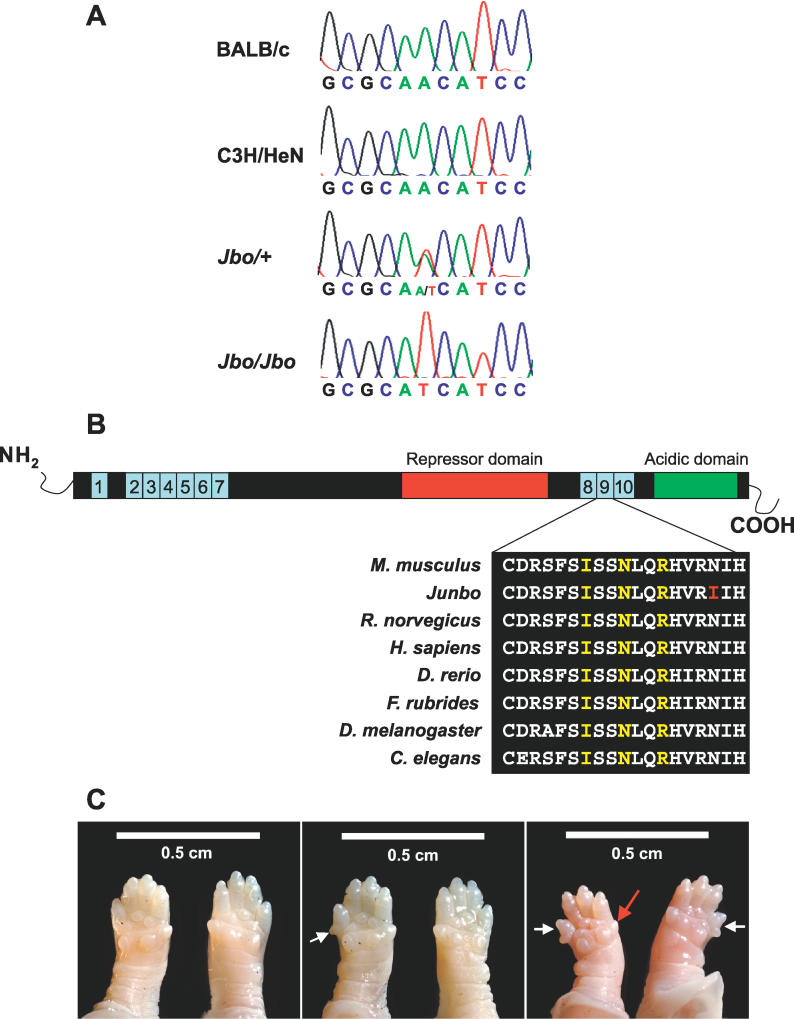
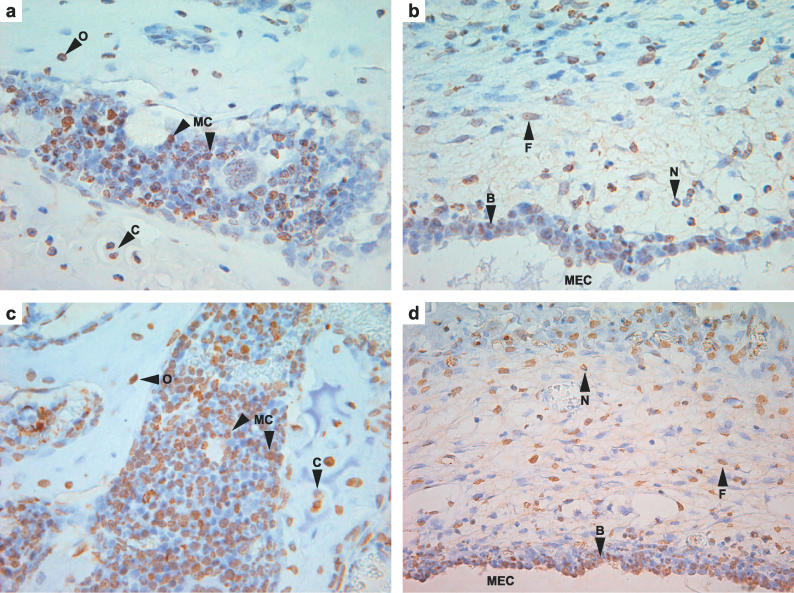
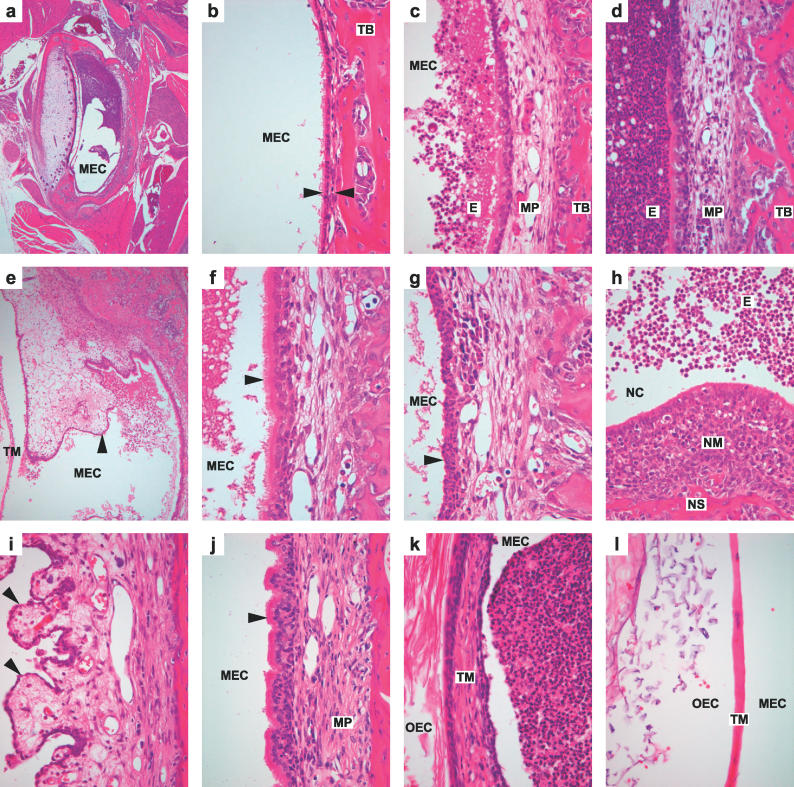
Otitis media (OM), inflammation of the middle ear, remains the most common cause of hearing impairment in children. It is also the most common cause of surgery in children in the developed world. There is evidence from studies of the human population and mouse models that there is a significant genetic component predisposing to OM, yet nothing is known about the underlying genetic pathways involved in humans. We identified an N-ethyl-N-nitrosourea-induced dominant mouse mutant Junbo with hearing loss due to chronic suppurative OM and otorrhea. This develops from acute OM that arises spontaneously in the postnatal period, with the age of onset and early severity dependent on the microbiological status of the mice and their air quality. We have identified the causal mutation, a missense change in the C-terminal zinc finger region of the transcription factor Evi1. This protein is expressed in middle ear basal epithelial cells, fibroblasts, and neutrophil leukocytes at postnatal day 13 and 21 when inflammatory changes are underway. The identification and characterization of the Junbo mutant elaborates a novel role for Evi1 in mammalian disease and implicates a new pathway in genetic predisposition to OM.
中耳炎(OM),即中耳的炎症,仍然是儿童听力障碍的最常见原因。它也是发达国家儿童进行手术的最常见原因。来自对人类群体和小鼠模型的研究证据表明,存在显著的遗传因素易导致中耳炎,然而对于人类中涉及的潜在遗传途径却一无所知。我们鉴定出一种由N-乙基-N-亚硝基脲诱导产生的显性小鼠突变体Junbo,它因慢性化脓性中耳炎和耳漏而导致听力丧失。这是由出生后自发出现的急性中耳炎发展而来的,发病年龄和早期严重程度取决于小鼠的微生物状态及其空气质量。我们已经确定了致病突变,即转录因子Evi1的C末端锌指区域的一个错义变化。这种蛋白质在出生后第13天和第21天炎症变化正在发生时,在中耳基底上皮细胞、成纤维细胞和中性粒细胞中表达。Junbo突变体的鉴定和表征阐述了Evi1在哺乳动物疾病中的新作用,并暗示了中耳炎遗传易感性的一条新途径。