Lee Boyoung, Dziema Heather, Lee Kyu Hyun, Choi Yun-Sik, Obrietan Karl
Department of Neuroscience, Ohio State University, Graves Hall, Rm 4118, 333 W. 10th Ave. Columbus, OH 43210, USA.
Neurobiol Dis. 2007 Jan;25(1):80-91. doi: 10.1016/j.nbd.2006.08.015. Epub 2006 Oct 9.
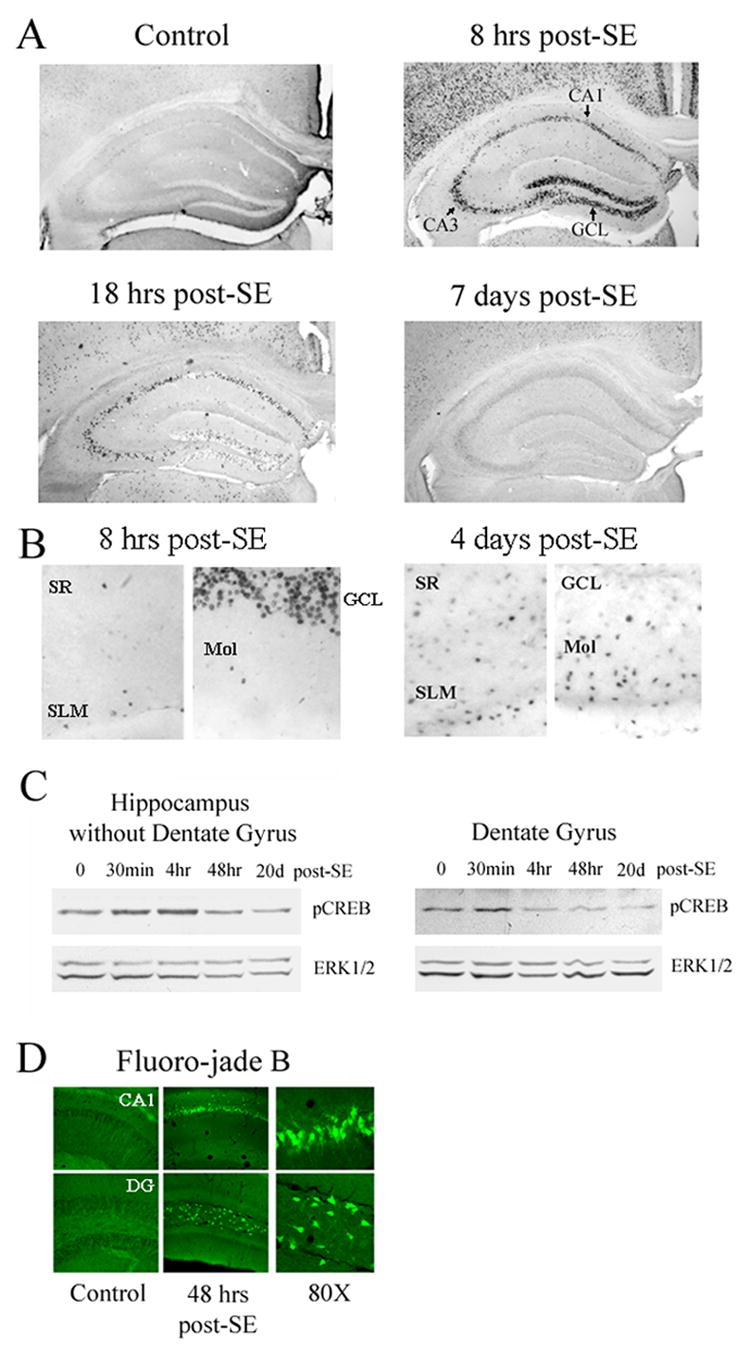
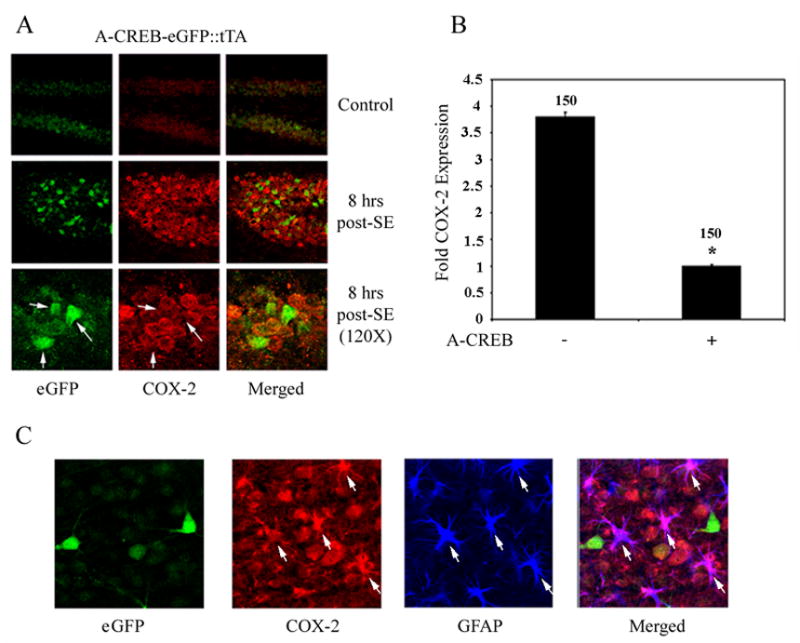
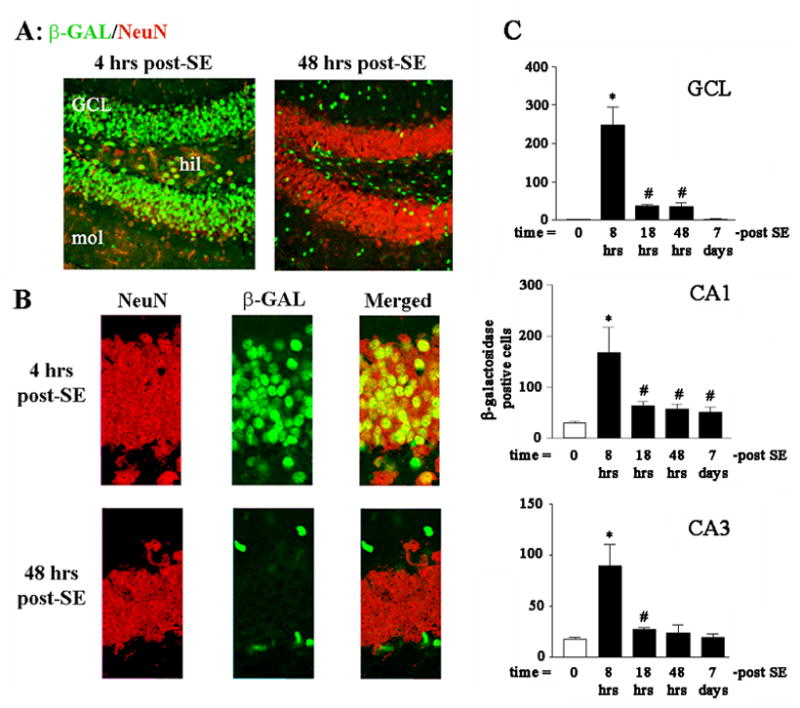
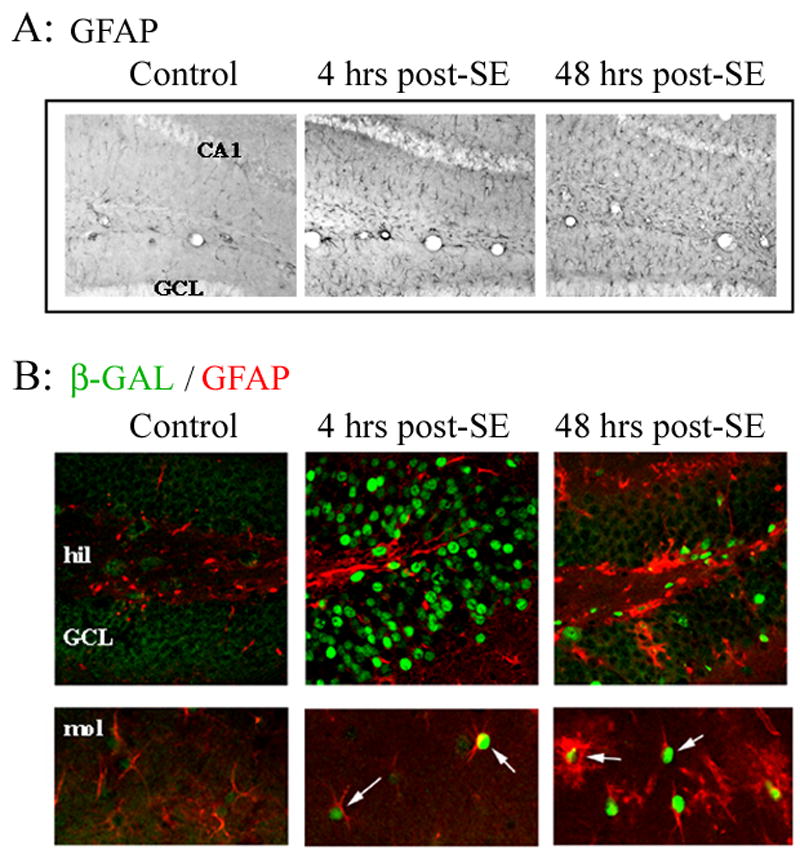
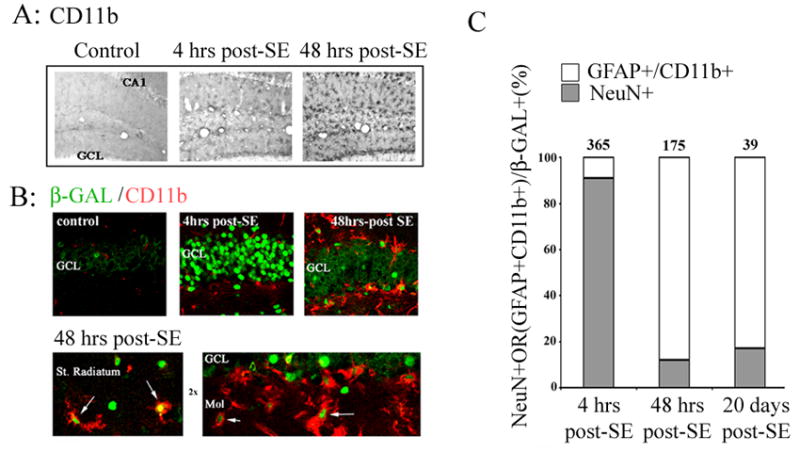
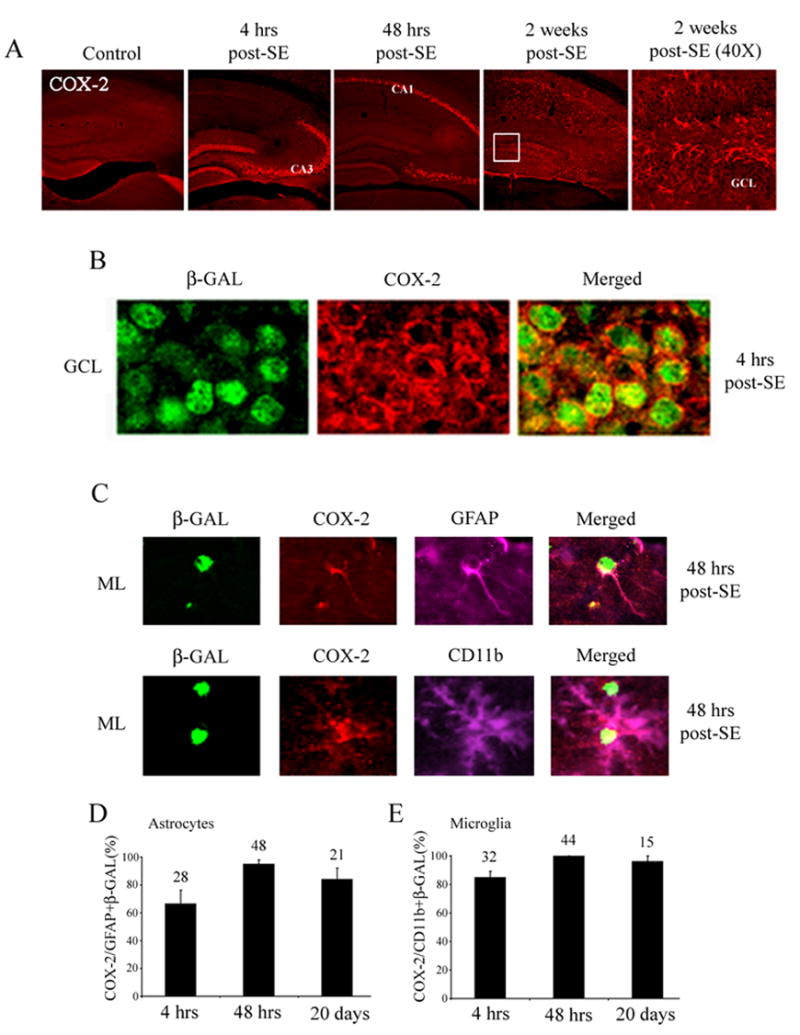
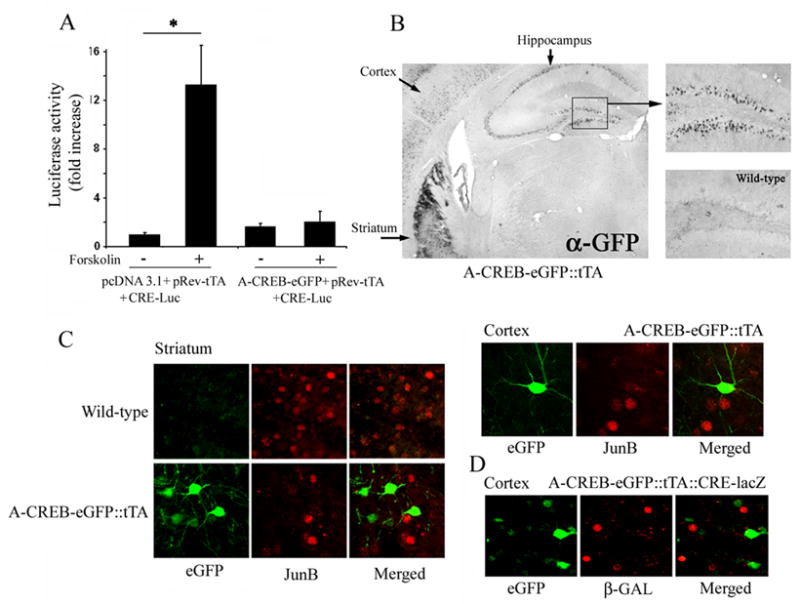
Status epilepticus (SE) triggers neuronal death, reactive gliosis and remodeling of synaptic circuitry, thus leading to profound pathological alterations in CNS physiology. These processes are, in part, regulated by the rapid upregulation of both cytotoxic and cytoprotective genes. One pathway that may couple SE to transcriptionally dependent alterations in CNS physiology is the CREB (cAMP response element-binding protein)/CRE (cAMP response element) cascade. Here, we utilized the pilocarpine model of SE on a mouse strain transgenic for a CRE-reporter construct (beta-galactosidase) to begin to characterize how seizure activity regulates the activation state of the CREB/CRE pathway in both glia and neurons of the hippocampus. SE triggered a rapid (4-8 h post-SE) but transient increase in CRE-mediated gene expression in the neuronal sublayers. In contrast to neurons, SE induced a lasting increase (up to 20 days) in CRE-mediated transcription in both reactive astrocytes and microglia. CRE-mediated gene expression correlated with expression of the pro-inflammatory enzyme cyclooxygenase-2 (COX-2). To examine the role of CREB in SE-induced COX-2 expression, we generated a transgenic mouse strain that expresses A-CREB, a potent repressor of CREB-dependent transcription. In these animals, the capacity of SE to stimulate COX-2 expression was markedly attenuated, indicating that CREB is a key intermediate in SE-induced COX-2 expression. Collectively these data show that SE triggers two waves of CREB-mediated gene expression, a transient wave in neurons and a long-lasting wave in reactive glial cells, and that CREB couples SE to COX-2 expression.
癫痫持续状态(SE)会引发神经元死亡、反应性胶质细胞增生以及突触回路重塑,进而导致中枢神经系统(CNS)生理学发生深刻的病理改变。这些过程部分受细胞毒性和细胞保护基因的快速上调调控。一条可能将SE与CNS生理学中依赖转录的改变联系起来的途径是CREB(环磷酸腺苷反应元件结合蛋白)/CRE(环磷酸腺苷反应元件)级联反应。在此,我们利用一种针对CRE报告构建体(β-半乳糖苷酶)转基因的小鼠品系,采用匹鲁卡品诱导的SE模型,来开始研究癫痫发作活动如何调节海马体中神经胶质细胞和神经元中CREB/CRE途径的激活状态。SE引发了神经元亚层中CRE介导的基因表达快速(SE后4 - 8小时)但短暂的增加。与神经元不同,SE在反应性星形胶质细胞和小胶质细胞中均诱导了CRE介导的转录持续增加(长达20天)。CRE介导的基因表达与促炎酶环氧合酶-2(COX-2)的表达相关。为了研究CREB在SE诱导的COX-2表达中的作用,我们构建了一种表达A-CREB(CREB依赖性转录的强效抑制剂)的转基因小鼠品系。在这些动物中,SE刺激COX-2表达的能力明显减弱,表明CREB是SE诱导的COX-2表达中的关键中间体。这些数据共同表明,SE引发了两波CREB介导的基因表达,一波在神经元中短暂出现,另一波在反应性胶质细胞中持续存在,并且CREB将SE与COX-2表达联系起来。