Mukhopadhyay Srirupa, Hoidal John R, Mukherjee Tapan K
Pulmonary Division, Department of Internal Medicine, University of Utah Health Science Center, Salt Lake City, Utah 84132-4701, USA.
Respir Res. 2006 Oct 11;7(1):125. doi: 10.1186/1465-9921-7-125.
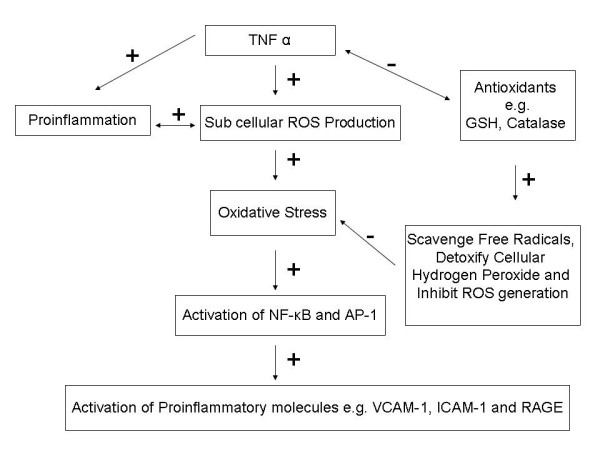
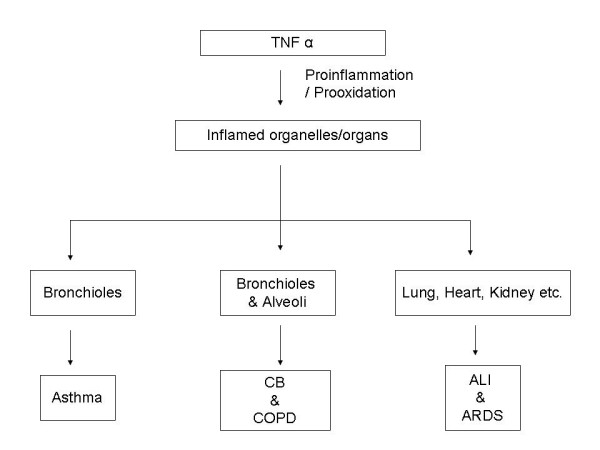
Tumor necrosis factor alpha (TNFalpha) is the most widely studied pleiotropic cytokine of the TNF superfamily. In pathophysiological conditions, generation of TNFalpha at high levels leads to the development of inflammatory responses that are hallmarks of many diseases. Of the various pulmonary diseases, TNFalpha is implicated in asthma, chronic bronchitis (CB), chronic obstructive pulmonary disease (COPD), acute lung injury (ALI) and acute respiratory distress syndrome (ARDS). In addition to its underlying role in the inflammatory events, there is increasing evidence for involvement of TNFalpha in the cytotoxicity. Thus, pharmacological agents that can either suppress the production of TNFalpha or block its biological actions may have potential therapeutic value against a wide variety of diseases. Despite some immunological side effects, anti-TNFalpha therapeutic strategies represent an important breakthrough in the treatment of inflammatory diseases and may have a role in pulmonary diseases characterized by inflammation and cell death.
肿瘤坏死因子α(TNFα)是肿瘤坏死因子超家族中研究最为广泛的多效性细胞因子。在病理生理条件下,高水平的TNFα生成会导致炎症反应的发生,而炎症反应是许多疾病的标志。在各种肺部疾病中,TNFα与哮喘、慢性支气管炎(CB)、慢性阻塞性肺疾病(COPD)、急性肺损伤(ALI)和急性呼吸窘迫综合征(ARDS)有关。除了在炎症事件中的潜在作用外,越来越多的证据表明TNFα参与细胞毒性作用。因此,能够抑制TNFα产生或阻断其生物学作用的药物制剂可能对多种疾病具有潜在的治疗价值。尽管存在一些免疫副作用,但抗TNFα治疗策略代表了炎症性疾病治疗中的一项重要突破,可能在以炎症和细胞死亡为特征的肺部疾病中发挥作用。