Wang Huan, Chua Nam-Hai, Wang Xiu-Jie
State Key Laboratory of Plant Genomics, Institute of Genetics and Developmental Biology, Chinese Academy of Sciences, Beijing 100101, China.
Genome Biol. 2006;7(10):R92. doi: 10.1186/gb-2006-7-10-r92. Epub 2006 Oct 13.
Natural antisense transcripts (NATs) are coding or non-coding RNAs with sequence complementarity to other transcripts (sense transcripts). These RNAs could potentially regulate the expression of their sense partner(s) at either the transcriptional or post-transcriptional level. Experimental and computational methods have demonstrated the widespread occurrence of NATs in eukaryotes. However, most previous studies only focused on cis-NATs with little attention being paid to NATs that originate in trans.
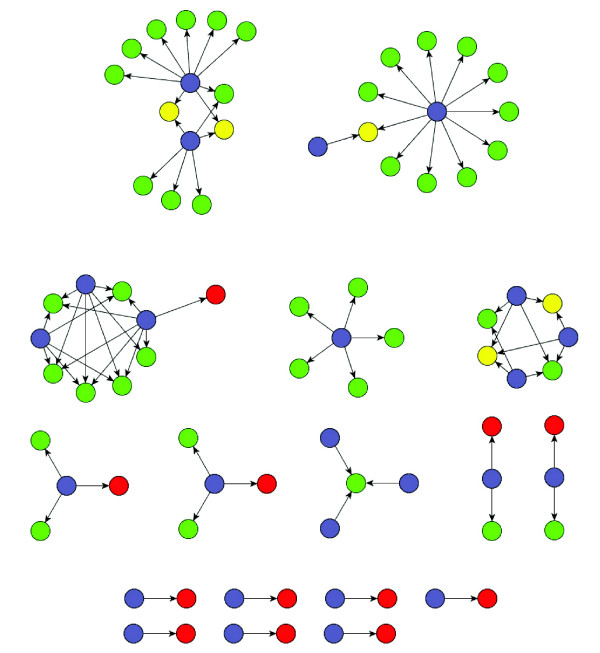
We have performed a genome-wide screen of trans-NATs in Arabidopsis thaliana and identified 1,320 putative trans-NAT pairs. An RNA annealing program predicted that most trans-NATs could form extended double-stranded RNA duplexes with their sense partners. Among trans-NATs with available expression data, more than 85% were found in the same tissue as their sense partners; of these, 67% were found in the same cell as their sense partners at comparable expression levels. For about 60% of Arabidopsis trans-NATs, orthologs of at least one transcript of the pair also had trans-NAT partners in either Populus trichocarpa or Oryza sativa. The observation that 430 transcripts had both putative cis- and trans-NATs implicates multiple regulations by antisense transcripts. The potential roles of trans-NATs in inducing post-transcriptional gene silencing and in regulating alternative splicing were also examined.
The Arabidopsis transcriptome contains a fairly large number of trans-NATs, whose possible functions include silencing of the corresponding sense transcripts or altering their splicing patterns. The interlaced relationships observed in some cis- and trans-NAT pairs suggest that antisense transcripts could be involved in complex regulatory networks in eukaryotes.
天然反义转录本(NATs)是与其他转录本(正义转录本)具有序列互补性的编码或非编码RNA。这些RNA可能在转录或转录后水平调节其正义伙伴的表达。实验和计算方法已证明NATs在真核生物中广泛存在。然而,大多数先前的研究仅关注顺式NATs,而对反式起源的NATs关注较少。
我们在拟南芥中进行了全基因组反式NATs筛选,鉴定出1320对假定的反式NATs。一个RNA退火程序预测,大多数反式NATs可以与其正义伙伴形成延伸的双链RNA双链体。在有可用表达数据的反式NATs中,超过85%在与其正义伙伴相同的组织中被发现;其中,67%在与其正义伙伴相同的细胞中以相当的表达水平被发现。对于约60%的拟南芥反式NATs,该对中至少一个转录本的直系同源物在毛果杨或水稻中也有反式NAT伙伴。430个转录本同时具有假定的顺式和反式NATs这一观察结果表明反义转录本存在多种调控作用。我们还研究了反式NATs在诱导转录后基因沉默和调节可变剪接中的潜在作用。
拟南芥转录组包含相当数量的反式NATs,其可能的功能包括沉默相应的正义转录本或改变其剪接模式。在一些顺式和反式NAT对中观察到的交错关系表明反义转录本可能参与真核生物复杂的调控网络。