Department of Plant Molecular Biology, University of Lausanne, Biophore Building, CH-1015, Lausanne, Switzerland.
BMC Genomics. 2019 Jul 22;20(1):601. doi: 10.1186/s12864-019-5946-0.
Long intergenic non-coding RNAs (lincRNAs) can act as regulators of expression of protein-coding genes. Trans-natural antisense transcripts (trans-NATs) are a type of lincRNAs that contain sequence complementary to mRNA from other loci. The regulatory potential of trans-NATs has been poorly studied in eukaryotes and no example of trans-NATs regulating gene expression in plants are reported. The goal of this study was to identify lincRNAs, and particularly trans-NATs, in Arabidopsis thaliana that have a potential to regulate expression of target genes in trans at the transcriptional or translational level.
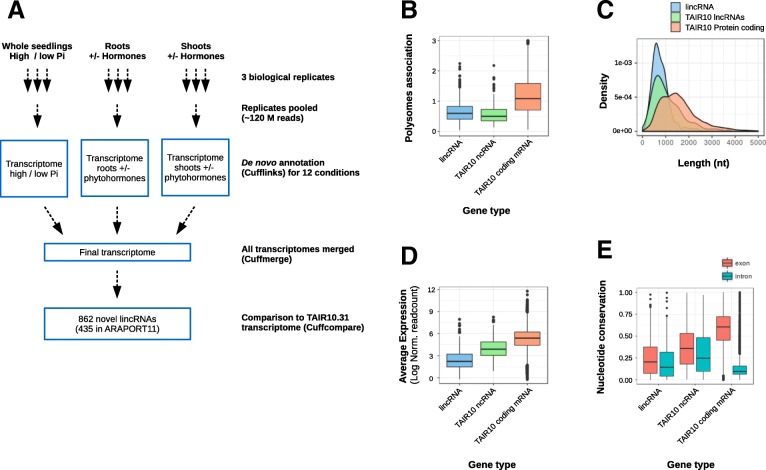
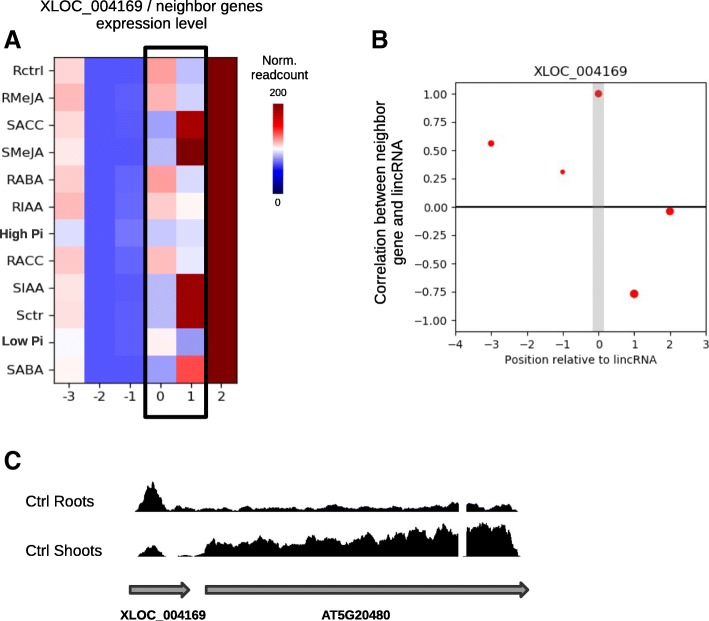
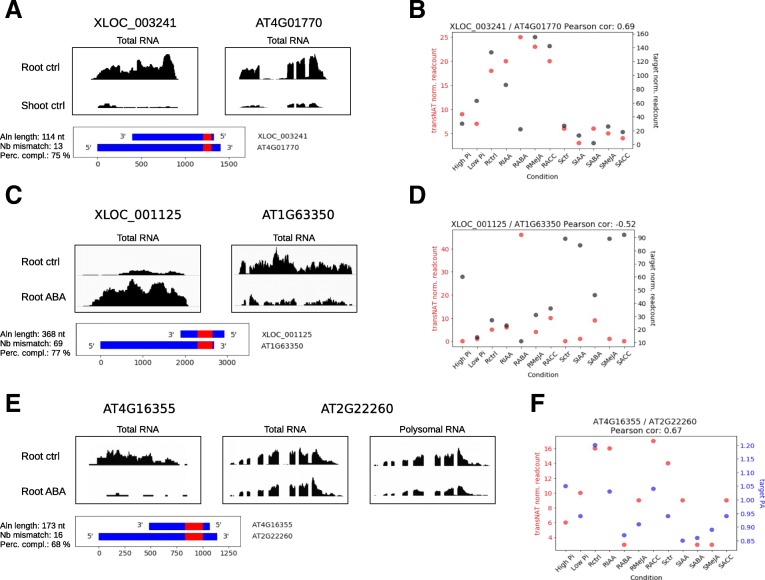
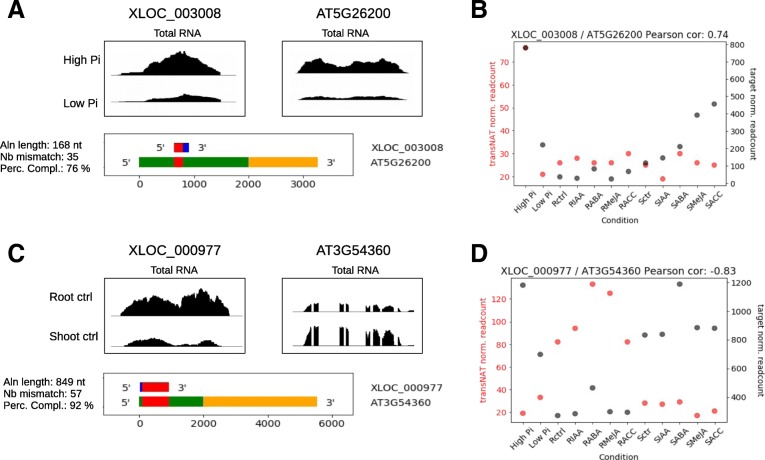
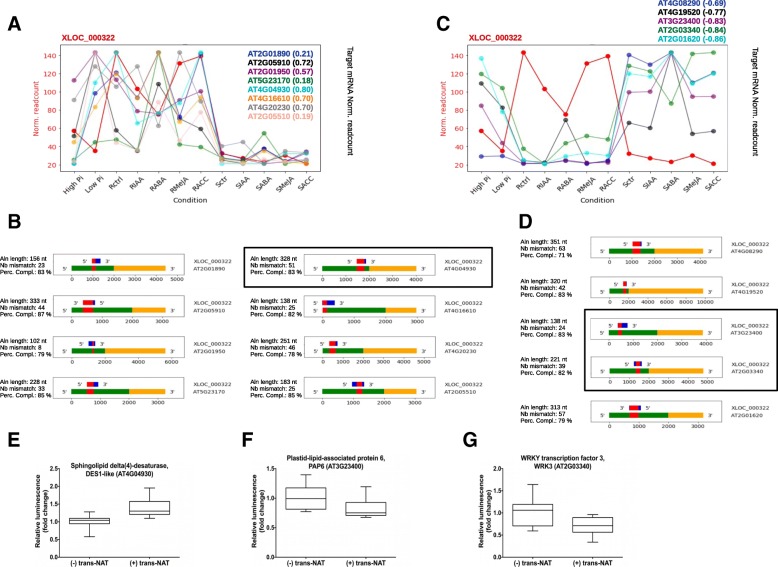
We identified 1001 lincRNAs using an RNAseq dataset from total polyA and polysome-associated RNA of seedlings grown under high and low phosphate, or shoots and roots treated with different phytohormones, of which 550 were differentially regulated. Approximately 30% of lincRNAs showed conservation amongst Brassicaceae and 25% harbored transposon element (TE) sequences. Gene co-expression network analysis highlighted a group of lincRNAs associated with the response of roots to low phosphate. A total of 129 trans-NATs were predicted, of which 88 were significantly differentially expressed under at least one pairwise comparison. Five trans-NATs showed a positive correlation between their expression and target mRNA steady-state levels, and three showed a negative correlation. Expression of four trans-NATs positively correlated with a change in target mRNA polysome association. The regulatory potential of these trans-NATs did not implicate miRNA mimics nor siRNAs. We also looked for lincRNAs that could regulate gene expression in trans by Watson-Crick DNA:RNA base pairing with target protein-encoding loci. We identified 100 and 81 with a positive or negative correlation, respectively, with steady-state level of their predicted target. The regulatory potential of one such candidate lincRNA harboring a SINE TE sequence was validated in a protoplast assay on three distinct genes containing homologous TE sequence in their promoters. Construction of networks highlighted other putative lincRNAs with multiple predicted target loci for which expression was positively correlated with target gene expression.
This study identified lincRNAs in Arabidopsis with potential in regulating target gene expression in trans by both RNA:RNA and RNA:DNA base pairing and highlights lincRNAs harboring TE sequences in such activity.
长链非编码 RNA(lncRNA)可以作为蛋白质编码基因表达的调节剂。反义转录本(trans-NAT)是一种 lncRNA,它包含与其他基因座 mRNA 序列互补的序列。在真核生物中,trans-NAT 的调节潜力研究甚少,也没有报道 trans-NAT 调节植物基因表达的例子。本研究的目的是鉴定拟南芥中的 lincRNA,特别是反义转录本(trans-NAT),它们有可能在转录或翻译水平上在转录上调节靶基因的表达。
我们使用来自在高磷和低磷条件下生长的幼苗的总 polyA 和多核糖体相关 RNA 的 RNAseq 数据集,或用不同植物激素处理的茎和根的数据集,鉴定了 1001 个 lincRNA,其中 550 个差异表达。大约 30%的 lincRNA在芸苔科中具有保守性,25%含有转座元件(TE)序列。基因共表达网络分析突出了一组与根对低磷反应相关的 lincRNA。共预测了 129 个 trans-NAT,其中 88 个在至少一对比较中差异表达显著。五个 trans-NAT 的表达与其靶 mRNA 稳态水平之间呈正相关,三个呈负相关。四个 trans-NAT 的表达与靶 mRNA 多核糖体结合的变化呈正相关。这些 trans-NAT 的调节潜力不涉及 miRNA 模拟物或 siRNA。我们还寻找可以通过与靶蛋白编码基因座的 Watson-Crick DNA:RNA 碱基配对在转录上调节基因表达的 lincRNA。我们分别鉴定了 100 个和 81 个与靶基因的稳态水平呈正相关或负相关的 lincRNA。一个含有 SINE TE 序列的候选 lincRNA 的调节潜力在三个含有同源 TE 序列启动子的不同基因的原生质体测定中得到了验证。网络的构建突出了其他具有多个预测靶基因的潜在 lincRNA,其表达与靶基因表达呈正相关。
本研究在拟南芥中鉴定了具有通过 RNA:RNA 和 RNA:DNA 碱基配对在转录上调节靶基因表达潜力的 lincRNA,并强调了含有 TE 序列的 lincRNA 在这种活性中的作用。