Strutt David, Strutt Helen
Centre for Developmental and Biomedical Genetics, Department of Biomedical Science, University of Sheffield, Western Bank, Sheffield, UK.
Dev Biol. 2007 Feb 1;302(1):181-94. doi: 10.1016/j.ydbio.2006.09.026. Epub 2006 Sep 16.
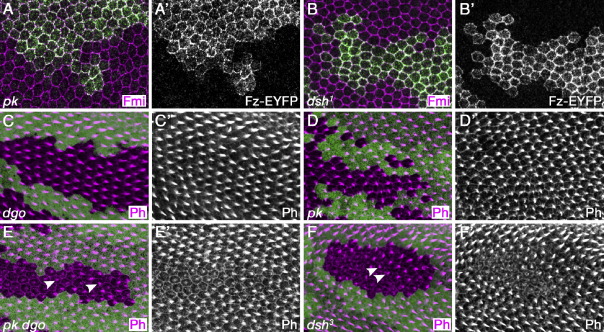
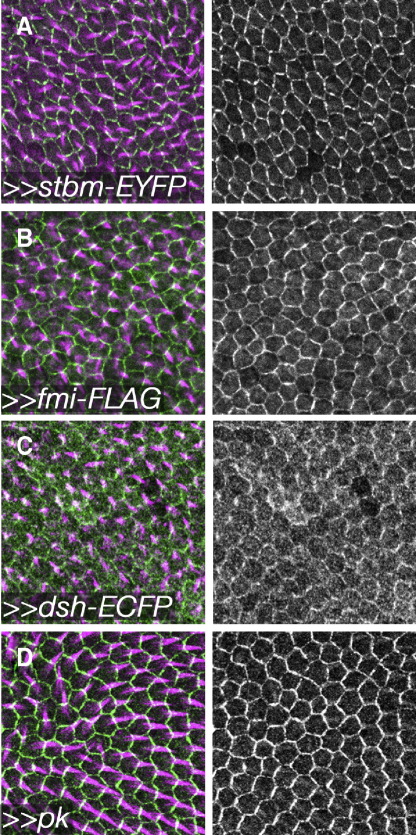
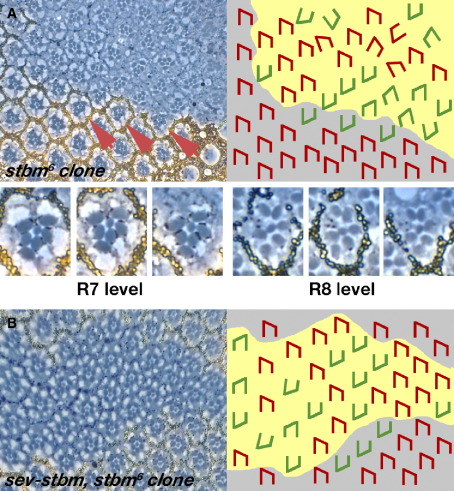
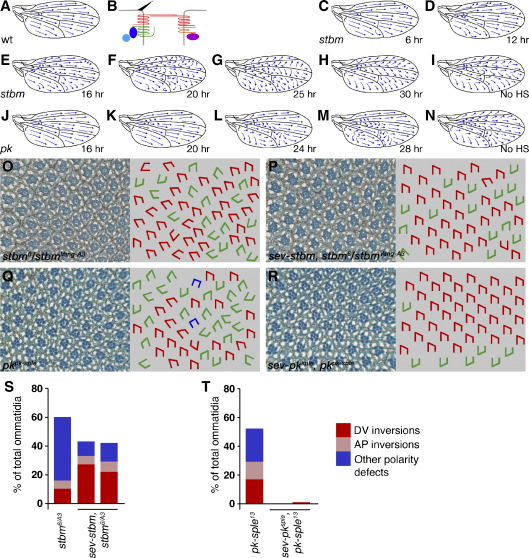
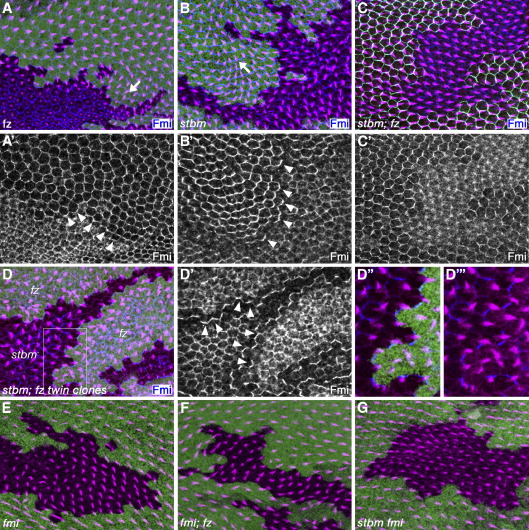
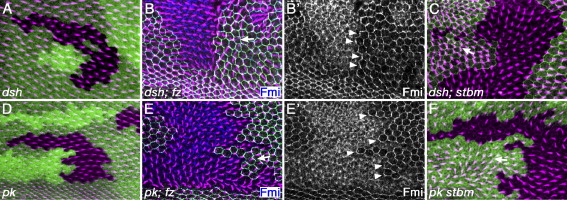
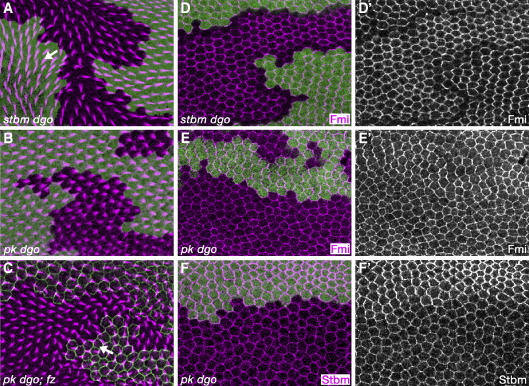
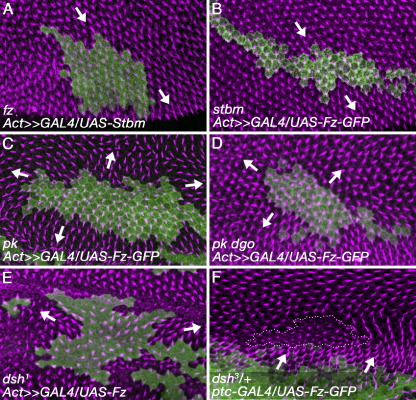
During planar polarity patterning of the Drosophila wing, a "core" group of planar polarity genes has been identified which acts downstream of global polarity cues to locally coordinate cell polarity and specify trichome production at distal cell edges. These genes encode protein products that assemble into asymmetric apicolateral complexes that straddle the proximodistal junctional region between adjacent cells. We have carried out detailed genetic analysis experiments, analysing the requirements of each complex component for planar polarity patterning. We find that the three transmembrane proteins at the core of the complex, Frizzled, Strabismus and Flamingo, are required earliest in development and are the only components needed for intercellular polarity signalling. Notably, cells that lack both Frizzled and Strabismus are unable to signal, revealing an absolute requirement for both proteins in cell-cell communication. In contrast the cytoplasmic components Dishevelled, Prickle and Diego are not needed for intercellular communication. These factors contribute to the cell-cell propagation of polarity, most likely by promotion of intracellular asymmetry. Interestingly, both local polarity propagation and trichome placement occur normally in mutant backgrounds where asymmetry of polarity protein distribution is undetectable, suggesting such asymmetry is not an absolute requirement for any of the functions of the core complex.
在果蝇翅膀的平面极性模式形成过程中,已鉴定出一组“核心”平面极性基因,它们在全局极性线索下游起作用,以局部协调细胞极性并在远端细胞边缘指定毛状体的产生。这些基因编码的蛋白质产物组装成不对称的顶侧复合体,跨越相邻细胞之间的近远侧连接区域。我们进行了详细的遗传分析实验,分析了平面极性模式形成中每个复合体成分的需求。我们发现,复合体核心的三种跨膜蛋白,卷曲蛋白(Frizzled)、斜视蛋白(Strabismus)和火烈鸟蛋白(Flamingo),在发育中最早被需要,并且是细胞间极性信号传导所需的唯一成分。值得注意的是,同时缺乏卷曲蛋白和斜视蛋白的细胞无法进行信号传导,这揭示了这两种蛋白在细胞间通讯中的绝对需求。相比之下,细胞质成分散乱蛋白(Dishevelled)、刺蛋白(Prickle)和迭戈蛋白(Diego)对于细胞间通讯并非必需。这些因子可能通过促进细胞内不对称性,对极性的细胞间传播做出贡献。有趣的是,在无法检测到极性蛋白分布不对称的突变背景中,局部极性传播和毛状体定位通常仍能正常发生,这表明这种不对称性并非核心复合体任何功能的绝对必需条件。