Parton Andrew, Nachev Parashkev, Hodgson Timothy L, Mort Dominic, Thomas David, Ordidge Roger, Morgan Paul S, Jackson Stephen, Rees Geraint, Husain Masud
Centre for Cognition & Neuroimaging, Brunel University, UK.
Neuropsychologia. 2007 Mar 14;45(5):997-1008. doi: 10.1016/j.neuropsychologia.2006.09.007. Epub 2006 Oct 27.
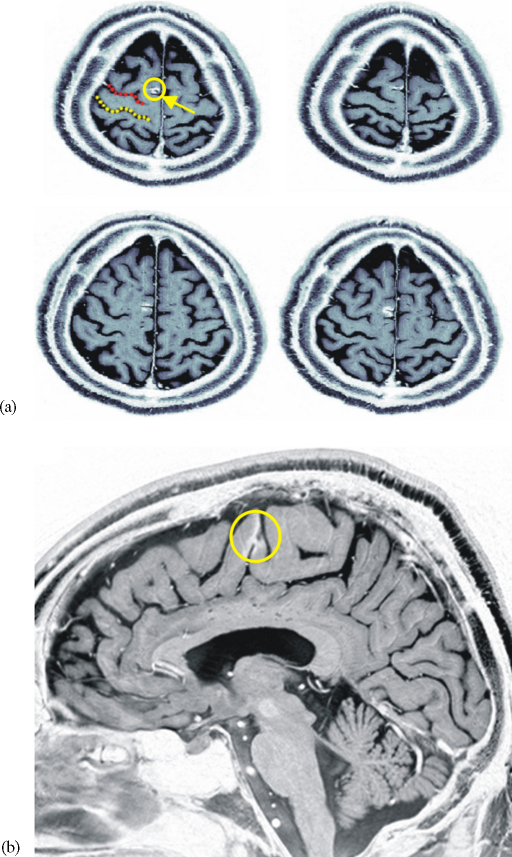
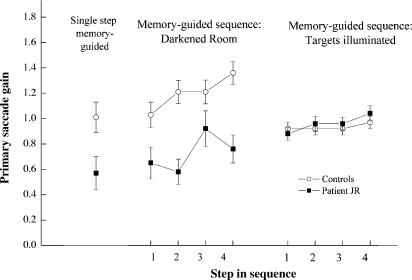
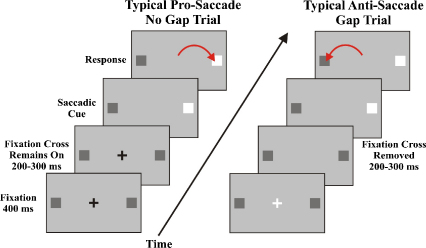
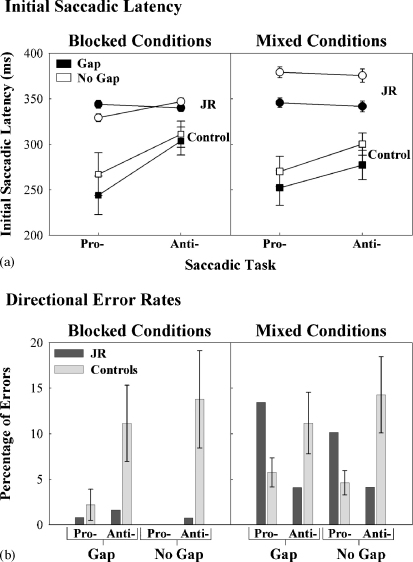
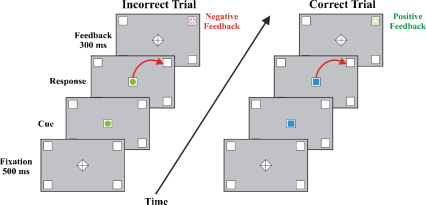
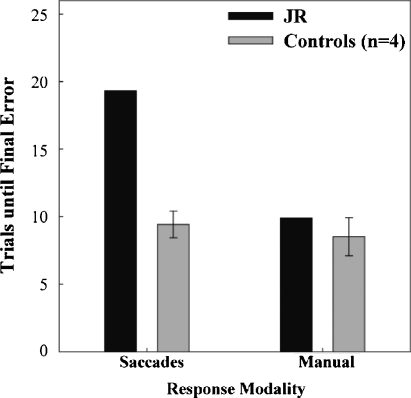
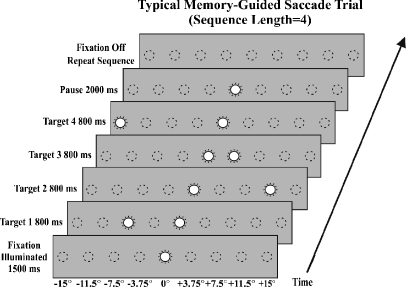
The precise function of the supplementary eye field (SEF) is poorly understood. Although electrophysiological and functional imaging studies are important for demonstrating when SEF neurones are active, lesion studies are critical to establish the functions for which the SEF is essential. Here we report a series of investigations performed on an extremely rare individual with a highly focal lesion of the medial frontal cortex. High-resolution structural imaging demonstrated that his lesion was confined to the region of the left paracentral sulcus, the anatomical locus of the SEF. Behavioural testing revealed that the patient was significantly impaired when required to switch between anti- and pro-saccades, when there were conflicting rules governing stimulus-response mappings for saccades. Similarly, the results of an arbitrary stimulus-response associative learning task demonstrated that he was impaired when required to select the appropriate saccade from conflicting eye movement responses, but not for limb movements on an analogous manual task. When making memory-guided saccadic sequences, the patient demonstrated hypometria, like patients with Parkinson's disease, but had no significant difficulties in reproducing the order of saccades correctly on a task that emphasized accuracy with a wide temporal segregation between responses. These findings are consistent with the hypothesis that the SEF plays a key role in implementing control when there is conflict between several, ongoing competing saccadic responses, but not when eye movements need to be made accurately in sequence.
辅助眼区(SEF)的确切功能尚不清楚。尽管电生理和功能成像研究对于证明SEF神经元何时活跃很重要,但病变研究对于确定SEF所必需的功能至关重要。在此,我们报告了对一名极为罕见的患有内侧额叶皮质高度局灶性病变个体进行的一系列调查。高分辨率结构成像显示,他的病变局限于左中央旁沟区域,即SEF的解剖位置。行为测试表明,当要求患者在反扫视和顺扫视之间切换时,以及在扫视的刺激-反应映射存在冲突规则时,患者会出现明显受损。同样,一项任意刺激-反应联想学习任务的结果表明,当要求他从相互冲突的眼球运动反应中选择合适的扫视时,他会受损,但在类似的手动任务中进行肢体运动时则不会。在进行记忆引导的扫视序列时,该患者表现出像帕金森病患者那样的眼球运动幅度减小,但在一项强调准确性且反应之间有较大时间间隔的任务中,他在正确再现扫视顺序方面没有明显困难。这些发现与以下假设一致,即当几种正在进行的竞争性扫视反应之间存在冲突时,SEF在实施控制方面起关键作用,但在需要按顺序准确进行眼球运动时则不然。