Whitley Brandi R, Beaulieu Lea M, Carter Jennifer C, Church Frank C
Department of Pathology, The University of North Carolina at Chapel Hill School of Medicine, Chapel Hill, NC 27599-7035, USA.
Gynecol Oncol. 2007 Feb;104(2):470-9. doi: 10.1016/j.ygyno.2006.08.048. Epub 2006 Oct 30.
Increased levels of urokinase-type plasminogen activator (uPA) are associated with shortened overall survival in ovarian cancer patients. Additionally, elevated levels of the serine protease inhibitor (serpin), plasminogen activator inhibitor-1 (PAI-1), a uPA inhibitor, have also been correlated with an unfavorable prognosis in ovarian cancer. Therefore, it is critical to understand the signaling pathways that regulate PAI-1 and uPA expression in cancer cell migration-invasion.
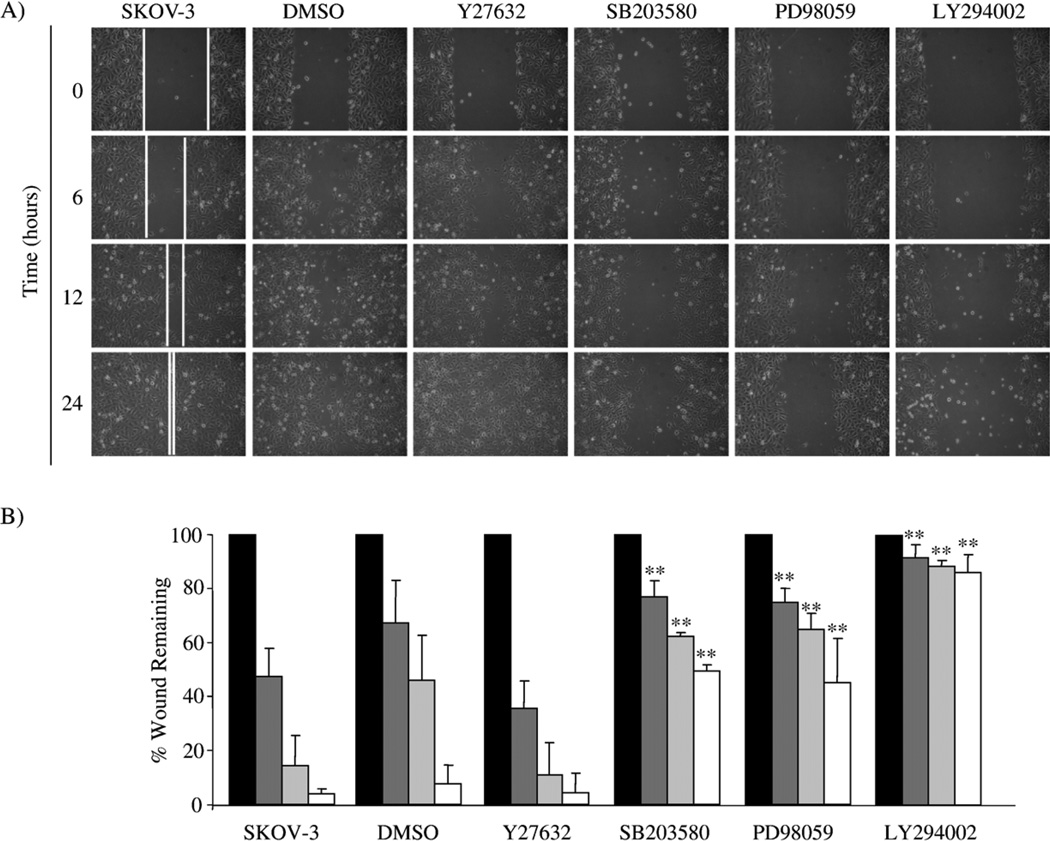
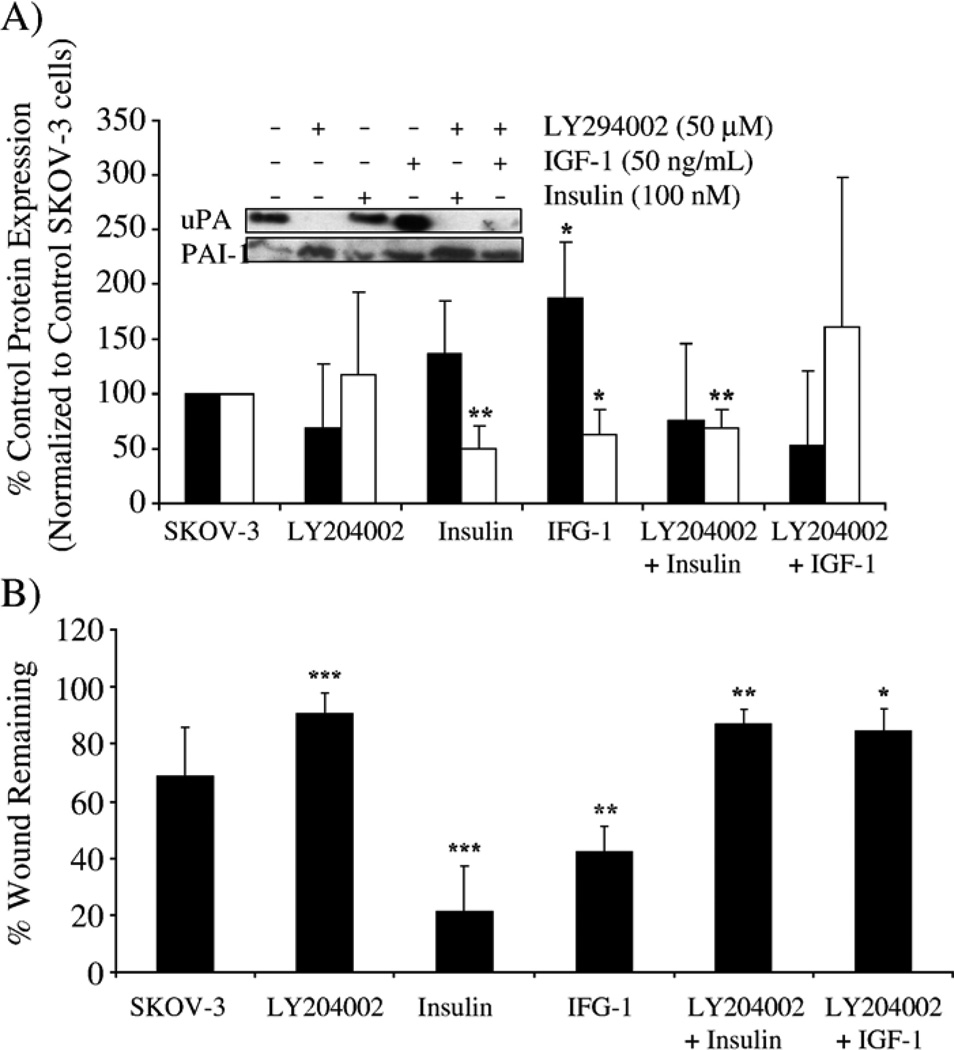
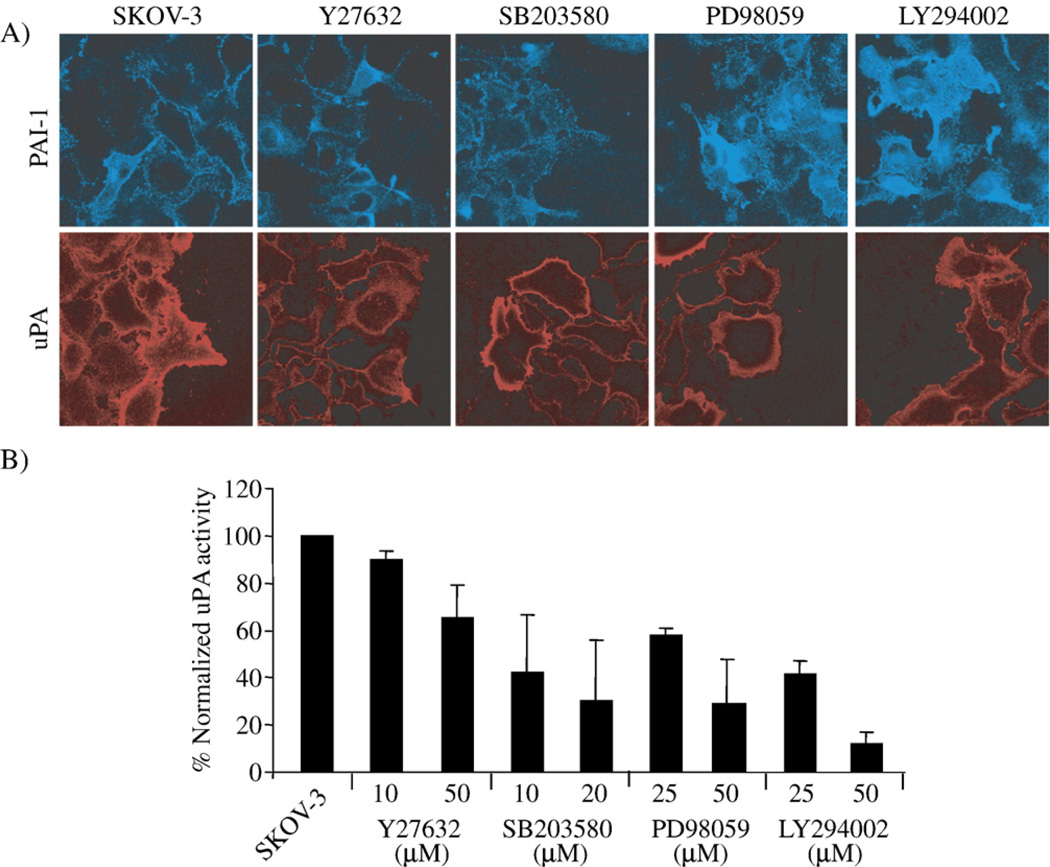
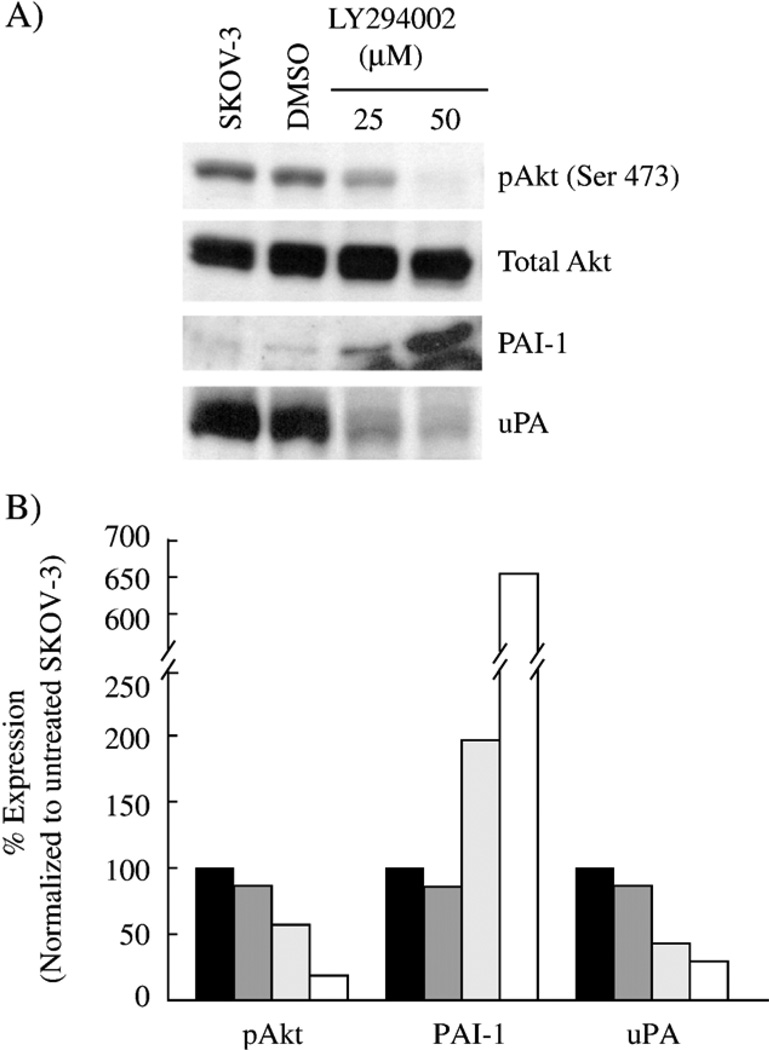
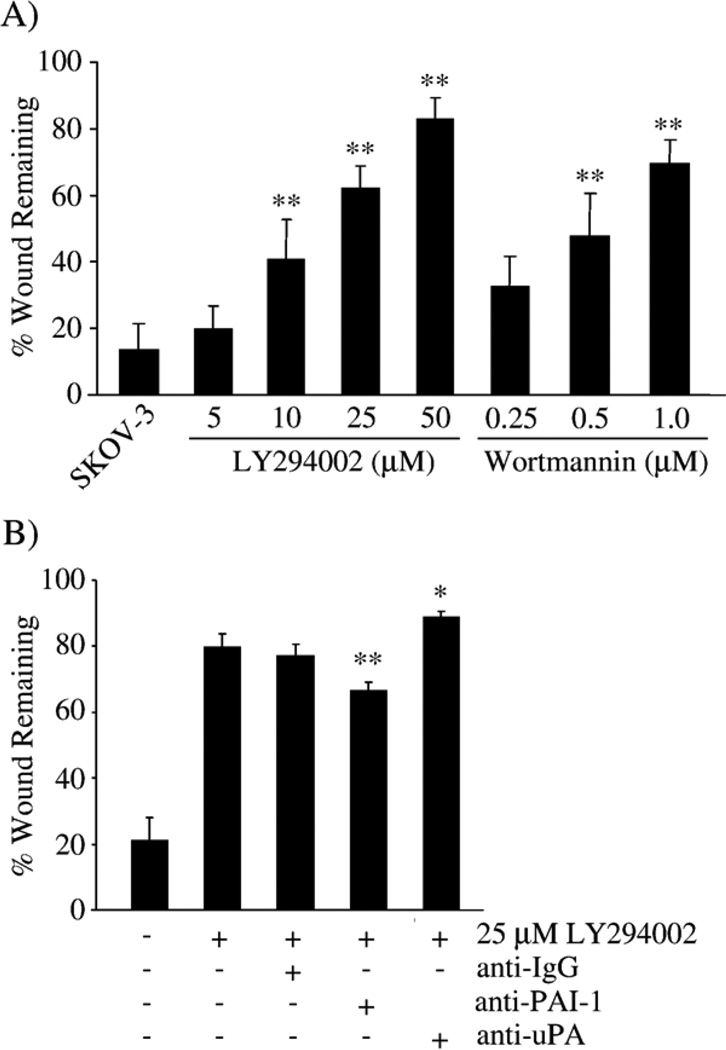
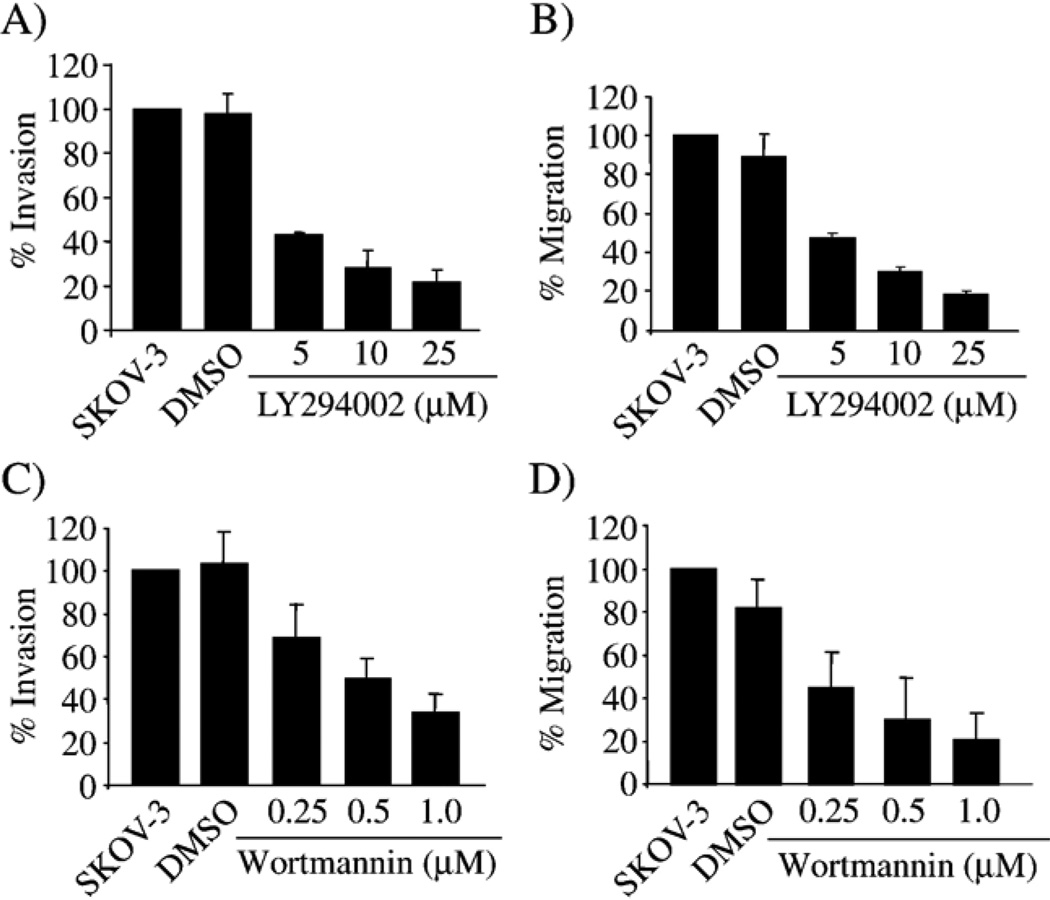
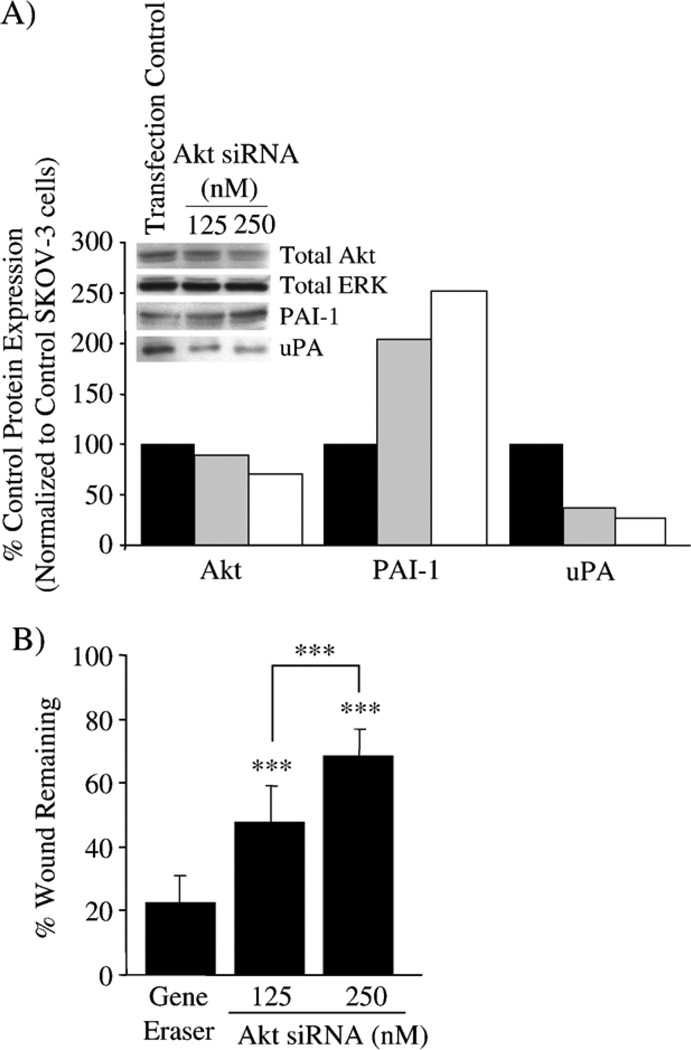
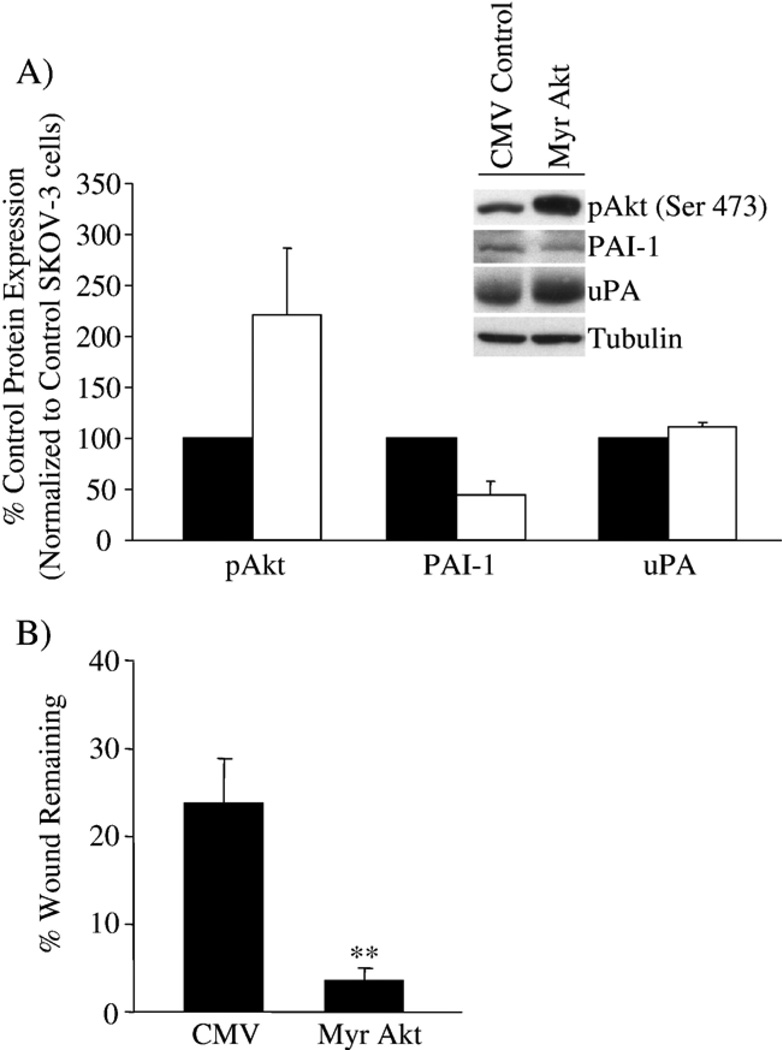
We studied the PI3K/Akt, Rho kinase/ROCK, p38 MAPK and MEK pathways and their modulation of PAI-1 and uPA expression and wound-induced cell migration in SKOV-3 ovarian cancer cells. The PI3K/Akt pathway was further examined using pharmacological inhibitors (LY294002 and wortmannin), Akt siRNA, constitutively active Akt adenovirus and treatment with IGF-1/insulin in the SKOV-3 cells.
The PI3K/Akt pathway negatively regulates PAI-1 expression and positively correlates with migratory abilities and uPA expression in SKOV-3 cells. A reduction in active Akt results in an increase in PAI-1 expression coupled with a decrease in uPA expression to ultimately result in reduced cell migration and invasion. By contrast, an increase in Akt activity reduces PAI-1 expression and results in an increase in SKOV-3 wound-induced cell migration. Furthermore, IGF-1 and insulin stimulated SKOV-3 migration by altering the balance between uPA and PAI-1 to favor uPA, and the enhanced migration was attenuated by treatment with LY294002 indicating PI3K/Akt in this pathway.
These results suggest an overall ovarian tumor-protective role for PAI-1, and that the PI3K/Akt signaling pathway regulates the ratio of PAI-1:uPA to either increase or decrease cell migration.
尿激酶型纤溶酶原激活剂(uPA)水平升高与卵巢癌患者总生存期缩短相关。此外,丝氨酸蛋白酶抑制剂(丝氨酸蛋白酶抑制剂)纤溶酶原激活剂抑制剂-1(PAI-1)水平升高,PAI-1是一种uPA抑制剂,也与卵巢癌预后不良相关。因此,了解调节癌细胞迁移侵袭中PAI-1和uPA表达的信号通路至关重要。
我们研究了PI3K/Akt、Rho激酶/ROCK、p38 MAPK和MEK信号通路及其对SKOV-3卵巢癌细胞中PAI-1和uPA表达以及伤口诱导细胞迁移的调节作用。使用药理学抑制剂(LY294002和渥曼青霉素)、Akt siRNA、组成型活性Akt腺病毒以及在SKOV-3细胞中用IGF-1/胰岛素处理进一步研究PI3K/Akt信号通路。
PI3K/Akt信号通路负向调节SKOV-3细胞中PAI-1的表达,并与迁移能力和uPA表达呈正相关。活性Akt的减少导致PAI-1表达增加,同时uPA表达减少,最终导致细胞迁移和侵袭减少。相比之下,Akt活性的增加降低了PAI-1的表达,并导致SKOV-3伤口诱导的细胞迁移增加。此外,IGF-1和胰岛素通过改变uPA和PAI-1之间的平衡以有利于uPA来刺激SKOV-3迁移,并且用LY294002处理减弱了增强的迁移,表明该信号通路中的PI3K/Akt。
这些结果表明PAI-1具有整体的卵巢肿瘤保护作用,并且PI3K/Akt信号通路调节PAI-1:uPA的比例以增加或减少细胞迁移。