Steenvoorden Marjan M C, Tolboom Tanja C A, van der Pluijm Gabri, Löwik Clemens, Visser Cornelis P J, DeGroot Jeroen, Gittenberger-DeGroot Adriana C, DeRuiter Marco C, Wisse Bert J, Huizinga Tom W J, Toes René E M
Department of Rheumatology, Leiden University Medical Center, Albinusdreef 2, 2333 ZA Leiden, The Netherlands.
Arthritis Res Ther. 2006;8(6):R165. doi: 10.1186/ar2073.
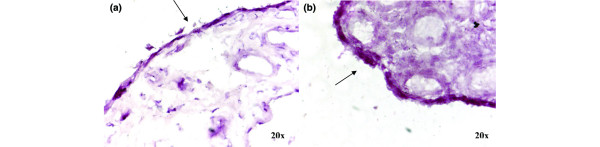
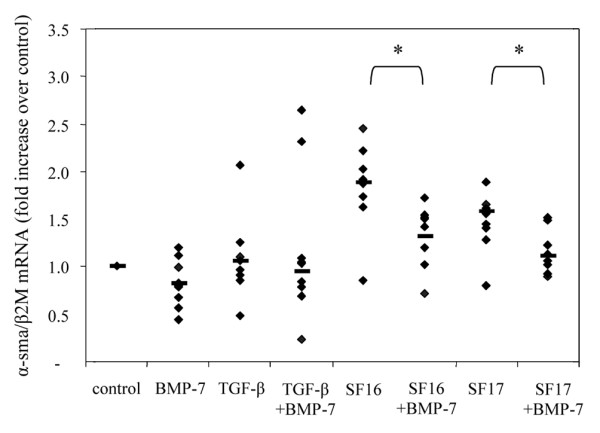
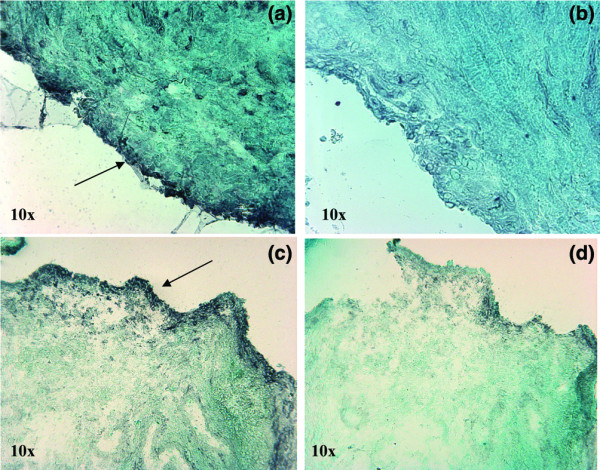
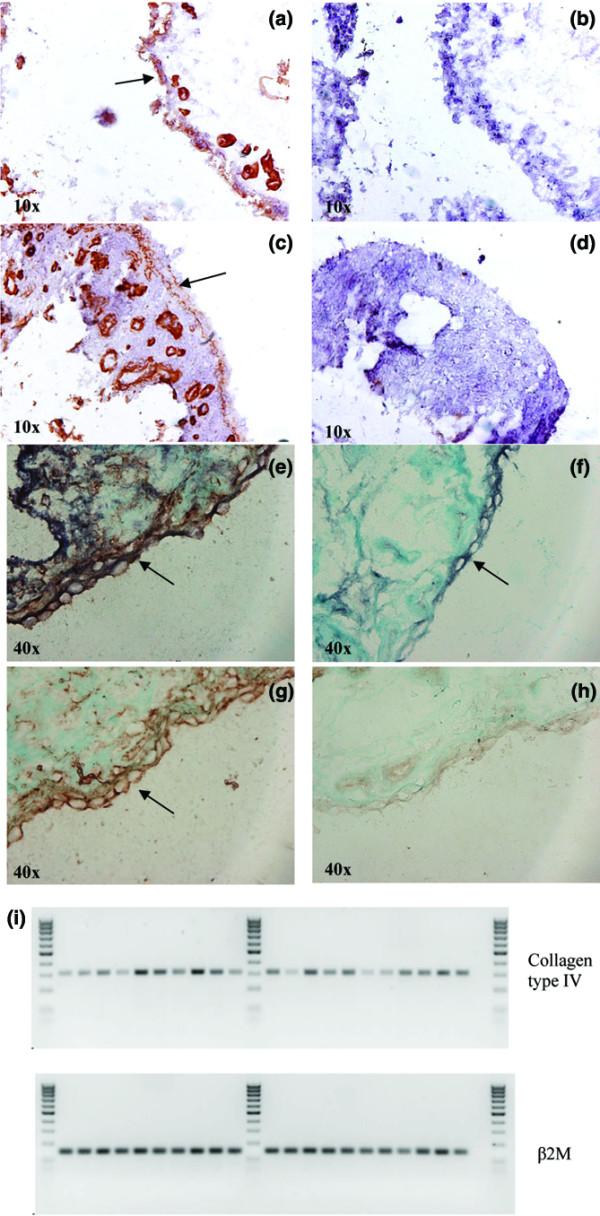
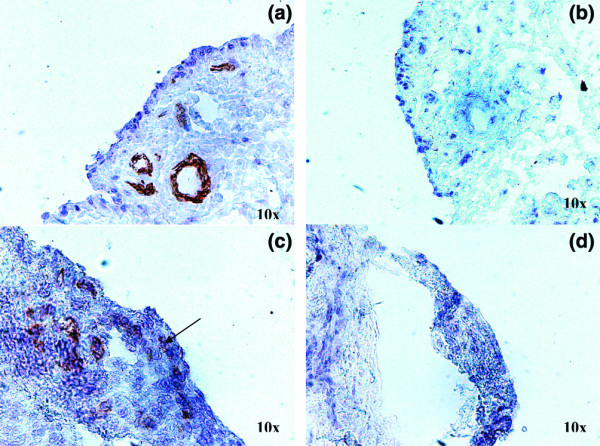
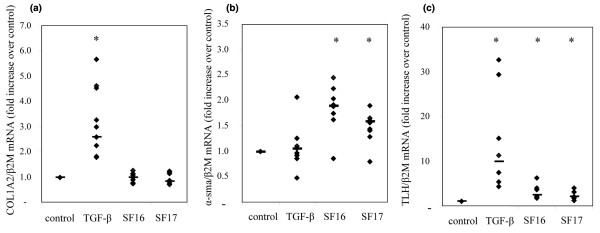
The healthy synovial lining layer consists of a single cell layer that regulates the transport between the joint cavity and the surrounding tissue. It has been suggested that abnormalities such as somatic mutations in the p53 tumor-suppressor gene contribute to synovial hyperplasia and invasion in rheumatoid arthritis (RA). In this study, expression of epithelial markers on healthy and diseased synovial lining tissue was examined. In addition, we investigated whether a regulated process, resembling epithelial to mesenchymal transition (EMT)/fibrosis, could be responsible for the altered phenotype of the synovial lining layer in RA. Synovial tissue from healthy subjects and RA patients was obtained during arthroscopy. To detect signs of EMT, expression of E-cadherin (epithelial marker), collagen type IV (indicator of the presence of a basement membrane) and alpha-smooth muscle actin (alpha-sma; a myofibroblast marker) was investigated on frozen tissue sections using immunohistochemistry. Fibroblast-like synoviocytes (FLSs) from healthy subjects were isolated and subjected to stimulation with synovial fluid (SF) from two RA patients and to transforming growth factor (TGF)-beta. To detect whether EMT/fibrotic markers were increased, expression of collagen type I, alpha-sma and telopeptide lysylhydroxylase (TLH) was measured by real time PCR. Expression of E-cadherin and collagen type IV was found in healthy and arthritic synovial tissue. Expression of alpha-sma was only found in the synovial lining layer of RA patients. Stimulation of healthy FLSs with SF resulted in an upregulation of alpha-sma and TLH mRNA. Collagen type I and TLH mRNA were upregulated after stimulation with TGF-beta. Addition of bone morphogenetic protein (BMP)-7 to healthy FLS stimulated with SF inhibited the expression of alpha-sma mRNA. The finding that E-cadherin and collagen type IV are expressed in the lining layer of healthy and arthritic synovium indicates that these lining cells display an epithelial-like phenotype. In addition, the presence of alpha-sma in the synovial lining layer of RA patients and induction of fibrotic markers in healthy FLSs by SF from RA patients indicate that a regulated process comparable to EMT might cause the alteration in phenotype of RA FLSs. Therefore, BMP-7 may represent a promising agent to counteract the transition imposed on synoviocytes in the RA joint.
健康的滑膜衬里层由单层细胞组成,可调节关节腔与周围组织之间的物质运输。有人提出,诸如p53肿瘤抑制基因的体细胞突变等异常情况会导致类风湿性关节炎(RA)中的滑膜增生和侵袭。在本研究中,检测了健康和患病滑膜衬里组织上皮标志物的表达。此外,我们研究了一种类似于上皮-间质转化(EMT)/纤维化的调控过程是否可能导致RA中滑膜衬里层表型的改变。在关节镜检查期间获取了健康受试者和RA患者的滑膜组织。为了检测EMT的迹象,使用免疫组织化学在冷冻组织切片上研究了E-钙黏蛋白(上皮标志物)、IV型胶原(基底膜存在的指标)和α-平滑肌肌动蛋白(α-sma;成肌纤维细胞标志物)的表达。分离出健康受试者的成纤维样滑膜细胞(FLS),并用两名RA患者的滑液(SF)和转化生长因子(TGF)-β进行刺激。为了检测EMT/纤维化标志物是否增加,通过实时PCR测量I型胶原、α-sma和端肽赖氨酰羟化酶(TLH)的表达。在健康和关节炎滑膜组织中发现了E-钙黏蛋白和IV型胶原的表达。仅在RA患者的滑膜衬里层中发现了α-sma的表达。用SF刺激健康FLS会导致α-sma和TLH mRNA上调。用TGF-β刺激后,I型胶原和TLH mRNA上调。向用SF刺激的健康FLS中添加骨形态发生蛋白(BMP)-7可抑制α-sma mRNA的表达。E-钙黏蛋白和IV型胶原在健康和关节炎滑膜的衬里层中表达这一发现表明,这些衬里细胞表现出上皮样表型。此外,RA患者滑膜衬里层中存在α-sma以及RA患者的SF诱导健康FLS中的纤维化标志物表明,类似于EMT的调控过程可能导致RA FLS表型的改变。因此,BMP-7可能是一种有前景的药物,可对抗RA关节中滑膜细胞的转变。