Wagner Joanne M, Dromerick Alexander W, Sahrmann Shirley A, Lang Catherine E
Program in Physical Therapy, Washington University School of Medicine, St. Louis, MO, USA.
Clin Neurophysiol. 2007 Jan;118(1):164-76. doi: 10.1016/j.clinph.2006.09.022. Epub 2006 Nov 13.
To investigate upper extremity muscle activation and recovery during the first few months after stroke.
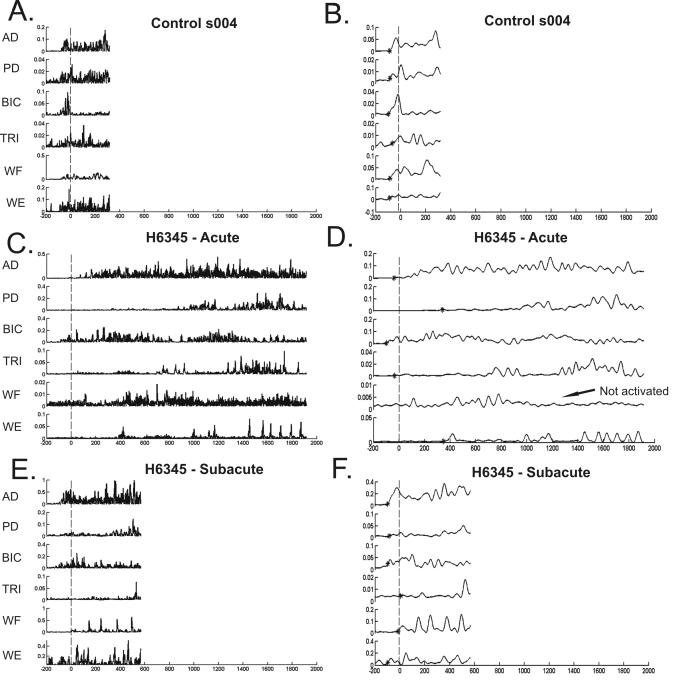
Subjects with hemiparesis following stroke were studied performing a reaching task at an acute time point (mean=9 days post-stroke) and then again at a subacute time point (mean=109 days post-stroke). We recorded kinematics and electromyographic activity of six upper extremity muscles.
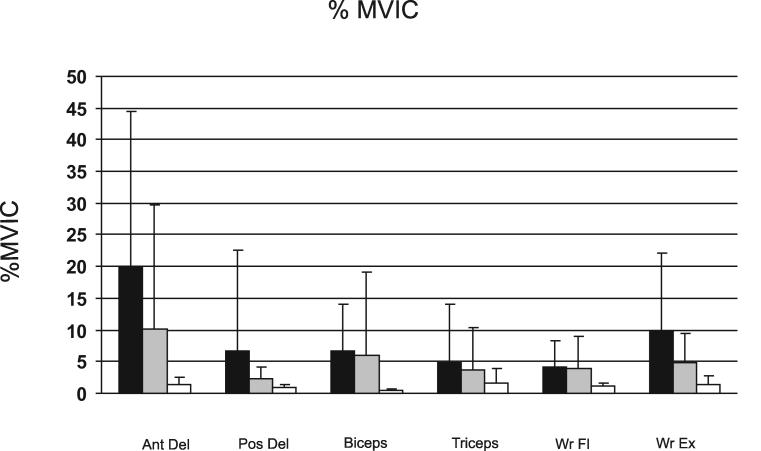
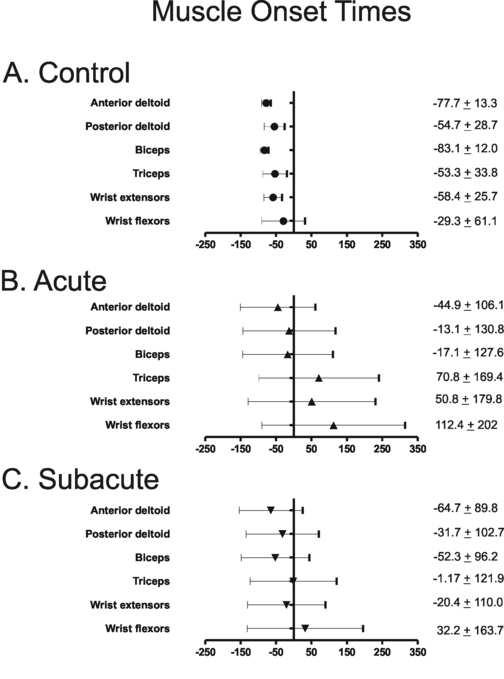
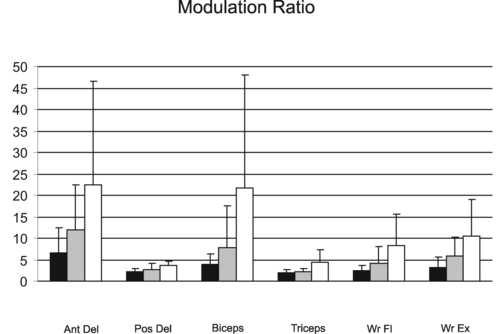
At the acute time point, the hemiparetic group had delayed muscle onsets, lower modulation ratios, and higher relative levels of muscle activation (%MVIC) during reaching than controls. From the acute to the subacute time points, improvements were noted in all three variables. By the subacute phase, muscle onsets were similar to controls, while modulation ratios remained lower than controls and %MVIC showed a trend toward being greater in the hemiparetic group. Changes in muscle activation were differentially related to changes in reaching performance.
Our data show that improvements in muscle timing and decreases in the relative level of volitional activation may underlie improved reaching performance in the early months after stroke.
Given that stroke is one of the leading causes of persistent physical disability, it is important to understand how the ability to activate muscles changes during the early phases of recovery after injury.
研究中风后头几个月上肢肌肉的激活与恢复情况。
对中风后出现偏瘫的受试者进行研究,在急性期(平均中风后9天)和亚急性期(平均中风后109天)分别执行一项伸手够物任务。我们记录了六块上肢肌肉的运动学和肌电图活动。
在急性期,偏瘫组在伸手够物过程中肌肉起始延迟、调制率较低且肌肉激活的相对水平(%MVIC)高于对照组。从急性期到亚急性期,所有这三个变量均有改善。到亚急性期时,肌肉起始与对照组相似,而调制率仍低于对照组,且偏瘫组的%MVIC呈更高的趋势。肌肉激活的变化与伸手够物表现的变化存在不同程度的关联。
我们的数据表明,肌肉定时的改善和意志性激活相对水平的降低可能是中风后早期伸手够物表现改善的基础。
鉴于中风是导致持续性身体残疾的主要原因之一,了解受伤后恢复早期肌肉激活能力如何变化非常重要。