Johnson J Erik, Nasar Farooq, Coleman John W, Price Roger E, Javadian Ali, Draper Kenneth, Lee Margaret, Reilly Patricia A, Clarke David K, Hendry R Michael, Udem Stephen A
Wyeth Vaccines Research, 401 N. Middletown Road, Pearl River, NY 10965, USA.
Virology. 2007 Mar 30;360(1):36-49. doi: 10.1016/j.virol.2006.10.026. Epub 2006 Nov 13.
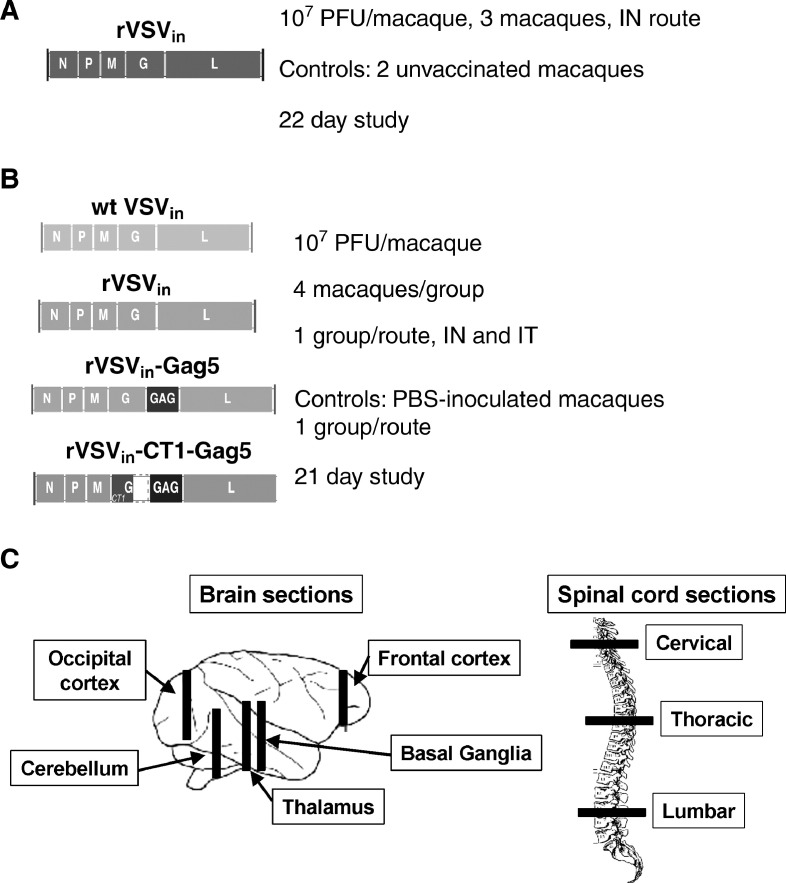
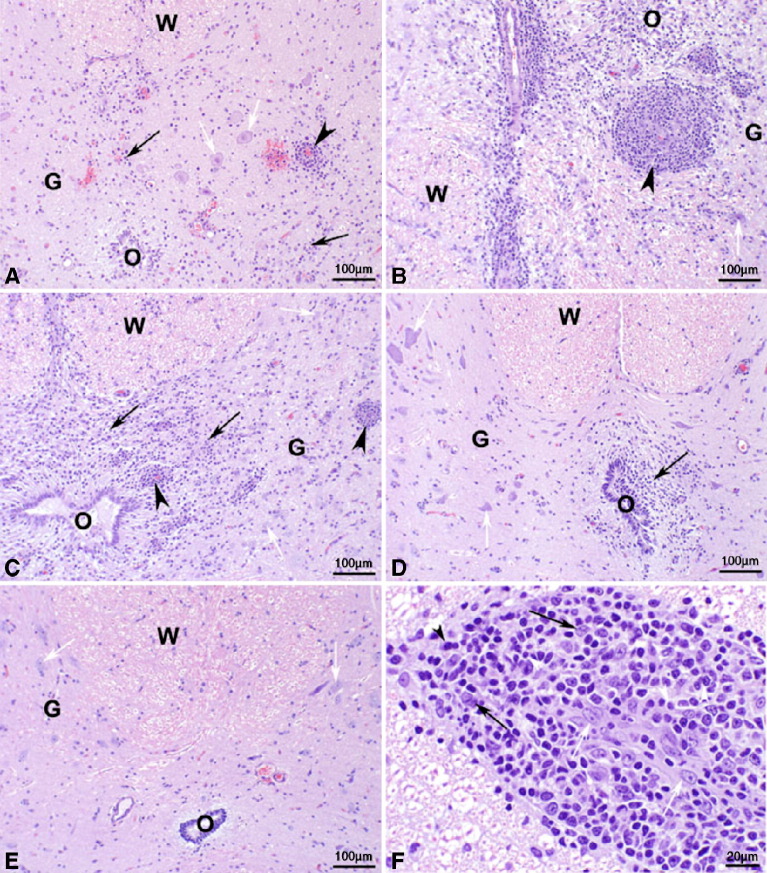
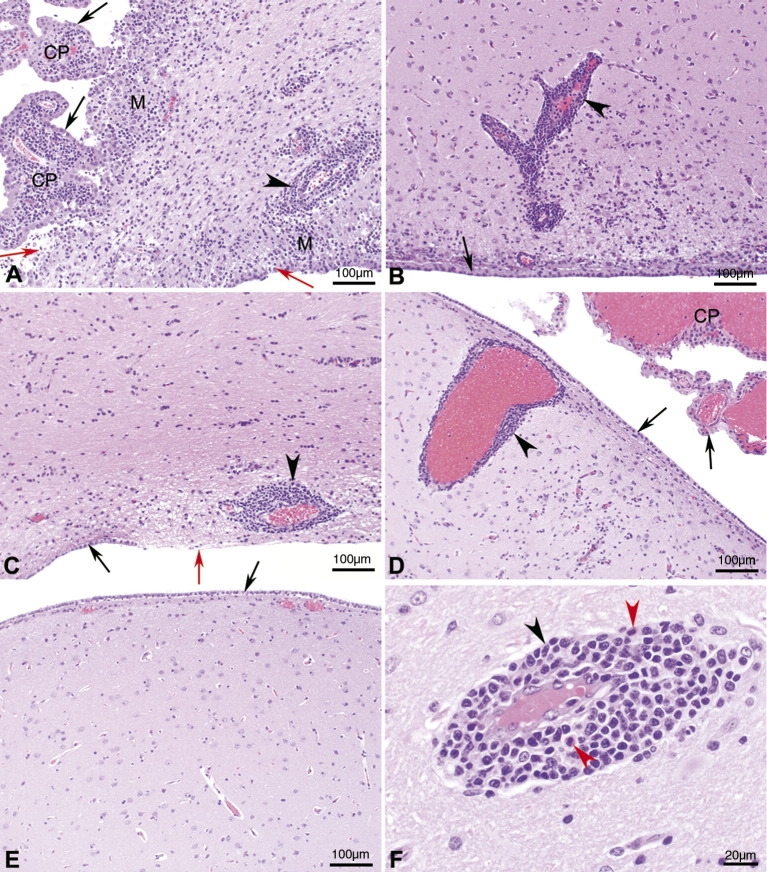
Although vesicular stomatitis virus (VSV) neurovirulence and pathogenicity in rodents have been well studied, little is known about VSV pathogenicity in non-human primates. To address this question, we measured VSV viremia, shedding, and neurovirulence in macaques. Following intranasal inoculation, macaques shed minimal recombinant VSV (rVSV) in nasal washes for 1 day post-inoculation; viremia was not detected. Following intranasal inoculation of macaques, wild type (wt) VSV, rVSV, and two rVSV-HIV vectors showed no evidence of spread to CNS tissues. However, macaques inoculated intrathalamically with wt VSV developed severe neurological disease. One of four macaques receiving rVSV developed clinical and histological signs similar to the wt group, while the remaining three macaques in this group and all of the macaques in the rVSV-HIV vector groups showed no clinical signs of disease and reduced severity of histopathology compared to the wt group. The implications of these findings for rVSV vaccine development are discussed.
尽管水泡性口炎病毒(VSV)在啮齿动物中的神经毒性和致病性已得到充分研究,但对于VSV在非人类灵长类动物中的致病性却知之甚少。为了解决这个问题,我们测量了猕猴体内的VSV病毒血症、排毒情况和神经毒性。经鼻内接种后,猕猴在接种后1天的鼻腔冲洗液中排出的重组VSV(rVSV)极少;未检测到病毒血症。经鼻内接种猕猴后,野生型(wt)VSV、rVSV和两种rVSV-HIV载体均未显示扩散至中枢神经系统组织的迹象。然而,经丘脑内接种wt VSV的猕猴出现了严重的神经疾病。接受rVSV的四只猕猴中有一只出现了与wt组相似的临床和组织学症状,而该组其余三只猕猴以及rVSV-HIV载体组的所有猕猴均未出现疾病的临床症状,并且与wt组相比,组织病理学严重程度有所降低。本文讨论了这些发现对rVSV疫苗开发的意义。