Department of Biomolecular Engineering, Graduate School of Bioscience and Biotechnology, Tokyo Institute of Technology, Yokohama, Japan.
PLoS One. 2006 Dec 20;1(1):e15. doi: 10.1371/journal.pone.0000015.
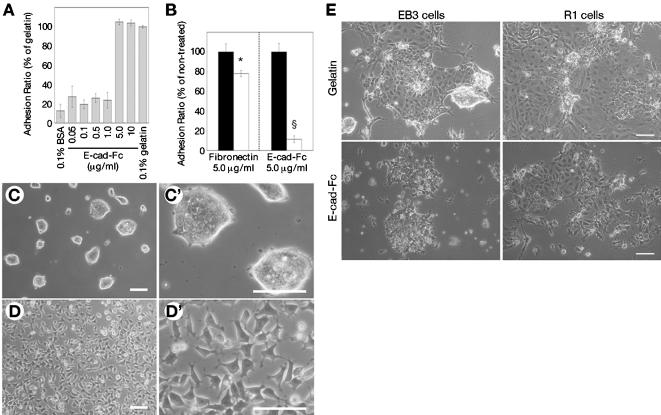
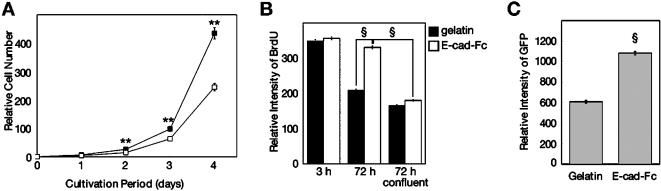
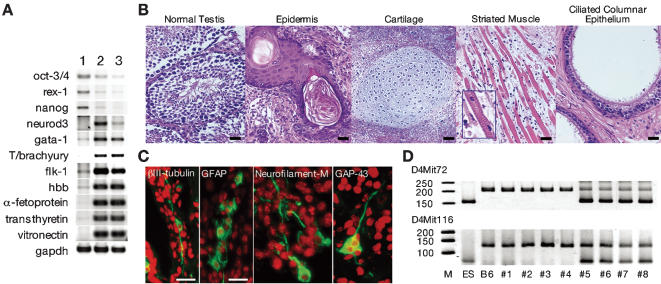
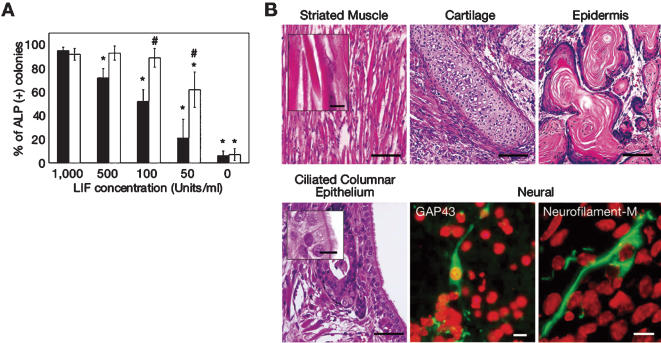
Embryonic stem (ES) cells cultured on gelatin-coated plates or feeder layers form tight aggregated colonies by the E-cadherin-mediated cell-cell adhesions. Here we show that murine ES cells do not make cell-cell contacts or form colonies when cultured on the plate coated with a fusion protein of E-cadherin and IgG Fc domain. The cells in culture retain all ES cell features including pluripotency to differentiate into cells of all three germ layers and germ-line transmission after extended culture. Furthermore, they show a higher proliferative ability, lower dependency on LIF, and higher transfection efficiency than colony-forming conditions. Our results suggest that aggregated colony formation might inhibit diffusion of soluble factors and increase cell-cell communication, which may result in a heterogeneous environment within and between surrounding cells of the colony. This method should enable more efficient and scalable culture of ES cells, an important step towards the clinical application of these cells.
胚胎干细胞(ES 细胞)在明胶包被的培养板或饲养层上培养时,通过 E-钙黏蛋白介导的细胞间黏附形成紧密聚集的集落。在这里,我们表明,当用 E-钙黏蛋白和 IgG Fc 结构域融合蛋白包被的平板培养时,鼠 ES 细胞不会发生细胞间接触或形成集落。培养中的细胞保留所有 ES 细胞特征,包括多能性,可分化为三个胚层的细胞,并在延长培养后进行种系传递。此外,它们比集落形成条件具有更高的增殖能力、更低的 LIF 依赖性和更高的转染效率。我们的结果表明,聚集的集落形成可能会抑制可溶性因子的扩散并增加细胞间通讯,这可能导致集落内和周围细胞之间的异质性环境。这种方法应该能够更有效地培养 ES 细胞,这是这些细胞临床应用的重要一步。