Reuter C W M, Morgan M A, Eckardt A
Department of Hematology, Hemostaseology and Oncology, Hannover Medical School, Carl-Neuberg-Strasse 1, 30625 Hannover, Germany.
Br J Cancer. 2007 Feb 12;96(3):408-16. doi: 10.1038/sj.bjc.6603566. Epub 2007 Jan 16.
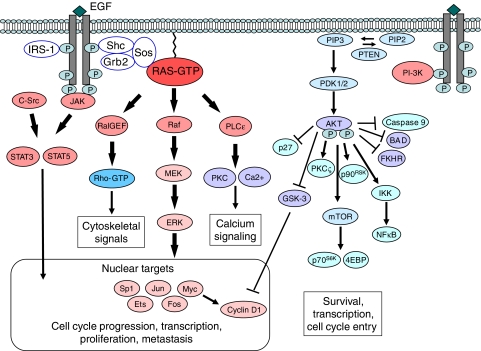
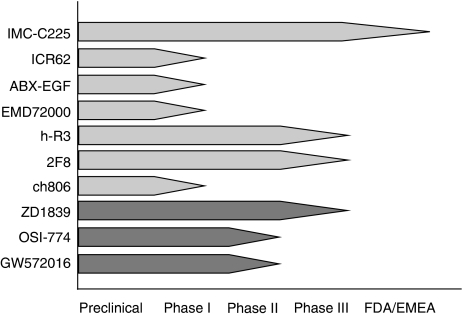
Despite significant advances in the use of surgery, chemotherapy and radiotherapy to treat squamous cell carcinoma of the head and neck (SCCHN), prognosis has improved little over the past 30 years. There is a clear need for novel, more effective therapies to prevent relapse, control metastases and improve overall survival. Improved understanding of SCCHN disease biology has led to the introduction of molecularly targeted treatment strategies in these cancers. The epidermal growth factor receptor (EGFR) is expressed at much higher levels in SCCHN tumours than in normal epithelial tissue, and EGFR expression correlates with poor prognosis. Therefore, much effort is currently directed toward targeting aberrant EGFR activity (e.g. cell signalling) in SCCHN. This review discusses the efficacy of novel therapies targeting the EGFR (e.g. anti-EGFR antibodies and EGFR tyrosine kinase inhibitors) that are currently tested in SCCHN patients.
尽管在使用手术、化疗和放疗治疗头颈部鳞状细胞癌(SCCHN)方面取得了重大进展,但在过去30年里,其预后改善甚微。显然需要新的、更有效的疗法来预防复发、控制转移并提高总体生存率。对头颈部鳞状细胞癌疾病生物学的深入了解促使在这些癌症中引入了分子靶向治疗策略。表皮生长因子受体(EGFR)在头颈部鳞状细胞癌肿瘤中的表达水平远高于正常上皮组织,且EGFR表达与预后不良相关。因此,目前很多努力都致力于靶向头颈部鳞状细胞癌中异常的EGFR活性(如细胞信号传导)。本综述讨论了目前在头颈部鳞状细胞癌患者中进行测试的靶向EGFR的新型疗法(如抗EGFR抗体和EGFR酪氨酸激酶抑制剂)的疗效。