Wang Yangming, Medvid Rostislav, Melton Collin, Jaenisch Rudolf, Blelloch Robert
Developmental and Stem Cell Biology Program, Department of Urology, University of California, San Francisco, California 94143, USA.
Nat Genet. 2007 Mar;39(3):380-5. doi: 10.1038/ng1969. Epub 2007 Jan 28.
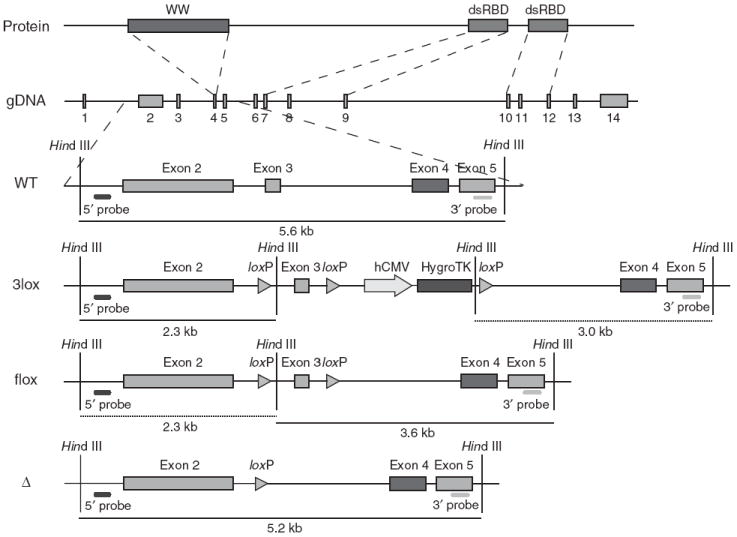
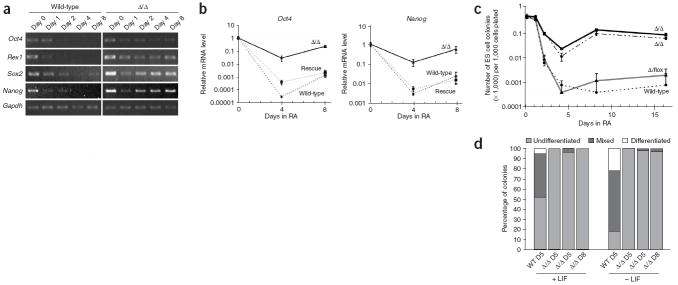
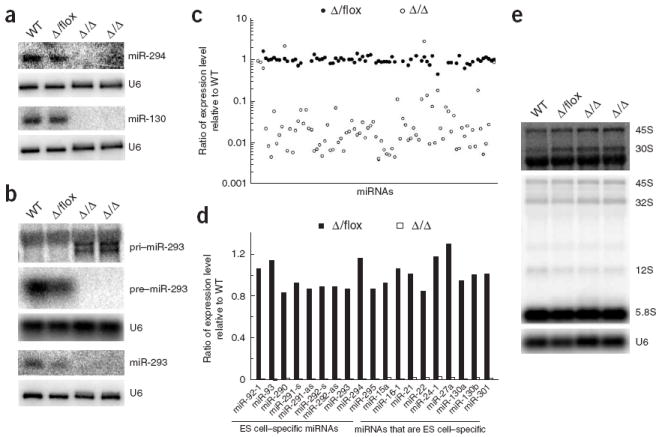
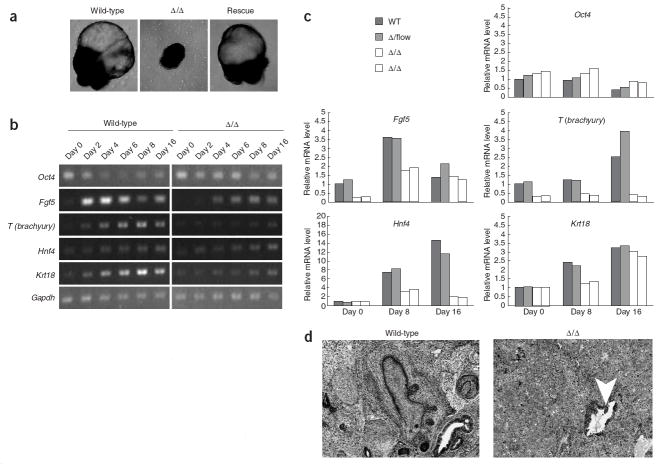
The molecular controls that govern the differentiation of embryonic stem (ES) cells remain poorly understood. DGCR8 is an RNA-binding protein that assists the RNase III enzyme Drosha in the processing of microRNAs (miRNAs), a subclass of small RNAs. Here we study the role of miRNAs in ES cell differentiation by generating a Dgcr8 knockout model. Analysis of mouse knockout ES cells shows that DGCR8 is essential for biogenesis of miRNAs. On the induction of differentiation, DGCR8-deficient ES cells do not fully downregulate pluripotency markers and retain the ability to produce ES cell colonies; however, they do express some markers of differentiation. This phenotype differs from that reported for Dicer1 knockout cells, suggesting that Dicer has miRNA-independent roles in ES cell function. Our findings indicate that miRNAs function in the silencing of ES cell self-renewal that normally occurs with the induction of differentiation.
目前,人们对调控胚胎干细胞(ES细胞)分化的分子机制仍知之甚少。DGCR8是一种RNA结合蛋白,可协助RNase III酶Drosha加工小RNA的一个亚类——微小RNA(miRNA)。在此,我们通过构建Dgcr8基因敲除模型来研究miRNA在ES细胞分化中的作用。对小鼠基因敲除ES细胞的分析表明,DGCR8对miRNA的生物合成至关重要。在诱导分化时,缺乏DGCR8的ES细胞不能完全下调多能性标志物,并且保留产生ES细胞集落的能力;然而,它们确实表达了一些分化标志物。这种表型与Dicer1基因敲除细胞所报道的不同,表明Dicer在ES细胞功能中具有不依赖于miRNA的作用。我们的研究结果表明,miRNA在ES细胞自我更新的沉默中发挥作用,而这种沉默通常发生在分化诱导过程中。