Blum H E, Zhang Z S, Galun E, von Weizsäcker F, Garner B, Liang T J, Wands J R
Molecular Hepatology Laboratory, Massachusetts General Hospital, Harvard Medical School, Charlestown 02129.
J Virol. 1992 Feb;66(2):1223-7. doi: 10.1128/JVI.66.2.1223-1227.1992.
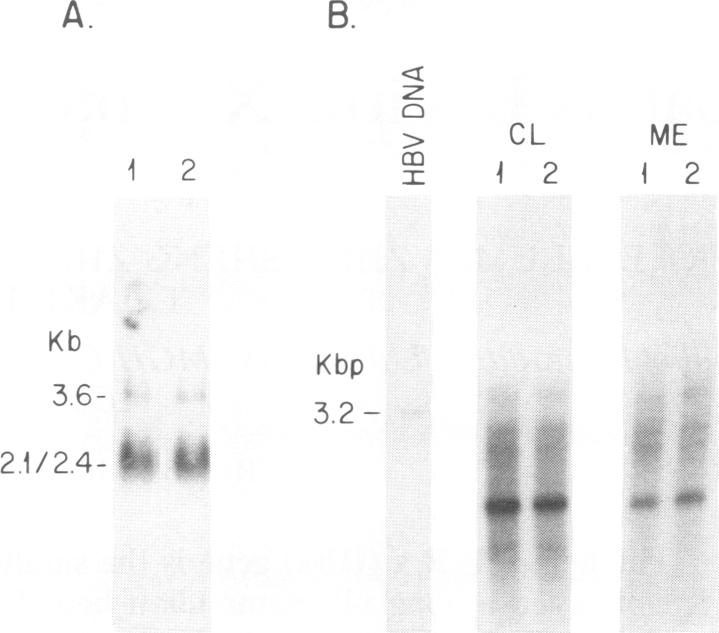
The hepatitis B x (HBx) gene is the smallest open reading frame of the hepatitis B virus (HBV) genome. It is conserved among all mammalian hepadnaviruses and is expressed during viral infection. While the HBx protein (pX) has been shown to trans-activate the transcription of a wide range of viral and cellular genes and to induce liver cancer in transgenic mice, the significance of pX for the life cycle of HBV itself has not been elucidated. To assess the function of pX in viral replication and virion export, we designed an X-minus mutant by introduction of a stop codon at the beginning of the HBx gene without affecting the viral polymerase gene product. Transient transfection analyses using different cell lines revealed that this X-minus mutant directs the synthesis of wild-type levels of viral proteins, replicative intermediates, and virion export. These data suggest that the expression of the highly conserved HBx gene is not central for the life cycle of HBV in vitro but may be involved in the pathogenicity of hepadnavirus infection, including liver cancer development.
乙型肝炎X(HBx)基因是乙型肝炎病毒(HBV)基因组中最小的开放阅读框。它在所有哺乳动物嗜肝DNA病毒中保守,并在病毒感染期间表达。虽然HBx蛋白(pX)已被证明可反式激活多种病毒和细胞基因的转录,并在转基因小鼠中诱发肝癌,但pX对HBV自身生命周期的意义尚未阐明。为了评估pX在病毒复制和病毒粒子输出中的功能,我们通过在HBx基因起始处引入一个终止密码子设计了一个X缺失突变体,而不影响病毒聚合酶基因产物。使用不同细胞系的瞬时转染分析表明,这种X缺失突变体指导野生型水平的病毒蛋白、复制中间体和病毒粒子输出的合成。这些数据表明,高度保守的HBx基因的表达在体外对HBV的生命周期并非至关重要,但可能参与嗜肝DNA病毒感染的致病性,包括肝癌的发生。