Schett Georg
Department of Internal Medicine III and Institute for Clinical Immunology, University of Erlangen-Nuremberg, Erlangen, Germany.
Arthritis Res Ther. 2007;9(1):203. doi: 10.1186/ar2110.
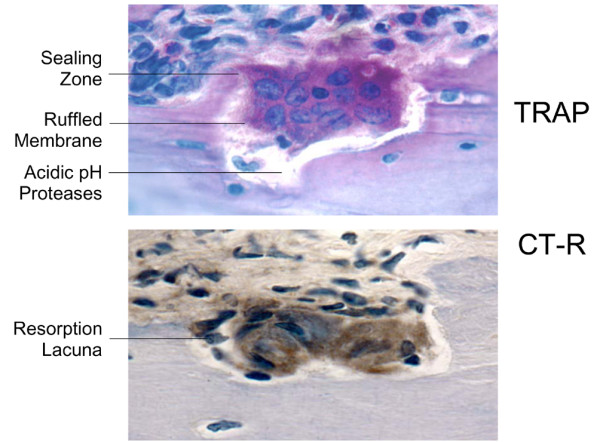
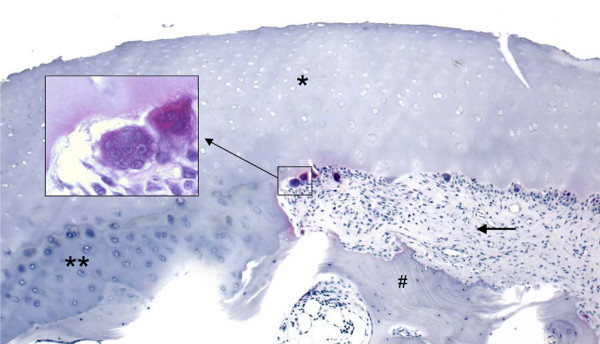
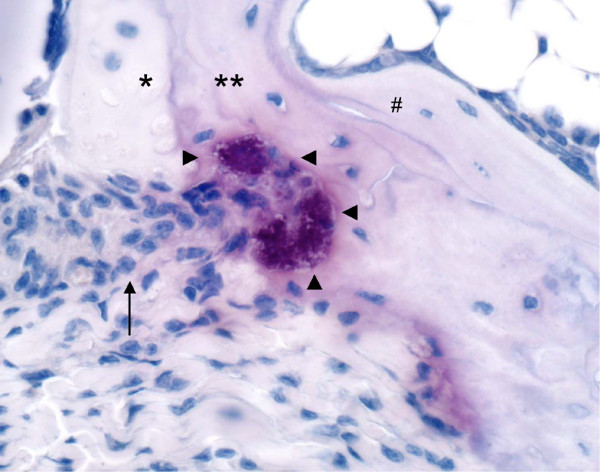
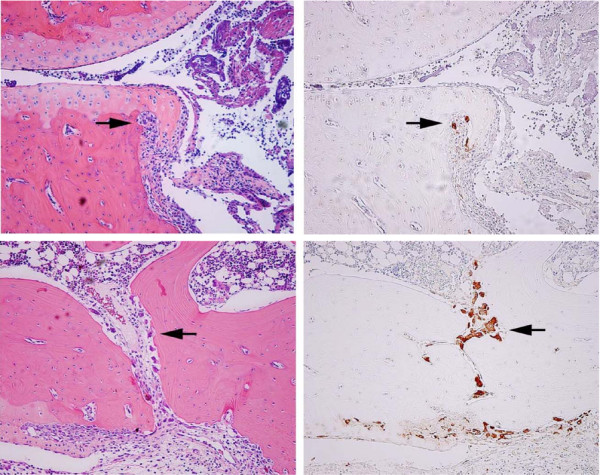
Osteoclasts are multinucleated cells of hematopoietic origin and are the primary bone resorbing cells. Numerous osteoclasts are found within the synovial tissue at sites adjacent to bone, creating resorption pits and local bone destruction. They are equipped with specific enzymes and a proton pump that enable them to degrade bone matrix and solubilize calcium, respectively. The synovial tissue of inflamed joints has a particularly high potential to accumulate osteoclasts because it harbors monocytes/macrophages, which function as osteoclast precursors, as well as cells that provide the specific molecular signals that drive osteoclast formation. Osteoclasts thus represent a link between joint inflammation and structural damage since they resorb mineralized tissue adjacent to the joint and destroy the joint architecture.
破骨细胞是造血起源的多核细胞,是主要的骨吸收细胞。在靠近骨骼的部位,滑膜组织内可发现大量破骨细胞,形成吸收陷窝并导致局部骨破坏。它们配备有特定的酶和质子泵,分别能够降解骨基质和溶解钙。炎症关节的滑膜组织具有特别高的积聚破骨细胞的潜力,因为它含有作为破骨细胞前体的单核细胞/巨噬细胞,以及提供驱动破骨细胞形成的特定分子信号的细胞。因此,破骨细胞代表了关节炎症与结构损伤之间的联系,因为它们吸收关节附近的矿化组织并破坏关节结构。