Schett Georg
Department of Internal Medicine 3, University of Erlangen-Nurnberg, Erlangen, Germany.
Arthritis Res Ther. 2007;9 Suppl 1(Suppl 1):S2. doi: 10.1186/ar2166.
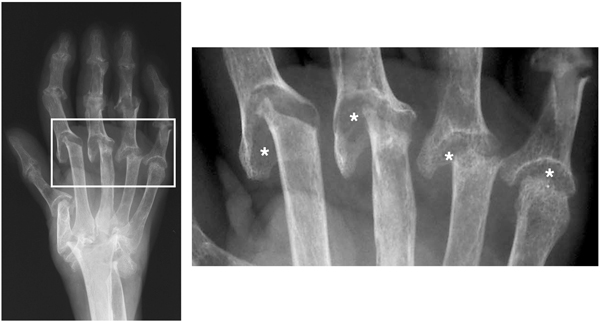
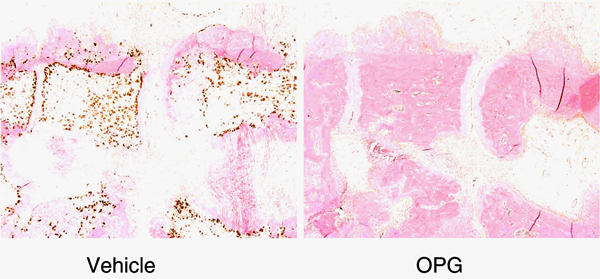
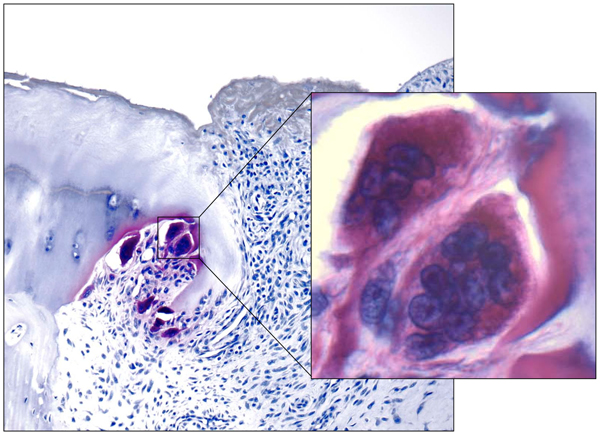
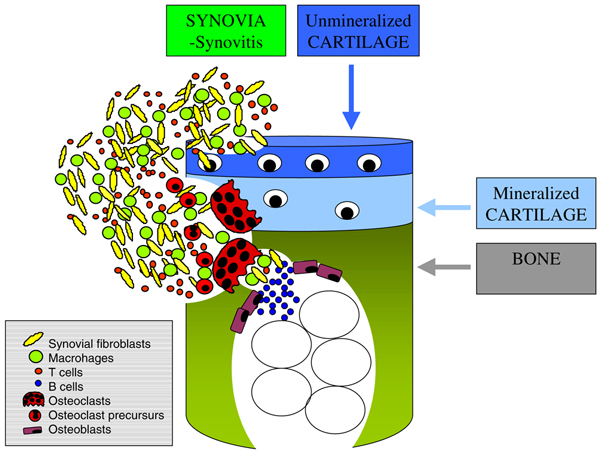
Inflammation and degradation of bone are two closely linked processes. Chronic inflammatory arthritis not only leads to inflammatory bone loss but it also involves local erosion of articular bone. This osteo-destructive feature of chronic inflammatory arthritis is a major cause of disability in patients with rheumatoid arthritis. Osteoclasts are essential for the resorption of mineralized cartilage and subchondral bone in chronic arthritis. The observed up-regulation of osteoclast differentiation factors (receptor activator of nuclear factor-kappaB ligand [RANKL]) in the synovial membrane of chronically inflamed joints indicates that osteoclasts are abundant in this setting, leading to rapid degradation of mineralized tissue. Blockade of osteoclast formation is thus a key strategy in preventing structural damage in arthritis. Denosumab, a humanized antibody that neutralizes RANKL, is an attractive candidate agent to inhibit inflammatory bone loss.
骨骼的炎症和降解是两个紧密相连的过程。慢性炎症性关节炎不仅会导致炎症性骨质流失,还会引起关节骨的局部侵蚀。慢性炎症性关节炎的这种骨破坏特征是类风湿性关节炎患者致残的主要原因。破骨细胞对于慢性关节炎中矿化软骨和软骨下骨的吸收至关重要。在慢性炎症关节的滑膜中观察到破骨细胞分化因子(核因子κB受体活化因子配体[RANKL])上调,这表明在这种情况下破骨细胞数量丰富,导致矿化组织快速降解。因此,阻断破骨细胞形成是预防关节炎结构损伤的关键策略。地诺单抗是一种中和RANKL的人源化抗体,是抑制炎症性骨质流失的有吸引力的候选药物。