Wacharotayankun R, Arakawa Y, Ohta M, Hasegawa T, Mori M, Horii T, Kato N
Department of Bacteriology, Nagoya University School of Medicine, Japan.
J Bacteriol. 1992 Feb;174(3):1063-7. doi: 10.1128/jb.174.3.1063-1067.1992.
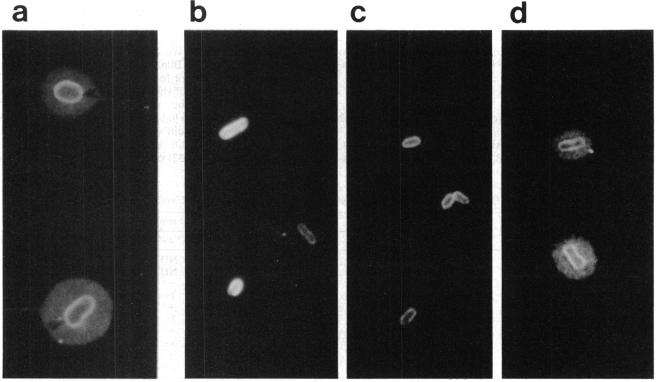
Escherichia coli K-12 harboring a part of the structural genes for the Klebsiella K2 capsular polysaccharide (cpsK*) expresses a large amount of K2 capsular polysaccharide as a thick capsule in the presence of plasmids carrying rmpA and rcsB. We have previously shown that expression of the Klebsiella K2 capsule in E. coli HB101 harboring cpsK* depends on the presence of rmpA, a regulatory gene from a large plasmid of Klebsiella pneumoniae Chedid (O1:K2). E. coli K-12 JM109, however, produces only a small amount of K2 capsular polysaccharide, even in the presence of plasmids carrying rmpA as well as the cpsK* structural genes. Introduction of the rcsB gene, a positive regulator of colanic acid capsule synthesis in E. coli K-12 which was cloned from HB101 on a plasmid, into JM109 cells carrying cpsK* and rmpA, results in the expression of a thick K2 capsule. By Northern (RNA) hybridization analysis, rcsB has been found to enhance transcription of a long strand of mRNA (longer than 14 kb) from cpsK*. These E. coli transformants which produce a thick K2 capsule also express colanic acid production at high levels. Therefore, rcsB can act as a positive regulator of Klebsiella K2 capsule production and two capsular polysaccharides can be expressed in E. coli simultaneously. With a somewhat different strain background, we have found that both of the colanic acid regulators, rcsA and rcsB, contribute to the basal level of Klebsiella K2 capsule expression but that the presence of multicopy rcsB in either an rcsB or an rcsA mutant of E. coli is sufficient to increase the expression of K2 capsular polysaccharide. These results suggest further parallels between the regulation of colanic acid synthesis in E. coli and the regulation of Klebsiella K2 capsule synthesis.
携带肺炎克雷伯菌K2荚膜多糖部分结构基因(cpsK*)的大肠杆菌K-12,在携带rmpA和rcsB的质粒存在的情况下,会表达大量的K2荚膜多糖,形成厚厚的荚膜。我们之前已经表明,在携带cpsK的大肠杆菌HB101中,肺炎克雷伯菌K2荚膜的表达取决于rmpA的存在,rmpA是来自肺炎克雷伯菌Chedid(O1:K2)大质粒的一个调控基因。然而,即使在携带rmpA以及cpsK结构基因的质粒存在的情况下,大肠杆菌K-12 JM109也只产生少量的K2荚膜多糖。将rcsB基因(从HB101克隆到质粒上的大肠杆菌K-12中结肠酸荚膜合成的正调控因子)导入携带cpsK和rmpA的JM109细胞中,会导致厚厚的K2荚膜的表达。通过Northern(RNA)杂交分析,发现rcsB能增强cpsK的一条长链mRNA(长于14 kb)的转录。这些产生厚厚的K2荚膜的大肠杆菌转化体也高水平表达结肠酸。因此,rcsB可以作为肺炎克雷伯菌K2荚膜产生的正调控因子,并且两种荚膜多糖可以在大肠杆菌中同时表达。在稍有不同的菌株背景下,我们发现结肠酸调控因子rcsA和rcsB都对肺炎克雷伯菌K2荚膜表达的基础水平有贡献,但在大肠杆菌的rcsB或rcsA突变体中多拷贝rcsB的存在足以增加K2荚膜多糖的表达。这些结果进一步表明大肠杆菌中结肠酸合成的调控与肺炎克雷伯菌K2荚膜合成的调控之间存在相似之处。