Andersen J F, Hutchinson C R
School of Pharmacy, University of Wisconsin, Madison 53706.
J Bacteriol. 1992 Feb;174(3):725-35. doi: 10.1128/jb.174.3.725-735.1992.
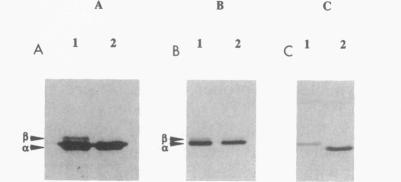
Previous studies of erythromycin biosynthesis have indicated that a cytochrome P-450 monooxygenase system is responsible for hydroxylation of 6-deoxyerythronolide B to erythronolide B as part of erythromycin biosynthesis in Saccharopolyspora erythraea (A. Shafiee and C. R. Hutchinson, Biochemistry 26:6204-6210 1987). The enzyme was previously purified to apparent homogeneity and found to have a catalytic turnover number of approximately 10(-3) min-1. More recently, disruption of a P-450-encoding sequence (eryF) in the region of ermE, the erythromycin resistance gene of S. erythraea, produced a 6-deoxyerythronolide B hydroxylation-deficient mutant (J. M. Weber, J. O. Leung, S. J. Swanson, K. B. Idler, and J. B. McAlpine, Science 252:114-116, 1991). In this study we purified the catalytically active cytochrome P-450 fraction from S. erythraea and found by using sodium dodecyl sulfate-polyacrylamide gel electrophoresis that it consists of a major and a minor P-450 species. The gene encoding the major species (orf405) was cloned from genomic DNA and found to be distinct from eryF. Both the orf405 and eryF genes were expressed in Escherichia coli, and the properties of the proteins were compared. Heterologously expressed EryF and Orf405 both reacted with antisera prepared against the 6-deoxyerythronolide B hydroxylase described by Shafiee and Hutchinson (1987), and the EryF polypeptide comigrated with the minor P-450 species from S. erythraea on sodium dodecyl sulfate-polyacrylamide gel electrophoresis gels. In comparisons of enzymatic activity, EryF hydroxylated a substrate with a turnover number of 53 min-1, whereas Orf405 showed no detectable activity with a 6-deoxyerythronolide B analog. Both enzymes showed weak activity in the O-dealkylation of 7-ethoxycoumarin. We conclude that the previously isolated 6-deoxyerythronolide B hydroxylase was a mixture of two P-450 enzymes and that only the minor form shows 6-deoxyerythronolide B hydroxylase activity.
先前关于红霉素生物合成的研究表明,细胞色素P-450单加氧酶系统负责将6-脱氧红霉内酯B羟基化为红霉内酯B,这是糖多孢红霉菌中红霉素生物合成的一部分(A. Shafiee和C. R. Hutchinson,《生物化学》26:6204 - 6210,1987年)。该酶先前已纯化至表观均一性,发现其催化周转数约为10⁻³ 分钟⁻¹。最近,破坏糖多孢红霉菌红霉素抗性基因ermE区域中一个编码P-450的序列(eryF),产生了一个6-脱氧红霉内酯B羟基化缺陷型突变体(J. M. Weber、J. O. Leung、S. J. Swanson、K. B. Idler和J. B. McAlpine,《科学》252:114 - 116,1991年)。在本研究中,我们从糖多孢红霉菌中纯化了具有催化活性的细胞色素P-450组分,通过十二烷基硫酸钠 - 聚丙烯酰胺凝胶电泳发现它由一种主要的和一种次要的P-450物种组成。编码主要物种的基因(orf405)从基因组DNA中克隆出来,发现与eryF不同。orf405和eryF基因均在大肠杆菌中表达,并比较了蛋白质的性质。异源表达的EryF和Orf405均与针对Shafiee和Hutchinson(1987年)描述的6-脱氧红霉内酯B羟化酶制备的抗血清发生反应,并且在十二烷基硫酸钠 - 聚丙烯酰胺凝胶电泳凝胶上,EryF多肽与糖多孢红霉菌中的次要P-450物种迁移位置相同。在酶活性比较中,EryF使一种底物羟基化,周转数为53分钟⁻¹,而Orf405对6-脱氧红霉内酯B类似物未显示出可检测到的活性。两种酶在7-乙氧基香豆素的O-脱烷基反应中均表现出较弱的活性。我们得出结论,先前分离的6-脱氧红霉内酯B羟化酶是两种P-450酶的混合物,并且只有次要形式显示出6-脱氧红霉内酯B羟化酶活性。