Lim Sangyong, Yun Jiae, Yoon Hyunjin, Park Chehwee, Kim Boowon, Jeon Byeonghwa, Kim Dongho, Ryu Sangryeol
Department of Food and Animal Biotechnology, School of Agricultural Biotechnology, and Center for Agricultural Biomaterials, Seoul National University, Seoul 151-921, Republic of Korea.
Nucleic Acids Res. 2007;35(6):1822-32. doi: 10.1093/nar/gkm060. Epub 2007 Feb 28.
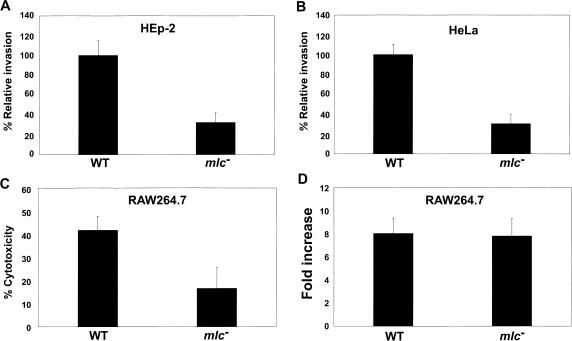
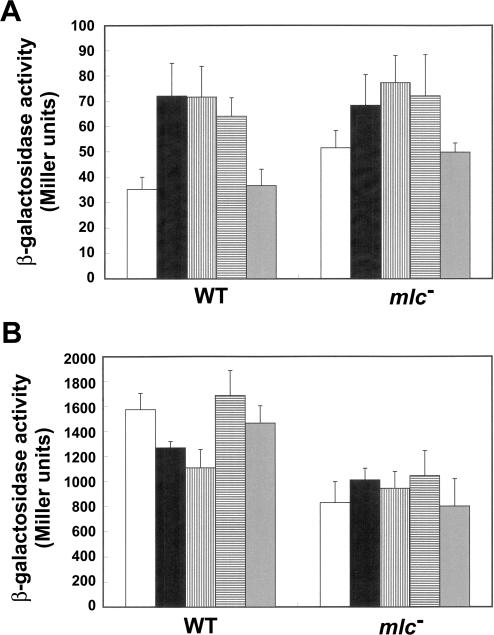
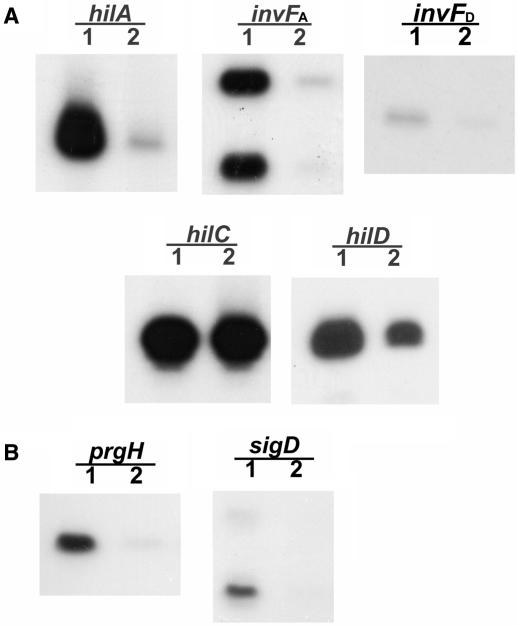
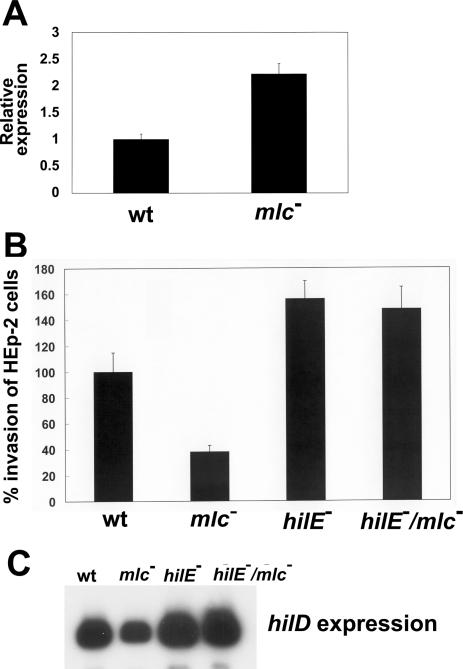
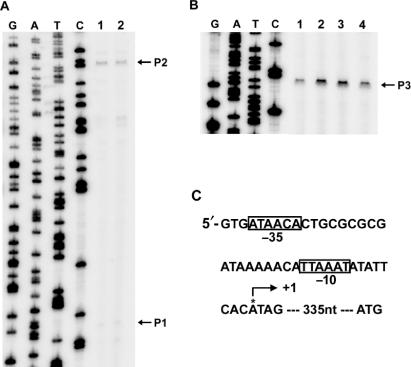
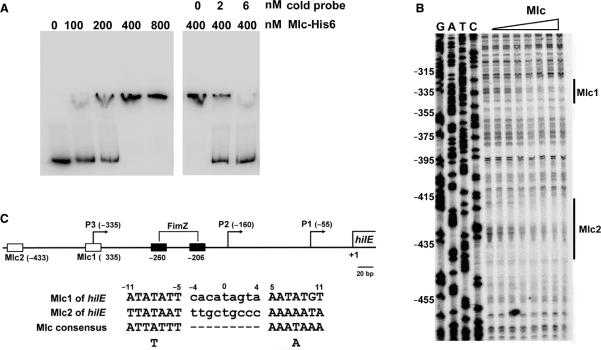
The global regulator Mlc is a repressor of several genes and operons that are involved in sugar uptake and metabolism. A Salmonella enterica serovar Typhimurium mlc mutant showed reduced levels of invasion and cytotoxicity compared to the wild-type, and exhibited reduced expression levels of hilD, hilA and invF, which are regulatory genes in the Salmonella pathogenicity island 1 (SPI1). However, the effects of Mlc on hilD expression and bacterial invasiveness were not seen in the hilE mutant, and hilE expression was increased in the mlc mutant, which suggests that Mlc exerts positive effects on the expression of SPI1 genes by reducing the expression of HilE, which is known to down-regulate the expression of SPI1 genes through direct interaction with HilD. We found that the two known promoters of hilE were not modulated by Mlc, and we identified a third promoter, designated P3, which was repressed by Mlc. The gel mobility shift assay and footprinting analysis revealed that Mlc repressed hilE in a direct manner by binding to two distinct sites in the hilE P3 promoter region. The specific down-regulation of hilD observed in the presence of Mlc regulon-inducible sugars, such as glucose and mannose, could not be detected in the mlc mutant. Based on these results, we propose that Mlc functions to sense the availability of sugars and is linked to virulence gene regulation by its ability to control hilE expression in Salmonella.
全局调节因子Mlc是多个参与糖摄取和代谢的基因及操纵子的阻遏物。与野生型相比,肠炎沙门氏菌鼠伤寒血清型mlc突变体的侵袭力和细胞毒性水平降低,且沙门氏菌致病岛1(SPI1)中的调控基因hilD、hilA和invF的表达水平也降低。然而,在hilE突变体中未观察到Mlc对hilD表达和细菌侵袭力的影响,且mlc突变体中hilE的表达增加,这表明Mlc通过降低HilE的表达对SPI1基因的表达发挥正向作用,已知HilE通过与HilD直接相互作用下调SPI1基因的表达。我们发现hilE的两个已知启动子不受Mlc调控,并且我们鉴定出第三个启动子,命名为P3,它受Mlc抑制。凝胶迁移率变动分析和足迹分析表明,Mlc通过结合hilE P3启动子区域的两个不同位点直接抑制hilE。在存在Mlc调控子诱导性糖(如葡萄糖和甘露糖)的情况下观察到的hilD的特异性下调在mlc突变体中未检测到。基于这些结果,我们提出Mlc的功能是感知糖的可用性,并通过其控制沙门氏菌中hilE表达的能力与毒力基因调控相关联。