Department of Chemical and Biomolecular Engineering, University of Illinois at Urbana-Champaign, 600 S. Mathews Ave, Urbana, IL, 61801, USA.
Department of Microbiology and Immunology, Faculty of Pharmacy, Helwan University - Ain Helwan, Helwan, 11795, Egypt.
BMC Microbiol. 2021 Feb 16;21(1):49. doi: 10.1186/s12866-021-02110-8.
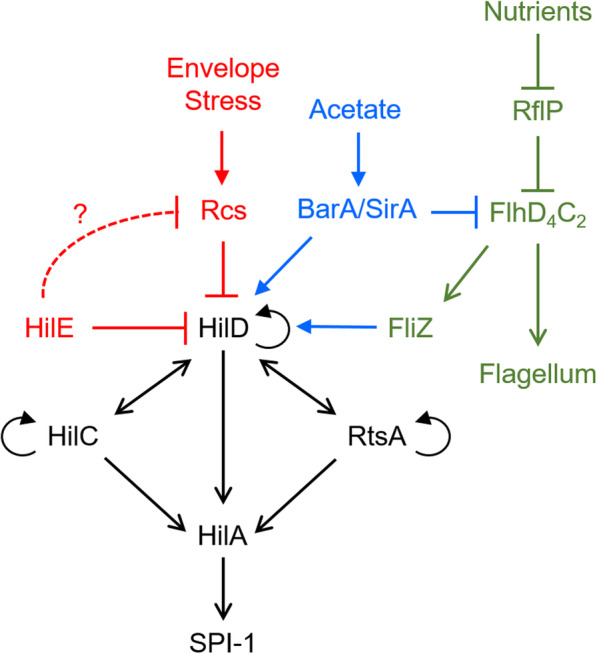
Salmonella enterica serovar Typhimurium is an intestinal pathogen capable of infecting a wide range of animals. It initiates infection by invading intestinal epithelial cells using a type III secretion system encoded within Salmonella pathogenicity island 1 (SPI-1). The SPI-1 genes are regulated by multiple interacting transcription factors. The master regulator is HilD. HilE represses SPI-1 gene expression by binding HilD and preventing it from activating its target promoters. Previous work found that acetate and nutrients synergistically induce SPI-1 gene expression. In the present study, we investigated the role of HilE, nominally a repressor of SPI-1 gene expression, in mediating this response to acetate and nutrients.
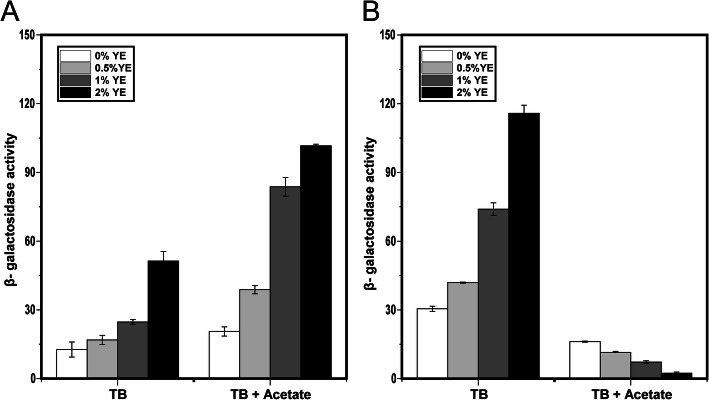
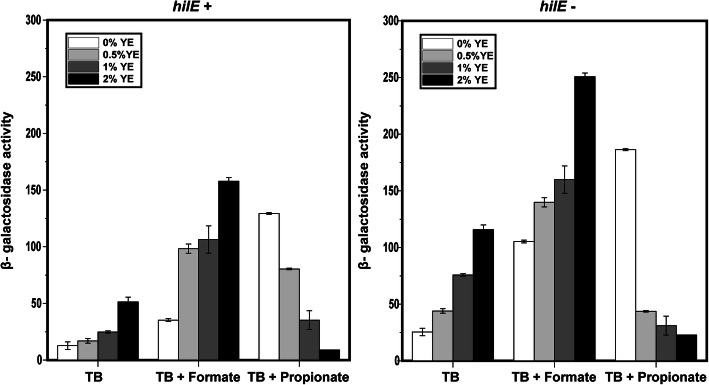
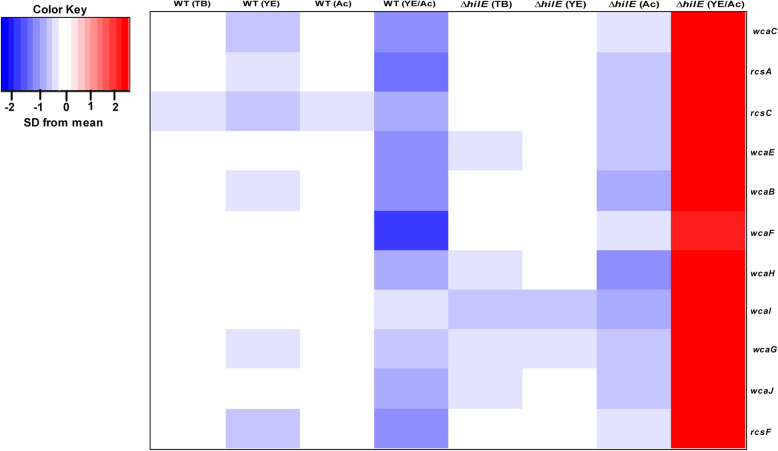
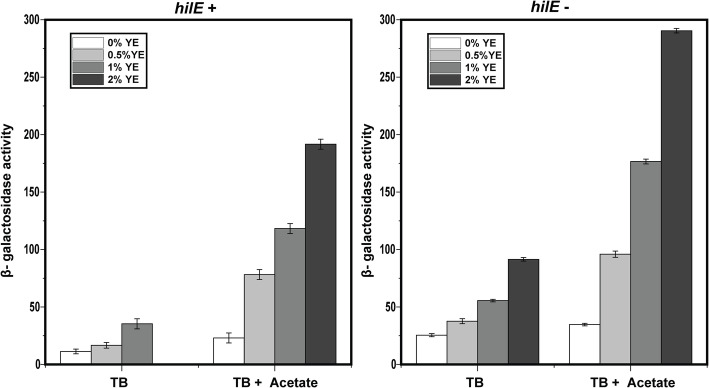
HilE is necessary for activation of SPI-1 gene expression by acetate and nutrients. In mutants lacking hilE, acetate and nutrients no longer increase SPI-1 gene expression but rather repress it. This puzzling response is not due to the BarA/SirA two component system, which governs the response to acetate. To identify the mechanism, we profiled gene expression using RNAseq in the wild type and a ΔhilE mutant under different growth conditions. Analysis of these data suggested that the Rcs system, which regulates gene expression in response to envelope stress, is involved. Consistent with this hypothesis, acetate and nutrients were able to induce SPI-1 gene expression in mutants lacking hilE and the Rcs system.
While the exact mechanism is unknown, these results demonstrate the HilE, nominally a repressor of SPI-1 gene expression, can also function as an activator under the growth conditions investigated. Collectively, these results provide new insights regarding SPI-1 gene regulation and demonstrate that HilE is more complex than initially envisioned.
肠炎沙门氏菌血清型鼠伤寒是一种能够感染多种动物的肠道病原体。它通过利用沙门氏菌致病岛 1(SPI-1)内编码的 III 型分泌系统侵入肠道上皮细胞来引发感染。SPI-1 基因受多个相互作用的转录因子调控。主调控因子是 HilD。HilE 通过结合 HilD 并阻止其激活靶启动子来抑制 SPI-1 基因表达。先前的工作发现,乙酸盐和营养物质协同诱导 SPI-1 基因表达。在本研究中,我们研究了 HilE(SPI-1 基因表达的名义抑制剂)在介导对乙酸盐和营养物质的这种反应中的作用。
HilE 对于乙酸盐和营养物质激活 SPI-1 基因表达是必要的。在缺乏 hilE 的突变体中,乙酸盐和营养物质不再增加 SPI-1 基因表达,而是抑制其表达。这种令人费解的反应不是由于调节对乙酸盐反应的 BarA/SirA 双组分系统引起的。为了确定机制,我们在不同的生长条件下使用 RNAseq 对野生型和Δ hilE 突变体进行了基因表达谱分析。对这些数据的分析表明,Rcs 系统(调节应对 envelope stress 的基因表达)参与其中。与该假设一致,乙酸盐和营养物质能够诱导缺乏 hilE 和 Rcs 系统的突变体中 SPI-1 基因的表达。
虽然确切的机制尚不清楚,但这些结果表明,在研究的生长条件下,名义上抑制 SPI-1 基因表达的 HilE 也可以作为激活剂发挥作用。这些结果共同提供了有关 SPI-1 基因调控的新见解,并表明 HilE 比最初想象的更为复杂。