Dietz Klaus, Raddatz Günter, Wallis Jonathan, Müller Norbert, Zerr Inga, Duerr Hans-Peter, Lefèvre Hans, Seifried Erhard, Löwer Johannes
University of Tübingen, Tübingen, Germany.
Emerg Infect Dis. 2007 Jan;13(1):89-96. doi: 10.3201/eid1301.060396.
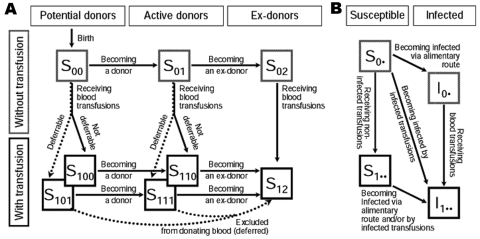
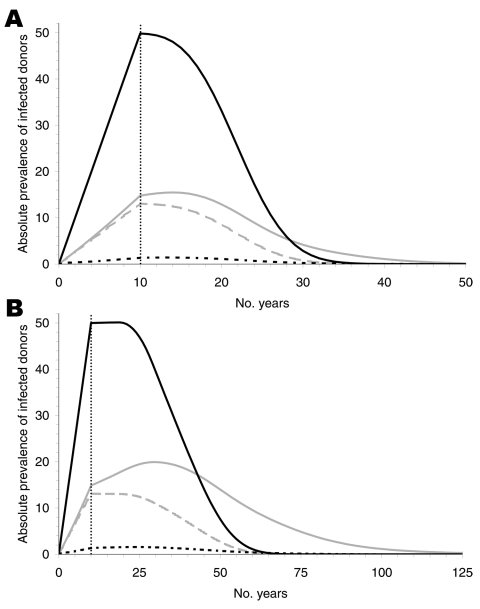
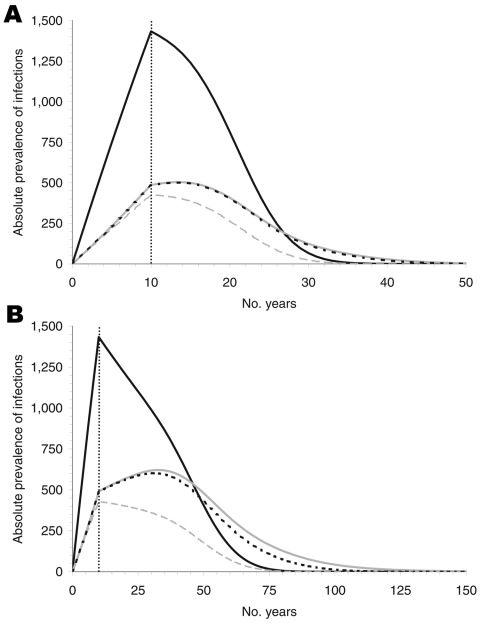
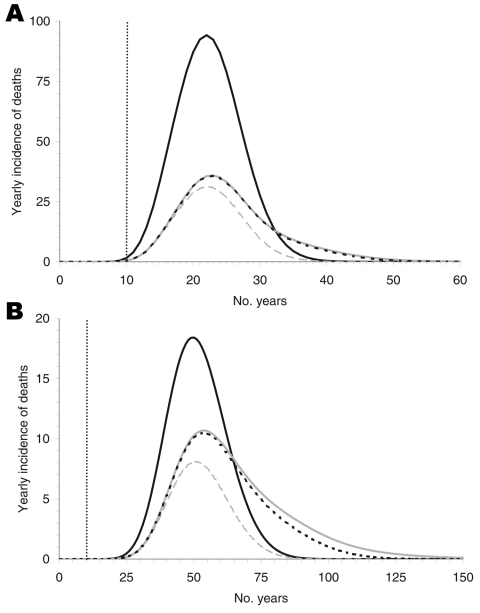
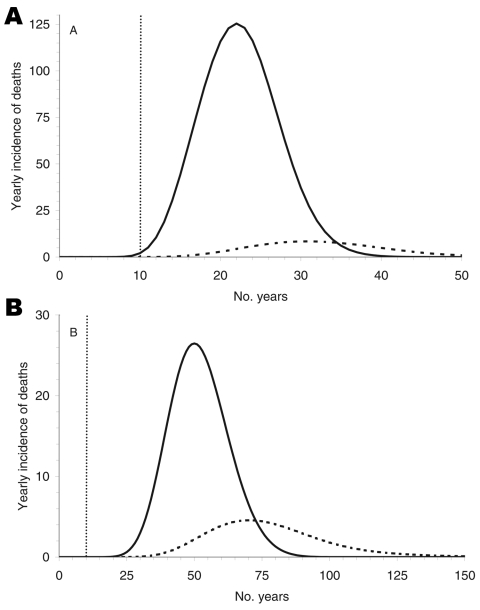
Variant Creutzfeldt-Jakob disease (vCJD) may be transmissible by blood. To prevent secondary transmission through blood components, several countries have started to exclude as donors persons who have received a blood transfusion. We investigated the effectiveness of this measure by using a dynamic age-structured model. It is the first such model based on epidemiologic data: 1) blood donor activities, 2) a case-control study on CJD, 3) age distribution of recipients, and 4) death of recipients of blood transfusions. The model predicts that an infection like vCJD, which has been introduced into the population by the alimentary route, could not become endemic by transfusion alone and that only <1% of cases would be avoided by excluding from blood donation those persons who have received a transfusion.
变异型克雅氏病(vCJD)可能通过血液传播。为防止通过血液成分进行二次传播,一些国家已开始将接受过输血的人排除在献血者之外。我们使用动态年龄结构模型研究了这一措施的有效性。这是首个基于以下流行病学数据的此类模型:1)献血者活动情况;2)克雅氏病病例对照研究;3)受血者年龄分布;4)输血受血者死亡情况。该模型预测,经消化道途径传入人群的类似vCJD的感染,仅通过输血无法成为地方病,并且通过将接受过输血的人排除在献血之外,仅可避免不到1%的病例。