Ranganathan Prathibha, Agrawal Animesh, Bhushan Raghu, Chavalmane Aravinda K, Kalathur Ravi Kiran Reddy, Takahashi Takashi, Kondaiah Paturu
Department of Molecular Reproduction, Development and Genetics, Indian Institute of Science, Bangalore, India.
BMC Genomics. 2007 Apr 11;8:98. doi: 10.1186/1471-2164-8-98.
TGF-beta is one of the key cytokines implicated in various disease processes including cancer. TGF-beta inhibits growth and promotes apoptosis in normal epithelial cells and in contrast, acts as a pro-tumour cytokine by promoting tumour angiogenesis, immune-escape and metastasis. It is not clear if various actions of TGF-beta on normal and tumour cells are due to differential gene regulations. Hence we studied the regulation of gene expression by TGF-beta in normal and cancer cells.
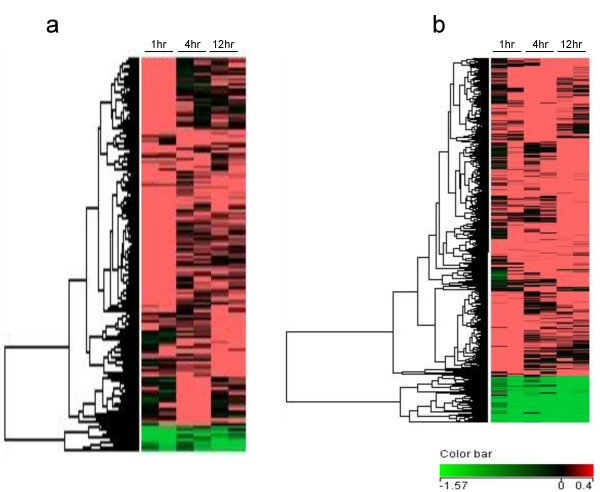
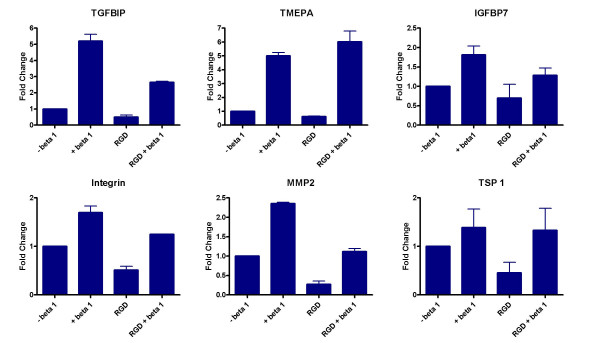
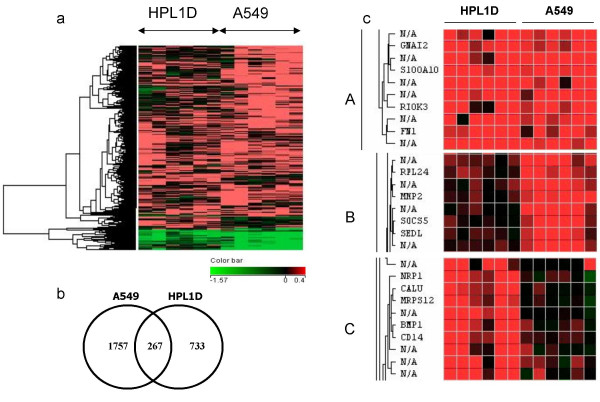
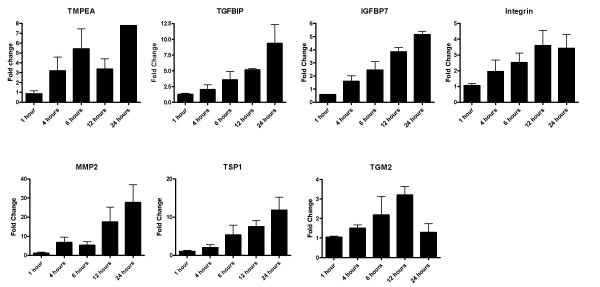
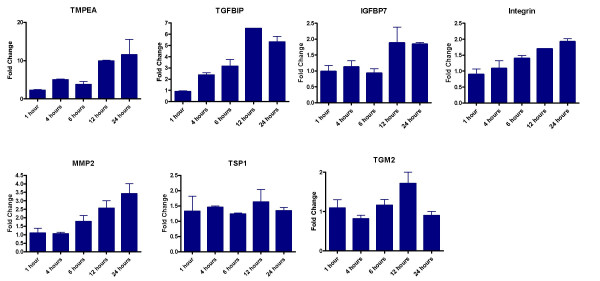
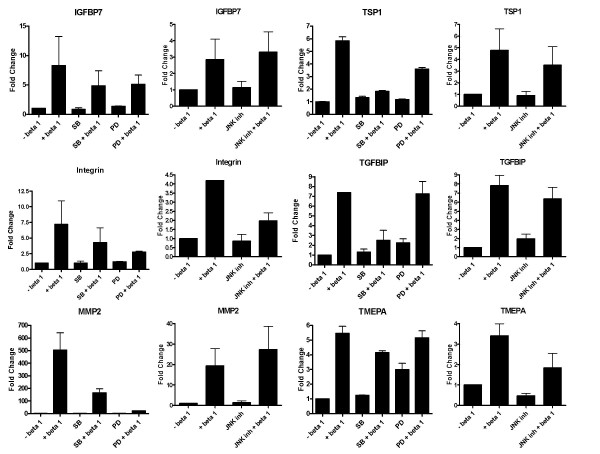
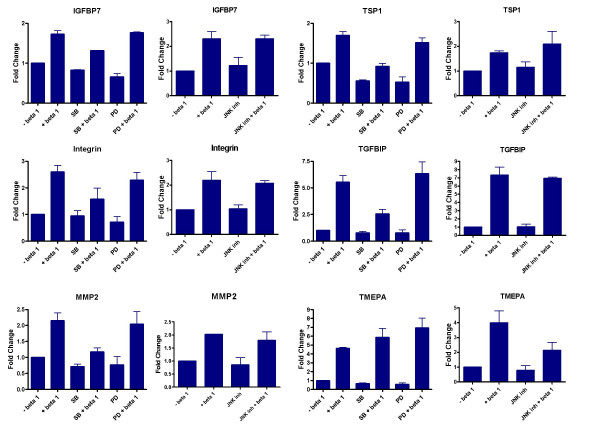
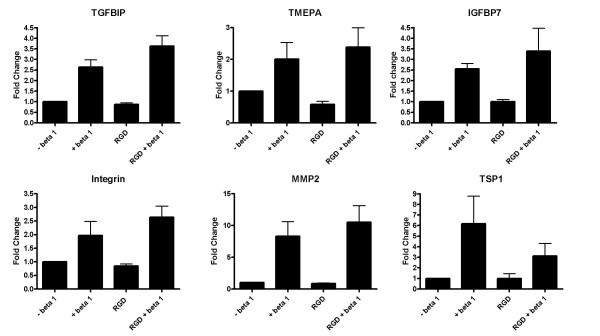
Using human 19 K cDNA microarrays, we show that 1757 genes are exclusively regulated by TGF-beta in A549 cells in contrast to 733 genes exclusively regulated in HPL1D cells. In addition, 267 genes are commonly regulated in both the cell-lines. Semi-quantitative and real-time qRT-PCR analysis of some genes agrees with the microarray data. In order to identify the signalling pathways that influence TGF-beta mediated gene regulation, we used specific inhibitors of p38 MAP kinase, ERK kinase, JNK kinase and integrin signalling pathways. The data suggest that regulation of majority of the selected genes is dependent on at least one of these pathways and this dependence is cell-type specific. Interestingly, an integrin pathway inhibitor, RGD peptide, significantly affected TGF-beta regulation of Thrombospondin 1 in A549 cells.
These data suggest major differences with respect to TGF-beta mediated gene regulation in normal and transformed cells and significant role of non-canonical TGF-beta pathways in the regulation of many genes by TGF-beta.
转化生长因子-β(TGF-β)是涉及包括癌症在内的多种疾病过程的关键细胞因子之一。TGF-β抑制正常上皮细胞的生长并促进其凋亡,相反,它通过促进肿瘤血管生成、免疫逃逸和转移而作为一种促肿瘤细胞因子。目前尚不清楚TGF-β对正常细胞和肿瘤细胞的各种作用是否归因于不同的基因调控。因此,我们研究了TGF-β在正常细胞和癌细胞中对基因表达的调控。
使用人类19K cDNA微阵列,我们发现与在HPL1D细胞中仅由TGF-β调控的733个基因相比,有1757个基因在A549细胞中仅受TGF-β调控。此外,有267个基因在两种细胞系中均受共同调控。对一些基因的半定量和实时定量逆转录-聚合酶链反应(qRT-PCR)分析与微阵列数据一致。为了确定影响TGF-β介导的基因调控的信号通路,我们使用了p38丝裂原活化蛋白激酶(MAP激酶)、细胞外信号调节激酶(ERK激酶)、应激活化蛋白激酶(JNK激酶)和整合素信号通路的特异性抑制剂。数据表明,大多数所选基因的调控依赖于这些通路中的至少一种,并且这种依赖性具有细胞类型特异性。有趣的是,一种整合素通路抑制剂RGD肽显著影响A549细胞中TGF-β对血小板反应蛋白1的调控。
这些数据表明在正常细胞和转化细胞中TGF-β介导的基因调控存在主要差异,并且非经典TGF-β通路在TGF-β对许多基因的调控中起重要作用。