Doss Michael Xavier, Winkler Johannes, Chen Shuhua, Hippler-Altenburg Rita, Sotiriadou Isaia, Halbach Marcel, Pfannkuche Kurt, Liang Huamin, Schulz Herbert, Hummel Oliver, Hübner Norbert, Rottscheidt Ruth, Hescheler Jürgen, Sachinidis Agapios
Center of Physiology and Pathophysiology, Institute of Neurophysiology, University of Cologne, Cologne, Germany.
Genome Biol. 2007;8(4):R56. doi: 10.1186/gb-2007-8-4-r56.
Characterization of gene expression signatures for cardiomyocytes derived from embryonic stem cells will help to define their early biologic processes.
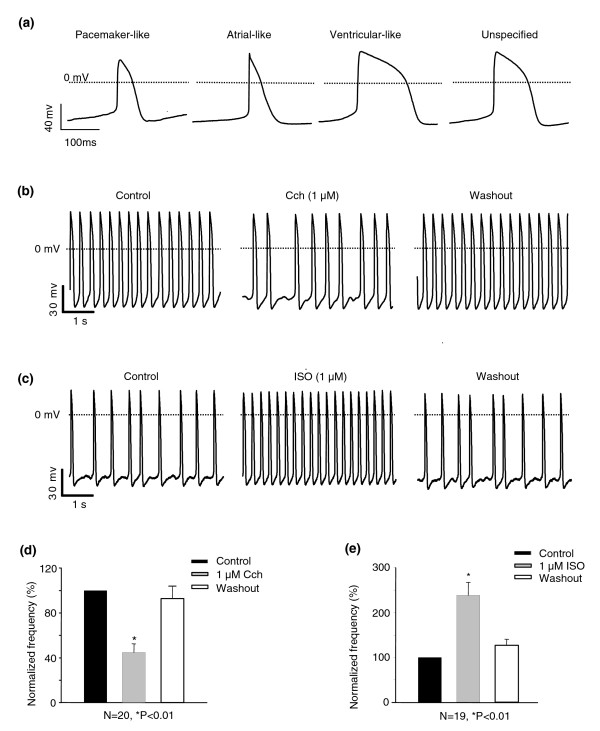
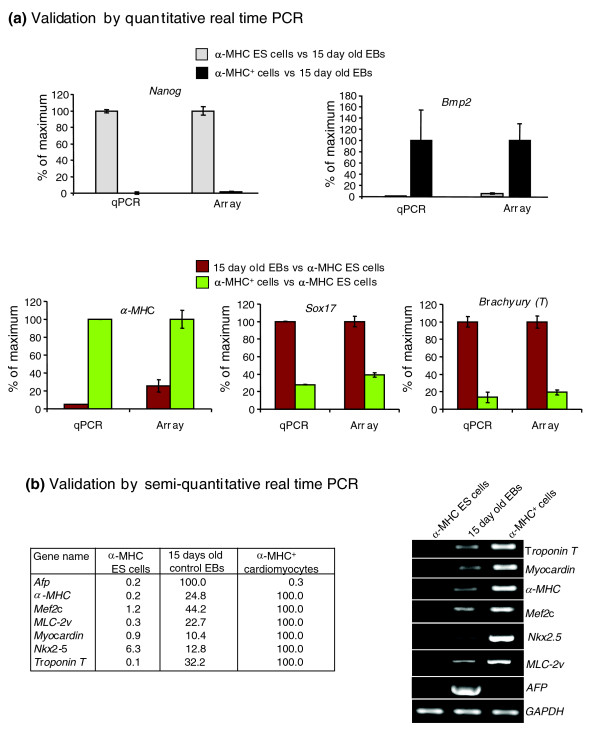
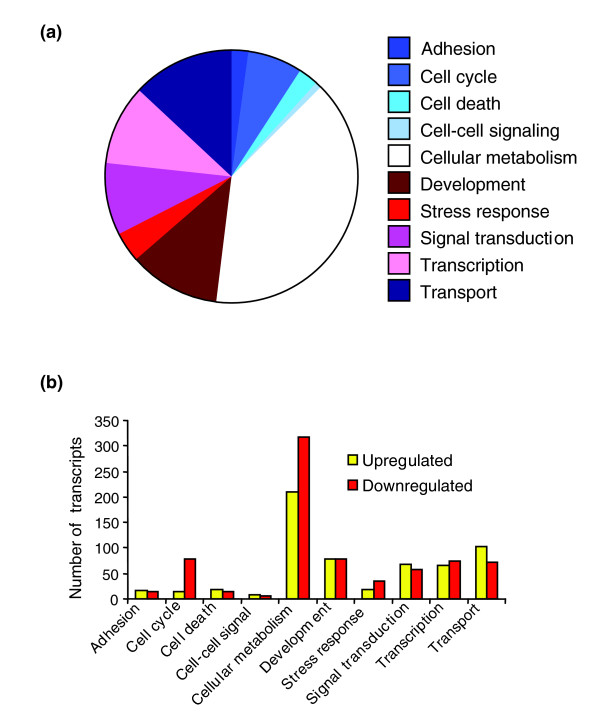
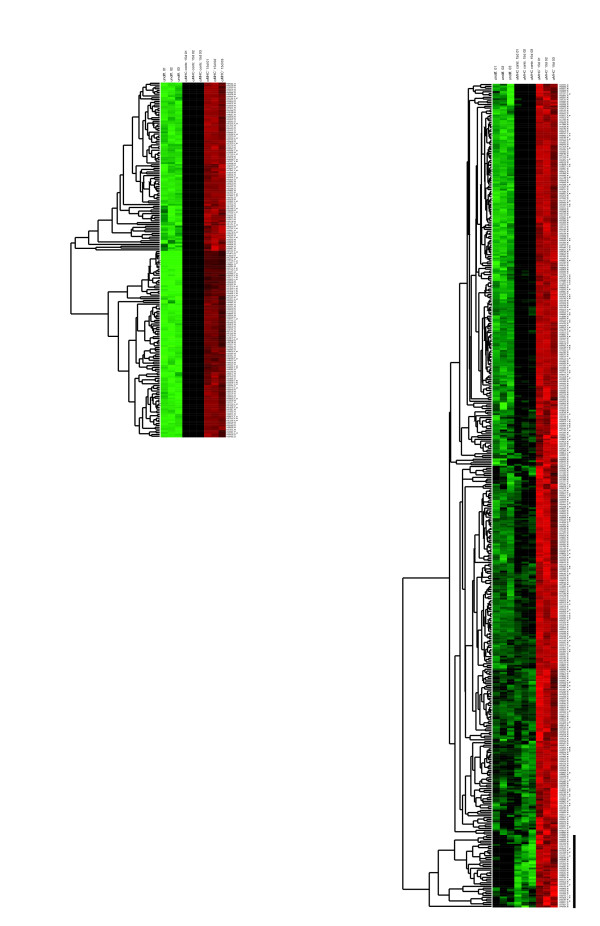
A transgenic alpha-myosin heavy chain (MHC) embryonic stem cell lineage was generated, exhibiting puromycin resistance and expressing enhanced green fluorescent protein (EGFP) under the control of the alpha-MHC promoter. A puromycin-resistant, EGFP-positive, alpha-MHC-positive cardiomyocyte population was isolated with over 92% purity. RNA was isolated after electrophysiological characterization of the cardiomyocytes. Comprehensive transcriptome analysis of alpha-MHC-positive cardiomyocytes in comparison with undifferentiated alpha-MHC embryonic stem cells and the control population from 15-day-old embryoid bodies led to identification of 884 upregulated probe sets and 951 downregulated probe sets in alpha-MHC-positive cardiomyocytes. A subset of upregulated genes encodes cytoskeletal and voltage-dependent channel proteins, and proteins that participate in aerobic energy metabolism. Interestingly, mitosis, apoptosis, and Wnt signaling-associated genes were downregulated in the cardiomyocytes. In contrast, annotations for genes upregulated in the alpha-MHC-positive cardiomyocytes are enriched for the following Gene Ontology (GO) categories: enzyme-linked receptor protein signaling pathway (GO:0007167), protein kinase activity (GO:0004672), negative regulation of Wnt receptor signaling pathway (GO:0030178), and regulation of cell size (O:0008361). They were also enriched for the Biocarta p38 mitogen-activated protein kinase signaling pathway and Kyoto Encyclopedia of Genes and Genomes (KEGG) calcium signaling pathway.
The specific pattern of gene expression in the cardiomyocytes derived from embryonic stem cells reflects the biologic, physiologic, and functional processes that take place in mature cardiomyocytes. Identification of cardiomyocyte-specific gene expression patterns and signaling pathways will contribute toward elucidating their roles in intact cardiac function.
对源自胚胎干细胞的心肌细胞的基因表达特征进行表征,将有助于明确其早期生物学过程。
构建了一个转基因α-肌球蛋白重链(MHC)胚胎干细胞系,该细胞系具有嘌呤霉素抗性,并在α-MHC启动子的控制下表达增强型绿色荧光蛋白(EGFP)。分离出了纯度超过92%的嘌呤霉素抗性、EGFP阳性、α-MHC阳性的心肌细胞群体。在对心肌细胞进行电生理表征后分离出RNA。将α-MHC阳性心肌细胞与未分化的α-MHC胚胎干细胞以及来自15天龄胚状体的对照群体进行综合转录组分析,结果在α-MHC阳性心肌细胞中鉴定出884个上调的探针集和951个下调的探针集。上调基因的一个子集编码细胞骨架和电压依赖性通道蛋白,以及参与有氧能量代谢的蛋白。有趣的是,有丝分裂、凋亡和Wnt信号相关基因在心肌细胞中下调。相比之下,α-MHC阳性心肌细胞中上调基因的注释在以下基因本体论(GO)类别中富集:酶联受体蛋白信号通路(GO:0007167)、蛋白激酶活性(GO:0004672)、Wnt受体信号通路的负调控(GO:0030178)以及细胞大小的调控(O:0008361)。它们还在Biocarta p38丝裂原活化蛋白激酶信号通路和京都基因与基因组百科全书(KEGG)钙信号通路中富集。
源自胚胎干细胞的心肌细胞中特定的基因表达模式反映了成熟心肌细胞中发生的生物学、生理学和功能过程。鉴定心肌细胞特异性基因表达模式和信号通路将有助于阐明它们在完整心脏功能中的作用。