Chang Wei-Tien, Shao Zuo-Hui, Yin Jun-Jie, Mehendale Sangeeta, Wang Chong-Zhi, Qin Yimin, Li Juan, Chen Wen-Jone, Chien Chiang-Ting, Becker Lance B, Vanden Hoek Terry L, Yuan Chun-Su
Emergency Resuscitation Center, Section of Emergency Medicine, Department of Medicine, University of Chicago, Chicago, IL 60637, USA, and Department of Emergency Medicine, National Taiwan University Hospital, Taipei, Taiwan, ROC.
Eur J Pharmacol. 2007 Jul 2;566(1-3):58-66. doi: 10.1016/j.ejphar.2007.03.037. Epub 2007 Mar 30.
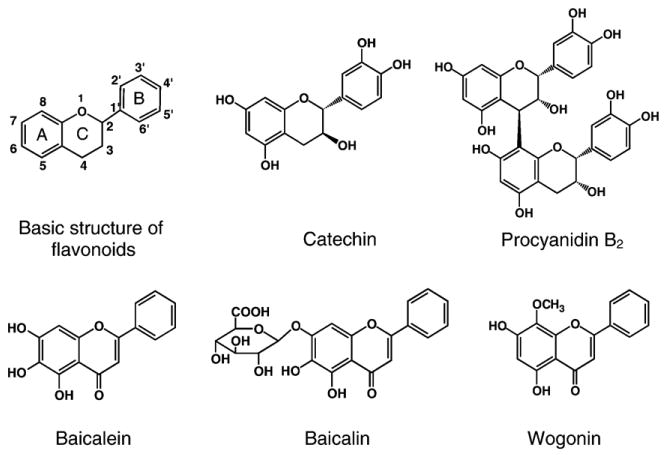
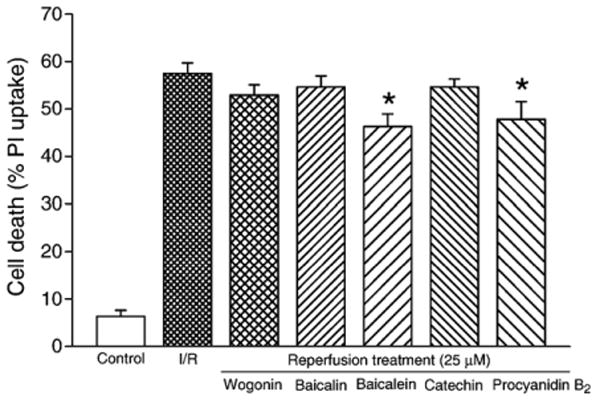
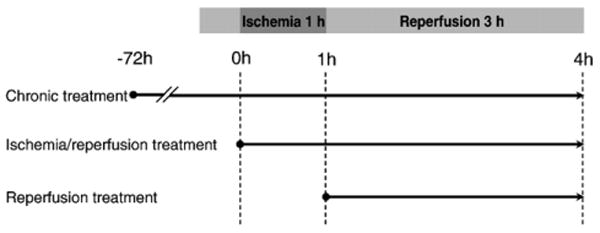
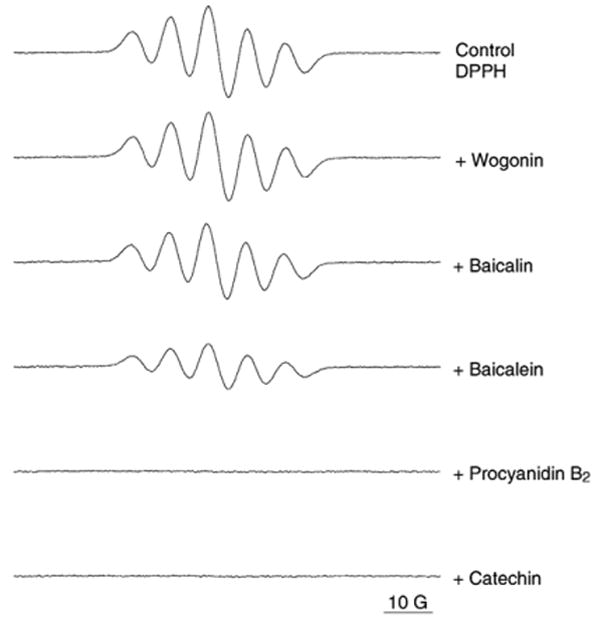
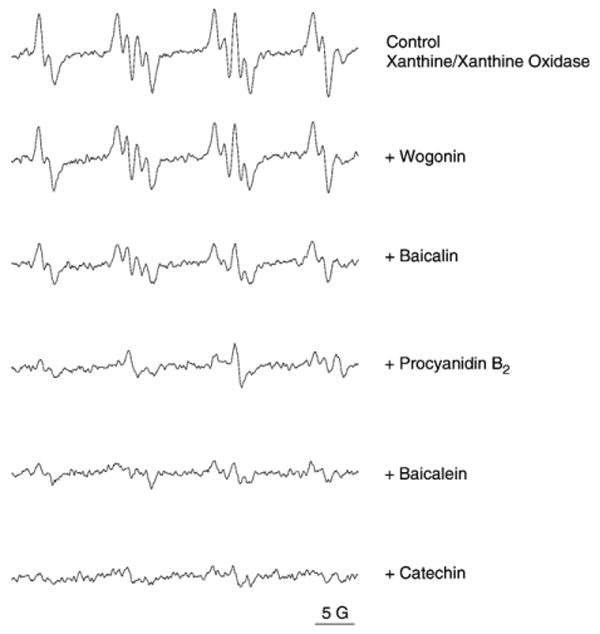
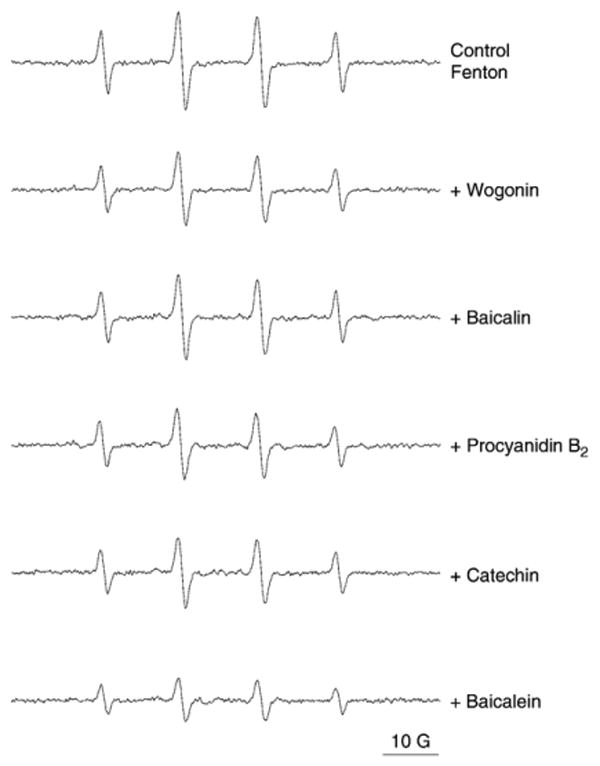
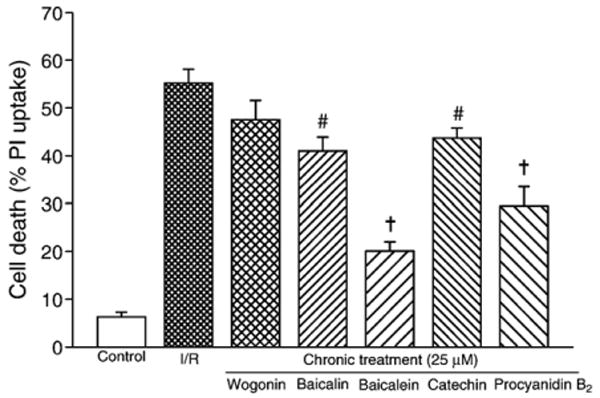
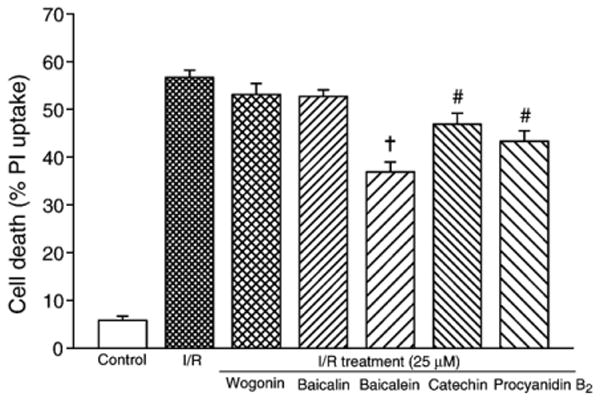
Since flavonoids scavenge reactive oxygen species, they may potentially protect against ischemia/reperfusion injury. This study compared the scavenging capacity of specific flavonoids towards different reactive oxygen species. Whether the differential oxidant scavenging capacity correlated with their protective efficacy in ischemia/reperfusion injury of cardiomyocytes was determined. The free radical scavenging capacity of five flavonoids (wogonin, baicalin, baicalein, catechin and procyanidin B2) was analyzed using electron spin resonance spectrometry for 3 radicals: 1,1-diphenyl-2picrylhydrazyl (DPPH), superoxide and hydroxyl radical. A well-established chick cardiomyocyte model of ischemia (1 h)/reperfusion (3 h) was used to evaluate flavonoid-induced protection against ischemia/reperfusion injury in chronic treatment (pretreated 72 h and treated through ischemia/reperfusion) and acute treatment protocols (during ischemia/reperfusion or only at reperfusion). The cell viability was assessed by propidium iodide. The DPPH scavenging was most significant with catechin, followed by procyanidin B2, baicalein, baicalin, and wogonin. The superoxide scavenging was, similarly, most significant with catechin, followed by baicalein, procyanidin B2, and baicalin. For hydroxyl radical, only baicalein showed a significant scavenging capacity (>50% reduction in ESR signal). For the cardiomyocyte studies, all flavonoids but wogonin showed protection against ischemia/reperfusion injury in the chronic treatment protocol. When flavonoids were administered only during ischemia/reperfusion, baicalein, procyanidin B2, and catechin significantly reduced cell death. If flavonoids were administered just at reperfusion, only baicalein and procyanidin B2 had protective effects, and the efficacy was less. Flavonoids possess specific but differential radical scavenging capacity, which, in conjunction with the timing of treatment, affects their protective efficacy in cardiomyocytes exposed to ischemia/reperfusion.
由于类黄酮可清除活性氧,它们可能具有预防缺血/再灌注损伤的潜力。本研究比较了特定类黄酮对不同活性氧的清除能力。确定了不同的抗氧化剂清除能力是否与其在心肌细胞缺血/再灌注损伤中的保护效果相关。使用电子自旋共振光谱法分析了五种类黄酮(汉黄芩素、黄芩苷、黄芩素、儿茶素和原花青素B2)对三种自由基的自由基清除能力:1,1-二苯基-2-苦基肼(DPPH)、超氧化物和羟基自由基。使用成熟的鸡心肌细胞缺血(1小时)/再灌注(3小时)模型,评估类黄酮在慢性治疗(预处理72小时并贯穿缺血/再灌注过程进行治疗)和急性治疗方案(在缺血/再灌注期间或仅在再灌注时)中对缺血/再灌注损伤的诱导保护作用。通过碘化丙啶评估细胞活力。儿茶素对DPPH的清除作用最为显著,其次是原花青素B2、黄芩素、黄芩苷和汉黄芩素。同样,儿茶素对超氧化物的清除作用最为显著,其次是黄芩素、原花青素B2和黄芩苷。对于羟基自由基,只有黄芩素显示出显著的清除能力(ESR信号降低>50%)。对于心肌细胞研究,除汉黄芩素外,所有类黄酮在慢性治疗方案中均显示出对缺血/再灌注损伤的保护作用。当类黄酮仅在缺血/再灌注期间给药时,黄芩素、原花青素B2和儿茶素显著降低细胞死亡。如果类黄酮仅在再灌注时给药,只有黄芩素和原花青素B2具有保护作用,且效果较差。类黄酮具有特定但不同的自由基清除能力,这与治疗时机相结合,会影响它们在遭受缺血/再灌注损伤的心肌细胞中的保护效果。