Lapadula Giuseppe, Izzo Ilaria, Costarelli Silvia, Cologni Giuliana, Bercich Luisa, Casari Salvatore, Gambarotti Marco, Torti Carlo
Institute of Infectious and Tropical Diseases, University of Brescia, Italy.
J Med Case Rep. 2007 May 8;1:19. doi: 10.1186/1752-1947-1-19.
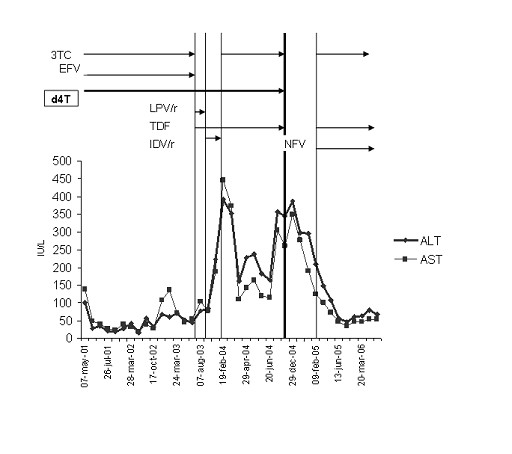
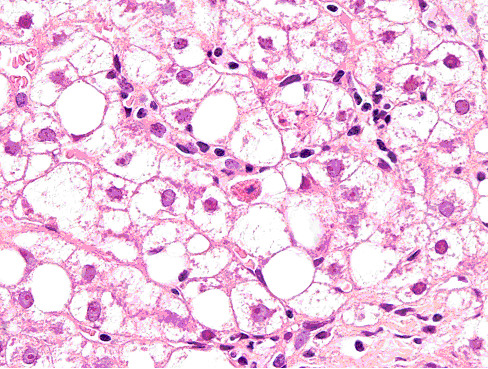
This report regards the case of a 43 year-old HIV-positive woman who developed an episode of serious transaminase elevation during stavudine-including antiretroviral therapy. Diagnostic assessment ruled out hepatitis virus co-infection, alcohol abuse besides other possible causes of liver damage. No signs of lactic acidosis were present. Liver biopsy showed portal inflammatory infiltrate, spotty necrosis, vacuoles of macro- and micro-vesicular steatosis, acidophil and foamy hepatocytes degeneration with organelles clumping, poorly formed Mallory bodies and neutrophil granulocytes attraction (satellitosis). A dramatic improvement in liver function tests occurred when stavudine was discontinued and a new antiretroviral regimen with different nucleoside reverse transcriptase inhibitors was used. The importance of considering hepatotoxicity as an adverse event of HAART including stavudine, even in absence of other signs of mitochondrial toxicity should therefore be underlined. Liver biopsy may provide further important information regarding patients with severe transaminase elevation, for a better understanding of the etiology of liver damage.
本报告涉及一名43岁的HIV阳性女性病例,该患者在接受包含司他夫定的抗逆转录病毒治疗期间出现了严重的转氨酶升高。诊断评估排除了肝炎病毒合并感染、酒精滥用以及其他可能导致肝损伤的原因。未出现乳酸酸中毒迹象。肝活检显示门脉炎性浸润、散在坏死、大小泡性脂肪变性空泡、嗜酸性和泡沫状肝细胞变性伴细胞器聚集、形成不良的马洛里小体以及中性粒细胞浸润(卫星现象)。停用司他夫定并使用含不同核苷类逆转录酶抑制剂的新抗逆转录病毒方案后,肝功能检查出现显著改善。因此,即使在没有其他线粒体毒性迹象的情况下,也应强调将肝毒性视为包括司他夫定在内的高效抗逆转录病毒治疗(HAART)不良事件的重要性。肝活检可为严重转氨酶升高的患者提供进一步重要信息,以更好地了解肝损伤的病因。