Hughes Cynthia L, Thomas John B
Molecular Neurobiology Laboratory, The Salk Institute, 10010 N. Torrey Pines Rd, La Jolla, CA 92037, USA.
Mol Cell Neurosci. 2007 Jun;35(2):383-96. doi: 10.1016/j.mcn.2007.04.001. Epub 2007 Apr 6.
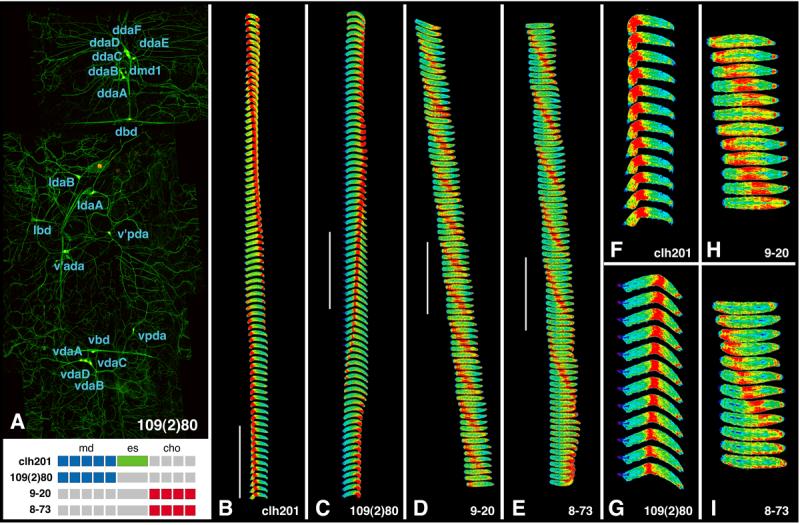
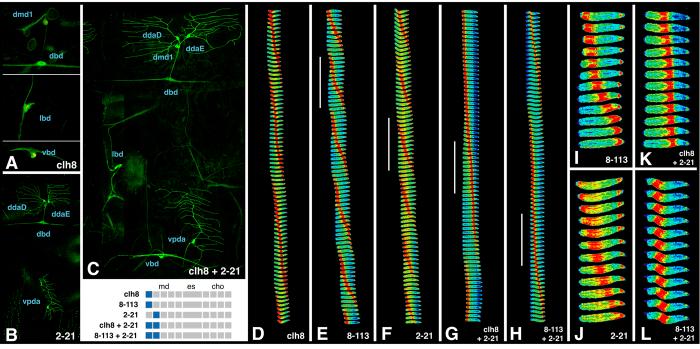
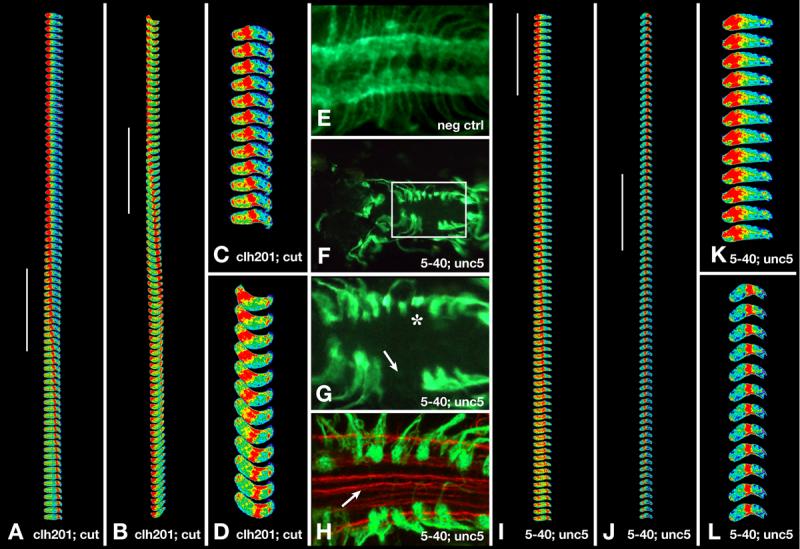
Drosophila larval crawling is a simple behavior that allows us to dissect the functions of specific neurons in the intact animal and explore the roles of genes in the specification of those neurons. By inhibiting subsets of neurons in the PNS, we have found that two classes of multidendritic neurons play a major role in larval crawling. The bipolar dendrites and class I mds send a feedback signal to the CNS that keeps the contraction wave progressing quickly, allowing smooth forward movement. Genetic manipulation of the sensory neurons suggests that this feedback depends on proper dendritic morphology and axon pathfinding to appropriate synaptic target areas in the CNS. Our data suggest that coordination of muscle activity in larval crawling requires feedback from neurons acting as proprioceptors, sending a "mission accomplished" signal in response to segment contraction, and resulting in rapid relaxation of the segment and propagation of the wave.
果蝇幼虫爬行是一种简单行为,它使我们能够剖析完整动物体内特定神经元的功能,并探索基因在这些神经元特化过程中的作用。通过抑制外周神经系统(PNS)中的神经元亚群,我们发现两类多树突神经元在幼虫爬行中起主要作用。双极树突和I类多树突神经元向中枢神经系统(CNS)发送反馈信号,使收缩波快速推进,从而实现平稳向前移动。对感觉神经元的基因操作表明,这种反馈依赖于适当的树突形态和轴突向中枢神经系统中适当突触靶区域的路径寻找。我们的数据表明,幼虫爬行中肌肉活动的协调需要来自充当本体感受器的神经元的反馈,这些神经元会在节段收缩时发送“任务完成”信号,从而导致节段快速松弛和波的传播。