Burghardt Nesha S, Bush David E A, McEwen Bruce S, LeDoux Joseph E
W M Keck Foundation Laboratory of Neurobiology, Center for Neural Science, New York University, New York 10032-2695, USA.
Biol Psychiatry. 2007 Nov 15;62(10):1111-8. doi: 10.1016/j.biopsych.2006.11.023. Epub 2007 May 23.
Selective serotonin reuptake inhibitors (SSRIs) effectively treat various anxiety disorders, although symptoms of anxiety are often exacerbated during early stages of treatment. We previously reported that acute treatment with the SSRI citalopram enhances the acquisition of auditory fear conditioning, which is consistent with the initial anxiogenic effects reported clinically. Here, we extend our findings by assessing the effects of acute SSRI treatment on the expression of previously acquired conditioned fear.
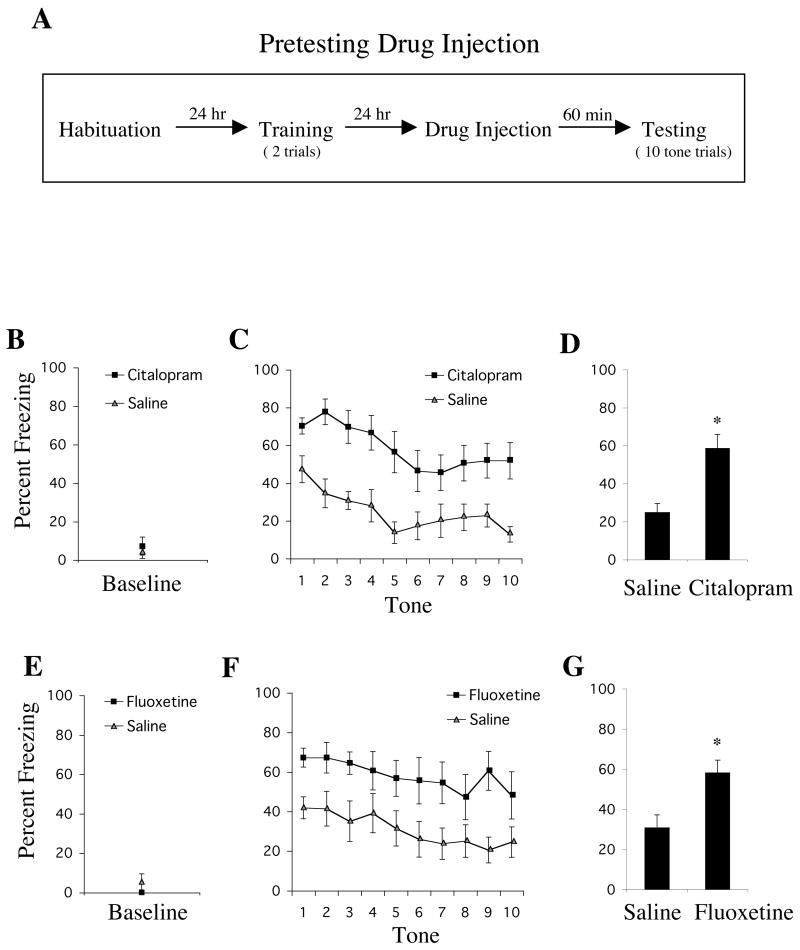
Rats underwent fear conditioning drug-free. Tone-evoked fear responses were tested after drug treatment the following day. This protocol more closely resembles the clinical setting than pre-conditioning treatment, because it evaluates effects of treatment on a pre-existing fear rather than on the formation of a new fear memory.
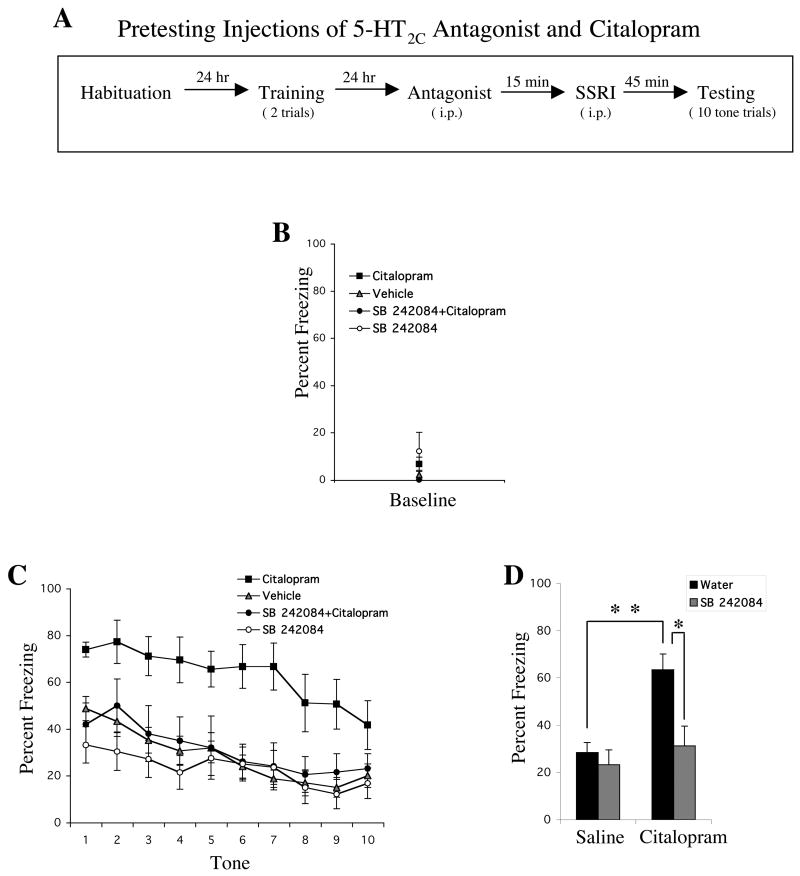
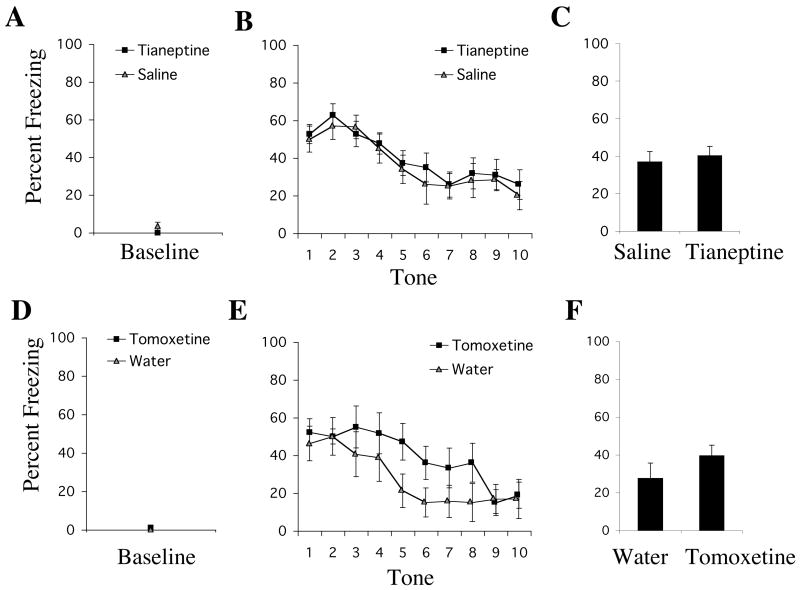
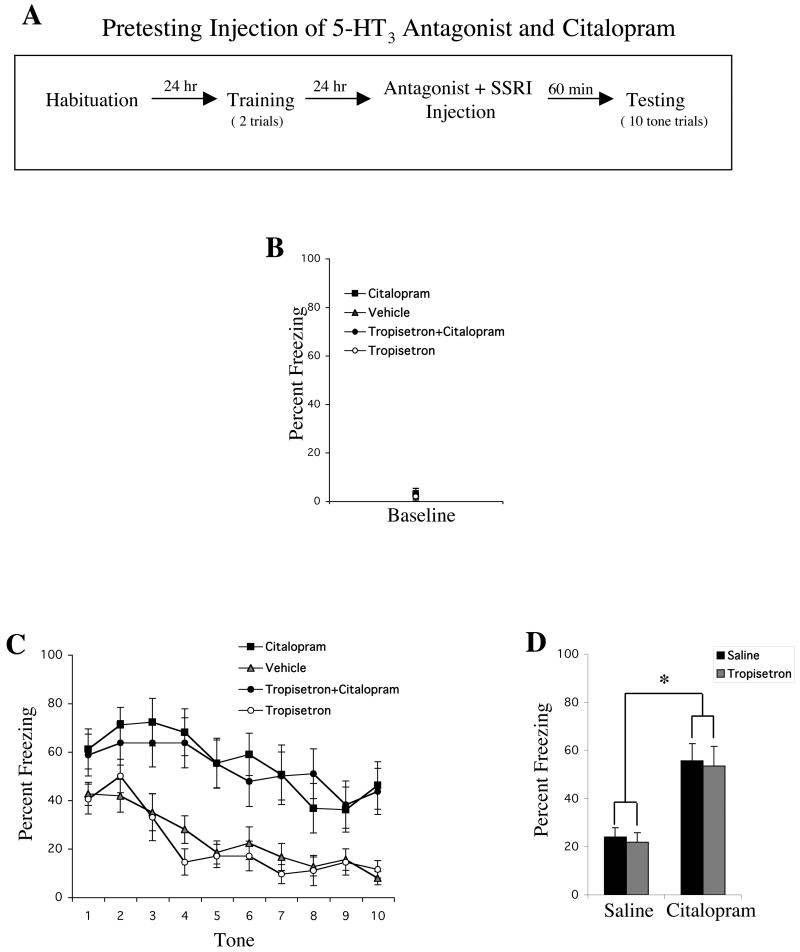
A single pre-testing injection of the SSRIs citalopram or fluoxetine significantly increased fear expression. There was no effect of the antidepressant tianeptine or the norepinephrine reuptake inhibitor tomoxetine, indicating that this effect is specific to SSRIs. The SSRI-induced enhancement in fear expression was not blocked by tropisetron, a 5-HT(3) receptor antagonist, but was blocked by SB 242084, a specific 5-HT(2C) receptor antagonist.
Enhanced activation of 5-HT(2C) receptors might be a mechanism for the anxiogenic effects of SSRIs observed initially during treatment.
选择性5-羟色胺再摄取抑制剂(SSRIs)能有效治疗各种焦虑症,尽管在治疗早期焦虑症状往往会加重。我们之前报道过,用SSRI西酞普兰进行急性治疗可增强听觉恐惧条件反射的获得,这与临床上最初报道的致焦虑效应一致。在此,我们通过评估急性SSRI治疗对先前获得的条件性恐惧表达的影响来扩展我们的研究结果。
大鼠在无药物情况下接受恐惧条件反射训练。次日药物治疗后测试纯音诱发的恐惧反应。该方案比预处理更接近临床情况,因为它评估的是治疗对已存在恐惧的影响,而非对新恐惧记忆形成的影响。
单次预测试注射SSRI西酞普兰或氟西汀可显著增加恐惧表达。抗抑郁药噻奈普汀或去甲肾上腺素再摄取抑制剂托莫西汀无此作用,表明这种效应是SSRI所特有的。SSRI诱导的恐惧表达增强未被5-HT(3)受体拮抗剂托烷司琼阻断,但被特异性5-HT(2C)受体拮抗剂SB 242084阻断。
5-HT(2C)受体的激活增强可能是治疗初期观察到的SSRI致焦虑效应的一种机制。