Chelysheva Liudmila, Gendrot Ghislaine, Vezon Daniel, Doutriaux Marie-Pascale, Mercier Raphaël, Grelon Mathilde
Institut Jean-Pierre Bourgin, INRA de Versailles, Station de Génétique et d'Amélioration des Plantes UR-254, France.
PLoS Genet. 2007 May 25;3(5):e83. doi: 10.1371/journal.pgen.0030083.
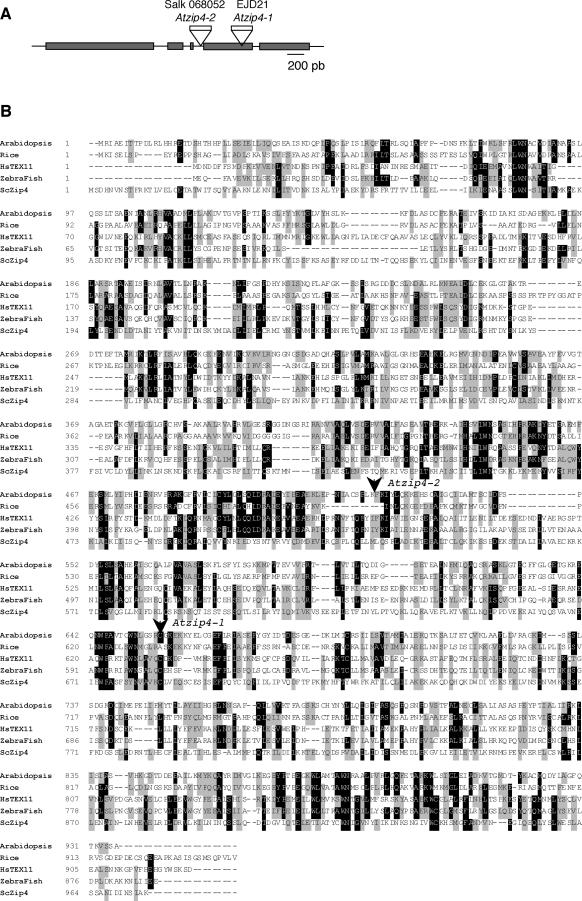
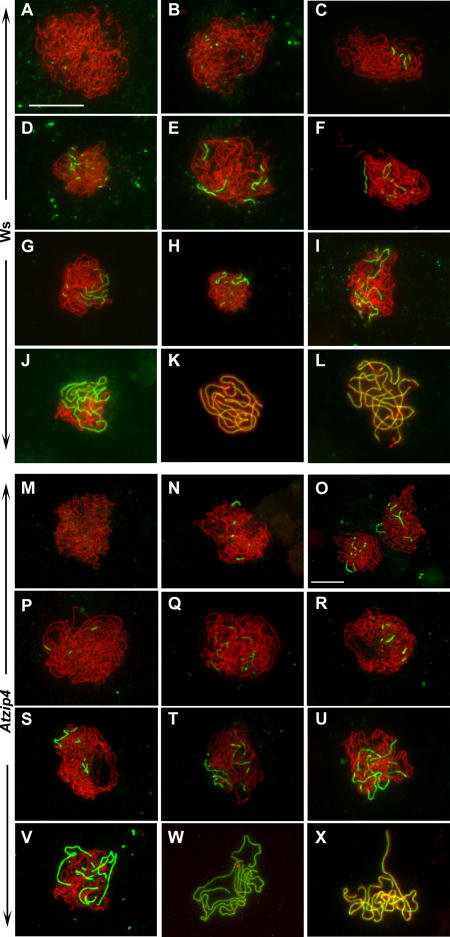
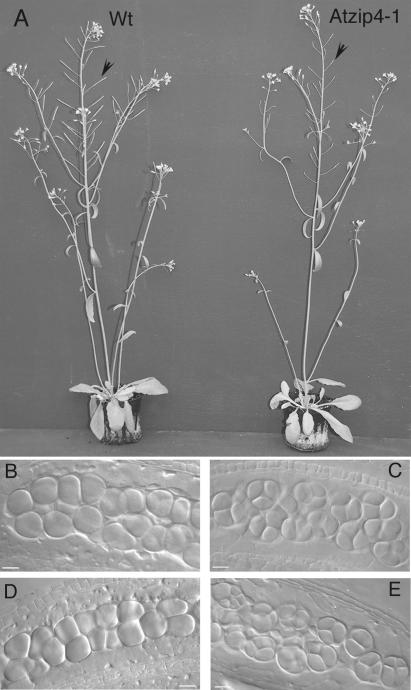
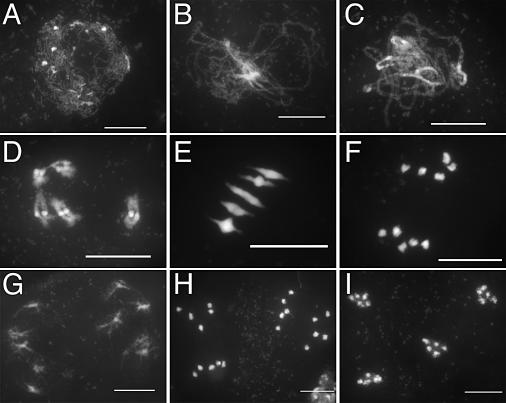
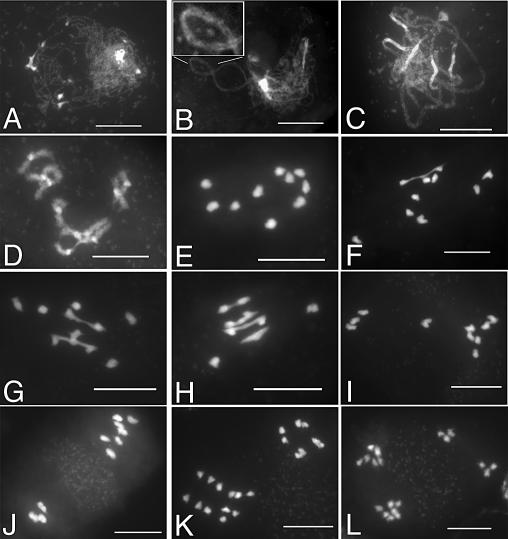
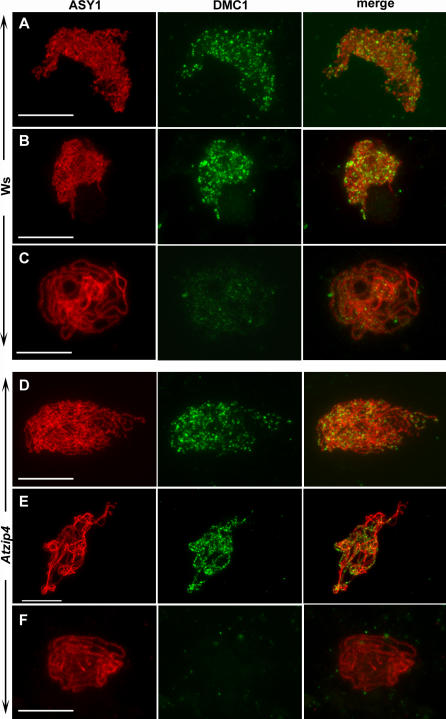
In budding yeast meiosis, the formation of class I interference-sensitive crossovers requires the ZMM proteins. These ZMM proteins are essential in forming a mature synaptonemal complex, and a subset of these (Zip2, Zip3, and Zip4) has been proposed to compose the core of synapsis initiation complexes (SICs). Zip4/Spo22 functions with Zip2 to promote polymerization of Zip1 along chromosomes, making it a crucial SIC component. In higher eukaryotes, synapsis and recombination have often been correlated, but it is totally unknown how these two processes are linked. In this study, we present the characterization of a higher eukaryote SIC component homologue: Arabidopsis AtZIP4. We show that mutations in AtZIP4 belong to the same epistasis group as Atmsh4 and eliminate approximately 85% of crossovers (COs). Furthermore, genetic analyses on two adjacent intervals of Chromosome I established that the remaining COs in Atzip4 do not show interference. Lastly, immunolocalization studies showed that polymerization of the central element of the synaptonemal complex is not affected in Atzip4 background, even if it may proceed from fewer sites compared to wild type. These results reveal that Zip4 function in class I CO formation is conserved from budding yeast to Arabidopsis. On the other hand, and contrary to the situation in yeast, mutation in AtZIP4 does not prevent synapsis, showing that both aspects of the Zip4 function (i.e., class I CO maturation and synapsis) can be uncoupled.
在出芽酵母减数分裂过程中,I类干涉敏感交叉的形成需要ZMM蛋白。这些ZMM蛋白对于形成成熟的联会复合体至关重要,其中一部分(Zip2、Zip3和Zip4)被认为构成了联会起始复合体(SIC)的核心。Zip4/Spo22与Zip2共同作用,促进Zip1沿染色体聚合,使其成为关键的SIC组分。在高等真核生物中,联会和重组常常相互关联,但这两个过程如何联系却完全未知。在本研究中,我们对一种高等真核生物SIC组分同源物进行了表征:拟南芥AtZIP4。我们发现AtZIP4中的突变与Atmsh4属于同一上位性组,并且消除了约85%的交叉(CO)。此外,对1号染色体两个相邻区间的遗传分析表明,Atzip4中剩余的CO不显示干涉。最后,免疫定位研究表明,即使与野生型相比,联会复合体中央元件的聚合可能从较少的位点开始,但在Atzip4背景下其聚合不受影响。这些结果表明,Zip4在I类CO形成中的功能从出芽酵母到拟南芥是保守的。另一方面,与酵母中的情况相反,AtZIP4中的突变并不阻止联会,这表明Zip4功能的两个方面(即I类CO成熟和联会)可以解偶联。