Spagnoli Anna, O'Rear Lynda, Chandler Ronald L, Granero-Molto Froilan, Mortlock Douglas P, Gorska Agnieszka E, Weis Jared A, Longobardi Lara, Chytil Anna, Shimer Kimberly, Moses Harold L
Department of Pediatrics, Vanderbilt University School of Medicine, Nashville, TN 37232, USA.
J Cell Biol. 2007 Jun 18;177(6):1105-17. doi: 10.1083/jcb.200611031.
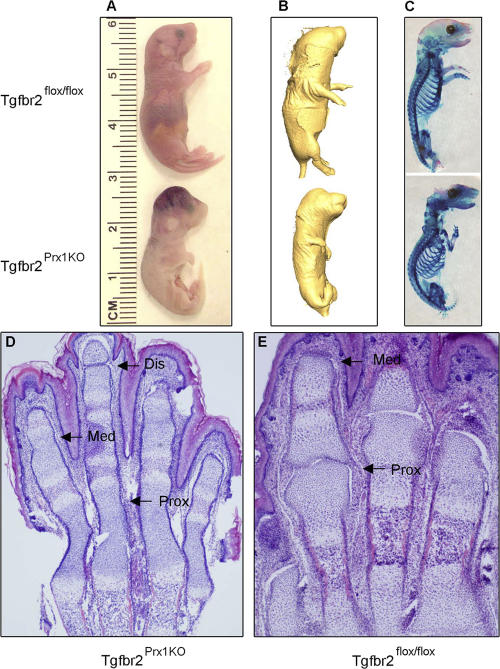
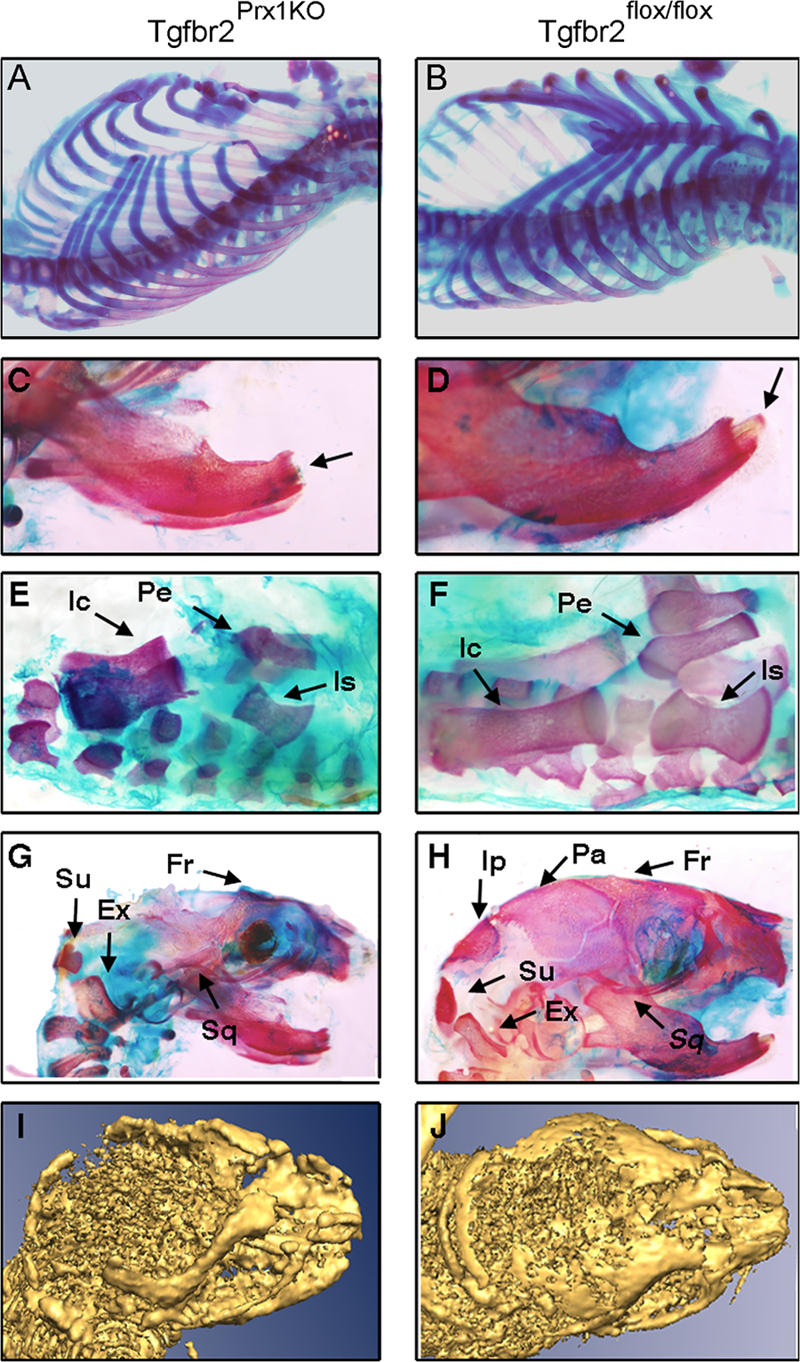
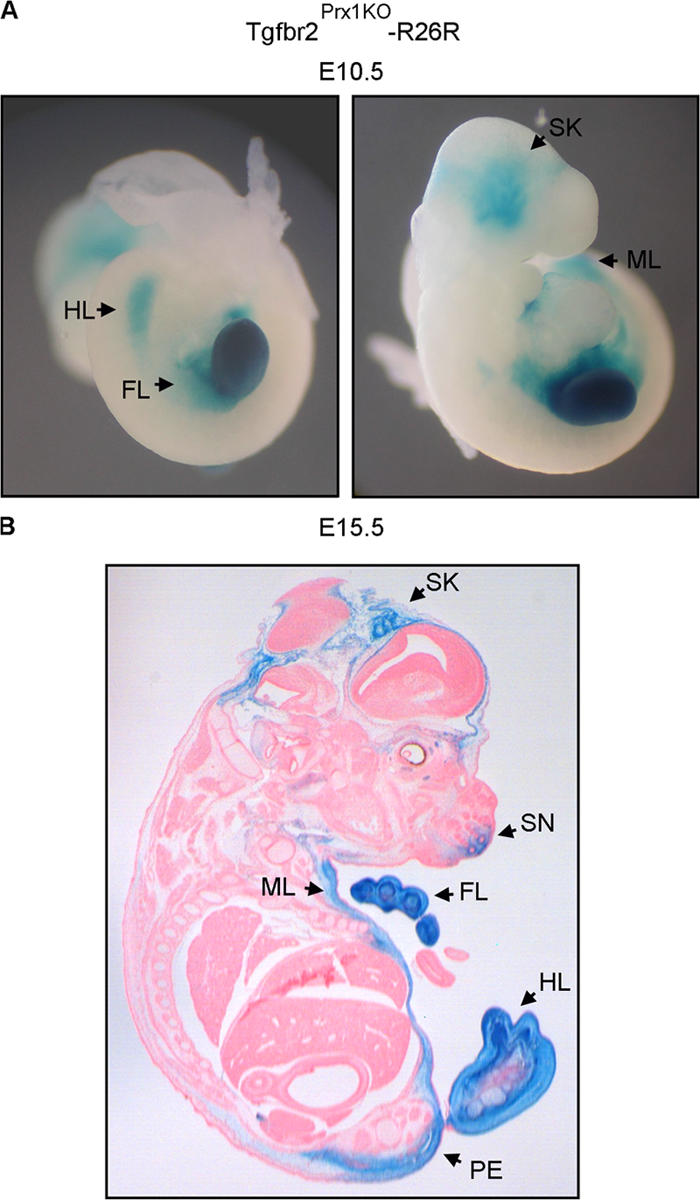
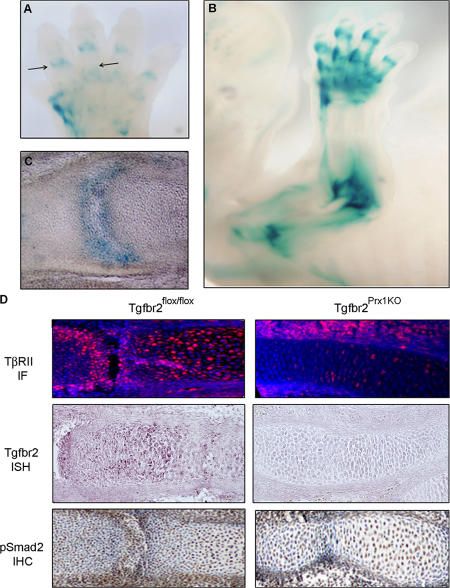
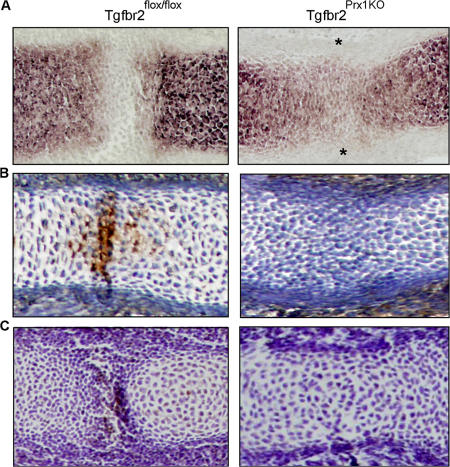
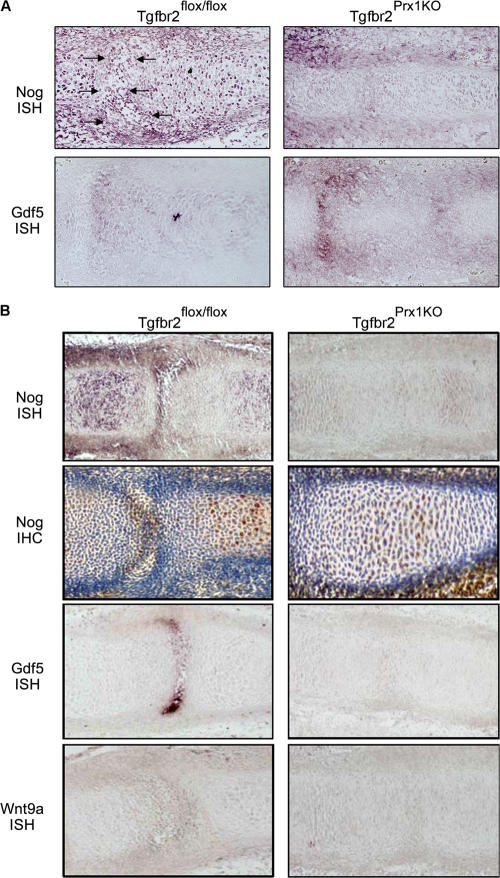
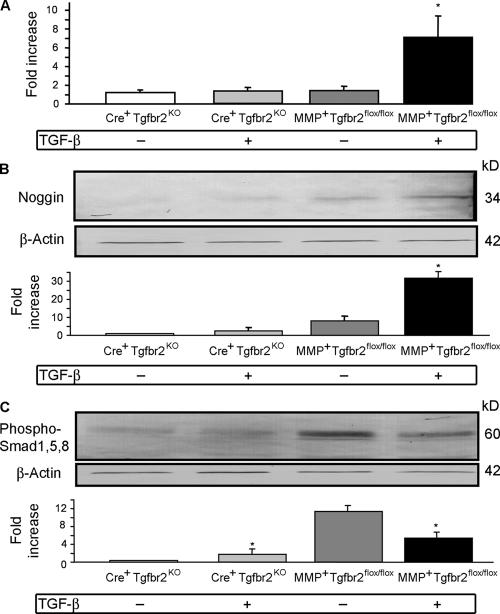
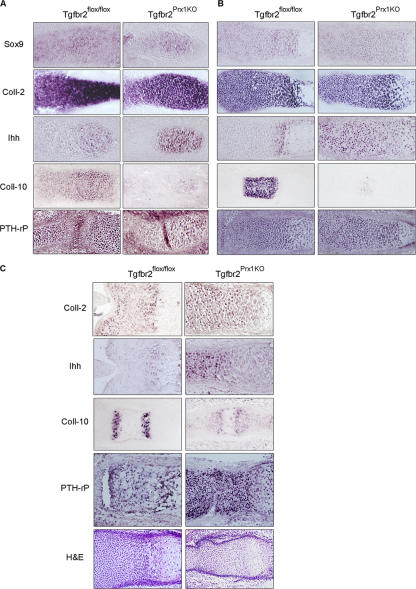
Despite its clinical significance, joint morphogenesis is still an obscure process. In this study, we determine the role of transforming growth factor beta (TGF-beta) signaling in mice lacking the TGF-beta type II receptor gene (Tgfbr2) in their limbs (Tgfbr2(PRX-1KO)). In Tgfbr2(PRX-1KO) mice, the loss of TGF-beta responsiveness resulted in the absence of interphalangeal joints. The Tgfbr2(Prx1KO) joint phenotype is similar to that in patients with symphalangism (SYM1-OMIM185800). By generating a Tgfbr2-green fluorescent protein-beta-GEO-bacterial artificial chromosome beta-galactosidase reporter transgenic mouse and by in situ hybridization and immunofluorescence, we determined that Tgfbr2 is highly and specifically expressed in developing joints. We demonstrated that in Tgfbr2(PRX-1KO) mice, the failure of joint interzone development resulted from an aberrant persistence of differentiated chondrocytes and failure of Jagged-1 expression. We found that TGF-beta receptor II signaling regulates Noggin, Wnt9a, and growth and differentiation factor-5 joint morphogenic gene expressions. In Tgfbr2(PRX-1KO) growth plates adjacent to interphalangeal joints, Indian hedgehog expression is increased, whereas Collagen 10 expression decreased. We propose a model for joint development in which TGF-beta signaling represents a means of entry to initiate the process.
尽管关节形态发生具有临床意义,但其仍然是一个模糊不清的过程。在本研究中,我们确定了转化生长因子β(TGF-β)信号通路在四肢缺乏TGF-β II型受体基因(Tgfbr2)的小鼠(Tgfbr2(PRX-1KO))中的作用。在Tgfbr2(PRX-1KO)小鼠中,TGF-β反应性的丧失导致指间关节缺失。Tgfbr2(Prx1KO)的关节表型与并指畸形患者(SYM1-OMIM185800)相似。通过构建Tgfbr2-绿色荧光蛋白-β-GEO-细菌人工染色体-β-半乳糖苷酶报告基因转基因小鼠,并进行原位杂交和免疫荧光实验,我们确定Tgfbr2在发育中的关节中高度特异性表达。我们证明,在Tgfbr2(PRX-1KO)小鼠中,关节中间带发育失败是由于分化软骨细胞异常持续存在以及Jagged-1表达失败所致。我们发现TGF-β受体II信号通路调节Noggin、Wnt9a以及生长和分化因子-5等关节形态发生基因的表达。在与指间关节相邻的Tgfbr2(PRX-1KO)生长板中,印度刺猬蛋白表达增加,而胶原蛋白10表达减少。我们提出了一个关节发育模型,其中TGF-β信号通路是启动该过程的一种途径。