Astrøm Anne N, Kida Irene A
Centre for international health, UoB, Bergen, Norway.
BMC Oral Health. 2007 Jul 11;7:9. doi: 10.1186/1472-6831-7-9.
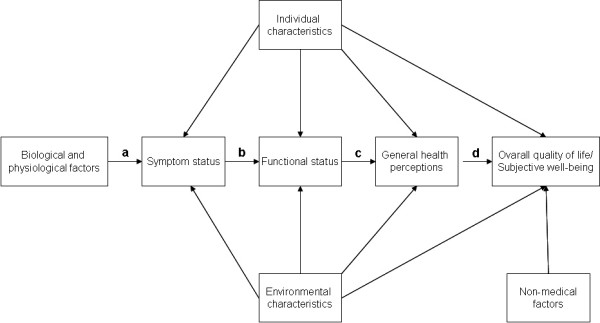
Need perceptions for dental care play a key role as to whether people in general will seek dental care. The aim was to assess the prevalence of perceived need of problem based dental care, dental check-ups and any type of dental care. Guided by the conceptual model of Wilson and Cleary, the relationship of perceived need for dental care with socio-demographic characteristics, clinically defined dental problems and self-reported oral health outcomes was investigated. Partial prosthetic treatment need was estimated using a socio-dental approach.
A cross-sectional survey was conducted in Pwani region and in Dar es Salaam in 2004/2005. Information from interviews and clinical examination became available for 511 urban and 520 rural adults (mean age 62.9 yr).
51.7% (95% CI 46.2, 57.0) urban and 62.5 % (95% CI 53.1, 70.9) rural inhabitants confirmed need for dental check-up, 42.9% (95% CI 36.9, 48.9) urban and 52.7% (95% CI 44.5, 60.6) rural subjects confirmed need for problem oriented care and 38.4% (95% CI 32.4, 44.6) urban versus 49.6% (95% CI 41.8, 57.4) rural residents reported need for any type of dental care. Binary and ordinal multiple logistic regression analyses revealed that adults who reported bad oral health and broken teeth were more likely to perceive need for dental care across the three outcome measures than their counterparts. Socio-demographic factors and clinically defined problems had less impact. Based on a normative and an integrated socio-dental approach respectively 39.5% and 4.7% were in need for partial dentures.
About half of the participants confirmed need for problem oriented care, dental check-ups and any type of dental care. Need perceptions were influenced by perceived oral health, clinically assessed oral problems and socio-demographic characteristics. Need estimates for partial denture was higher when based on clinical examination alone compared to an integrative socio-dental approach.
对牙科护理的需求认知对于人们是否会寻求牙科护理起着关键作用。本研究旨在评估基于问题的牙科护理、牙科检查以及任何类型牙科护理的需求认知患病率。以威尔逊和克利里的概念模型为指导,研究了牙科护理需求认知与社会人口学特征、临床定义的牙科问题以及自我报告的口腔健康结果之间的关系。使用社会牙科方法估计局部义齿治疗需求。
2004/2005年在滨海地区和达累斯萨拉姆进行了一项横断面调查。来自访谈和临床检查的信息可得511名城市和520名农村成年人(平均年龄62.9岁)。
51.7%(95%可信区间46.2, 57.0)的城市居民和62.5%(95%可信区间53.1, 70.9)的农村居民确认需要牙科检查,42.9%(95%可信区间36.9, 48.9)的城市居民和52.7%(95%可信区间44.5, 60.6)的农村居民确认需要针对问题的护理,38.4%(95%可信区间32.4, 44.6)的城市居民与49.6%(95%可信区间41.8, 57.4)的农村居民报告需要任何类型的牙科护理。二元和有序多因素逻辑回归分析显示,报告口腔健康差和牙齿破损的成年人在这三项结果指标上比同龄人更有可能认为需要牙科护理。社会人口学因素和临床定义的问题影响较小。分别基于规范和综合社会牙科方法,39.5%和4.7%的人需要局部义齿。
约一半的参与者确认需要针对问题的护理、牙科检查以及任何类型的牙科护理。需求认知受感知的口腔健康、临床评估的口腔问题和社会人口学特征影响。与综合社会牙科方法相比,仅基于临床检查时局部义齿的需求估计更高。