Abu-Amer Yousef, Darwech Isra, Clohisy John C
Department of Orthopaedic Surgery and Department of Cell Biology & Physiology, Washington University School of Medicine, Barnes Hospital Plaza, Saint Louis, Missouri 63110, USA.
Arthritis Res Ther. 2007;9 Suppl 1(Suppl 1):S6. doi: 10.1186/ar2170.
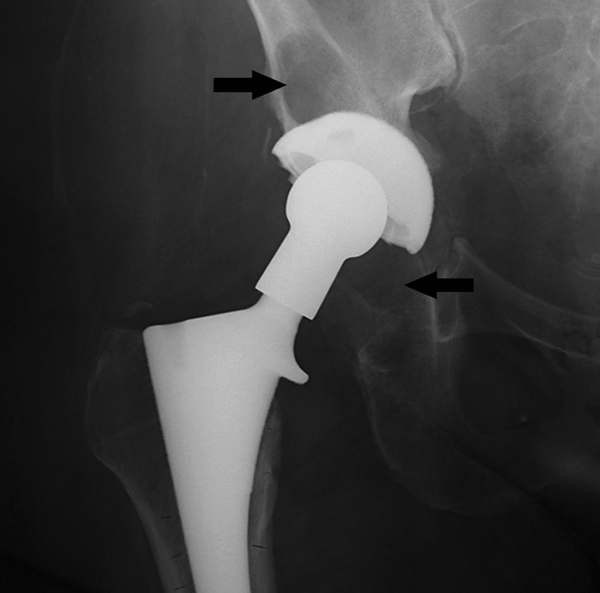
Total joint replacement, although considered an excellent surgical procedure, can be complicated by osteolysis induced by implant particles and subsequent aseptic loosening of the implant. The pathogenesis of implant-associated osteolysis includes inflammatory and osteolytic processes. The sustained chronic inflammatory response initiated by particulate debris at the implant-bone interface is manifested by recruitment of a wide array of cell types. These cells include macrophages, fibroblasts, giant cells, neutrophils, lymphocytes, and--most importantly--osteoclasts, which are the principal bone resorbing cells. The 'cellular response' entails secretion of osteoclastogenic and inflammatory cytokines that favor exacerbated osteoclast activity and enhanced osteolysis. An appreciation of the complex network that leads to these cellular and inflammatory responses will form a foundation on which to develop therapeutic interventions to combat inflammatory periprosthetic bone loss.
全关节置换术虽然被认为是一种出色的外科手术,但可能会因植入物颗粒引起的骨溶解以及随后植入物的无菌性松动而变得复杂。植入物相关骨溶解的发病机制包括炎症和骨溶解过程。由植入物 - 骨界面处的颗粒碎片引发的持续慢性炎症反应表现为多种细胞类型的募集。这些细胞包括巨噬细胞、成纤维细胞、巨细胞、中性粒细胞、淋巴细胞,以及 - 最重要的 - 破骨细胞,它们是主要的骨吸收细胞。“细胞反应”需要分泌破骨细胞生成和炎症细胞因子,这些因子有利于加剧破骨细胞活性和增强骨溶解。了解导致这些细胞和炎症反应的复杂网络将为开发治疗干预措施以对抗假体周围炎性骨质流失奠定基础。