Department of Animal and Plant Sciences, University of Sheffield, Sheffield, United Kingdom.
PLoS One. 2007 Jul 18;2(7):e624. doi: 10.1371/journal.pone.0000624.
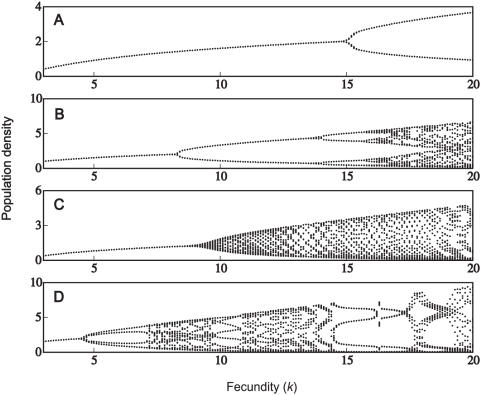
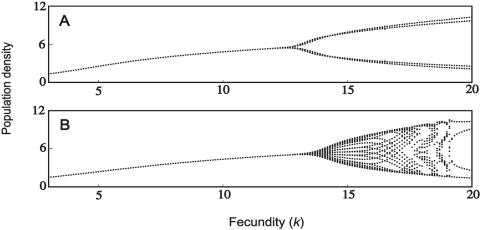
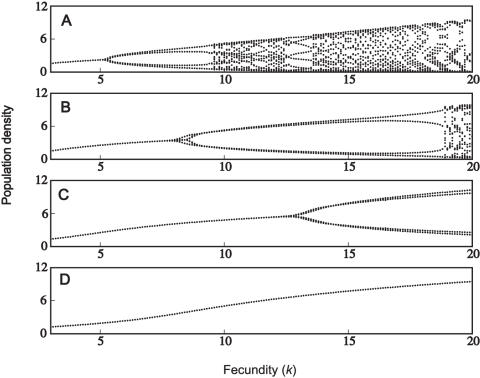
Although there is growing evidence that males tend to suffer higher levels of parasitism than females, the implications of this for the population dynamics of the host population are not yet understood. Here we build on an established 'two-sex' model and investigate how increased susceptibility to infection in males affects the dynamics, under different mating systems. We investigate the effect of pathogenic disease at different case mortalities, under both monogamous and polygynous mating systems. If the case mortality is low, then male-biased parasitism appears similar to unbiased parasitism in terms of its effect on the population dynamics. At higher case mortalities, we identified significant differences between male-biased and unbiased parasitism. A host population may therefore be differentially affected by male-biased and unbiased parasitism. The dynamical outcome is likely to depend on a complex interaction between the host's mating system and demography, and the parasite virulence.
尽管越来越多的证据表明男性比女性更容易受到寄生虫的侵害,但这对宿主种群的种群动态意味着什么尚不清楚。在这里,我们基于一个既定的“两性”模型,研究了在不同的交配系统下,男性对感染的易感性增加如何影响动态。我们在一夫一妻制和一夫多妻制交配系统下,调查了不同病例死亡率下病原性病的影响。如果病例死亡率较低,那么雄性偏向的寄生虫感染在对种群动态的影响方面与无偏向的寄生虫感染相似。在更高的病例死亡率下,我们发现雄性偏向和无偏向的寄生虫感染之间存在显著差异。因此,宿主种群可能会受到雄性偏向和无偏向的寄生虫感染的不同影响。动力学结果可能取决于宿主的交配系统和人口统计学以及寄生虫毒力之间的复杂相互作用。