Sandur Santosh K, Ichikawa Haruyo, Pandey Manoj K, Kunnumakkara Ajaikumar B, Sung Bokyung, Sethi Gautam, Aggarwal Bharat B
Cytokine Research Laboratory, Department of Experimental Therapeutics, Box 143, The University of Texas M. D. Anderson Cancer Center, Houston, TX 77030, USA.
Free Radic Biol Med. 2007 Aug 15;43(4):568-80. doi: 10.1016/j.freeradbiomed.2007.05.009. Epub 2007 May 16.
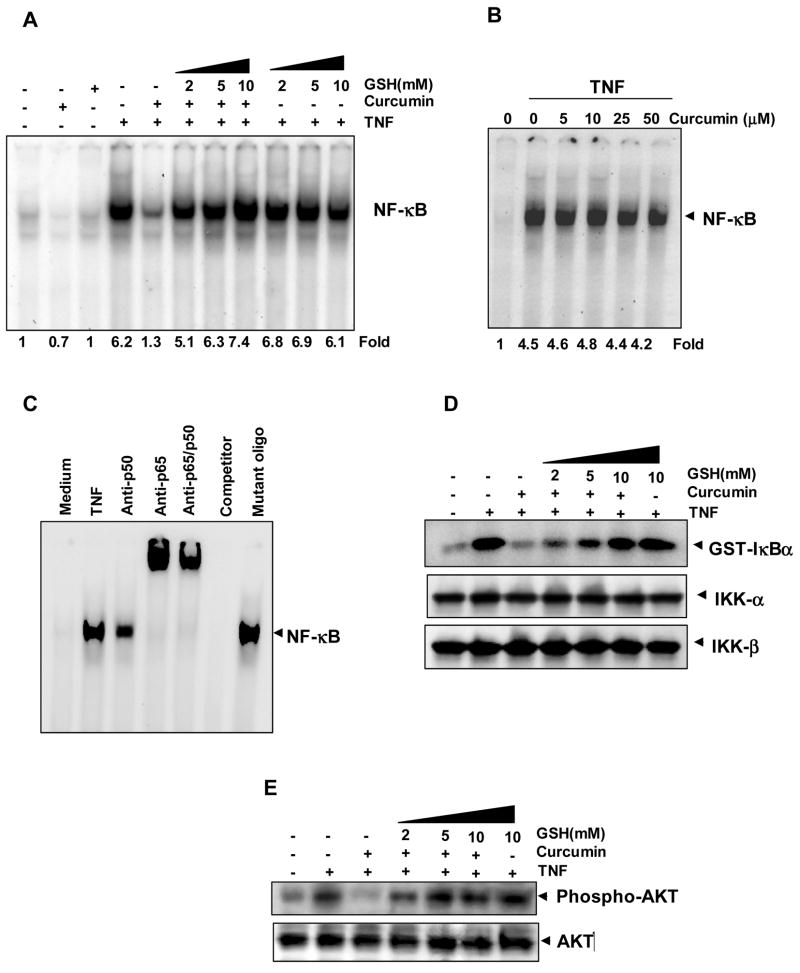
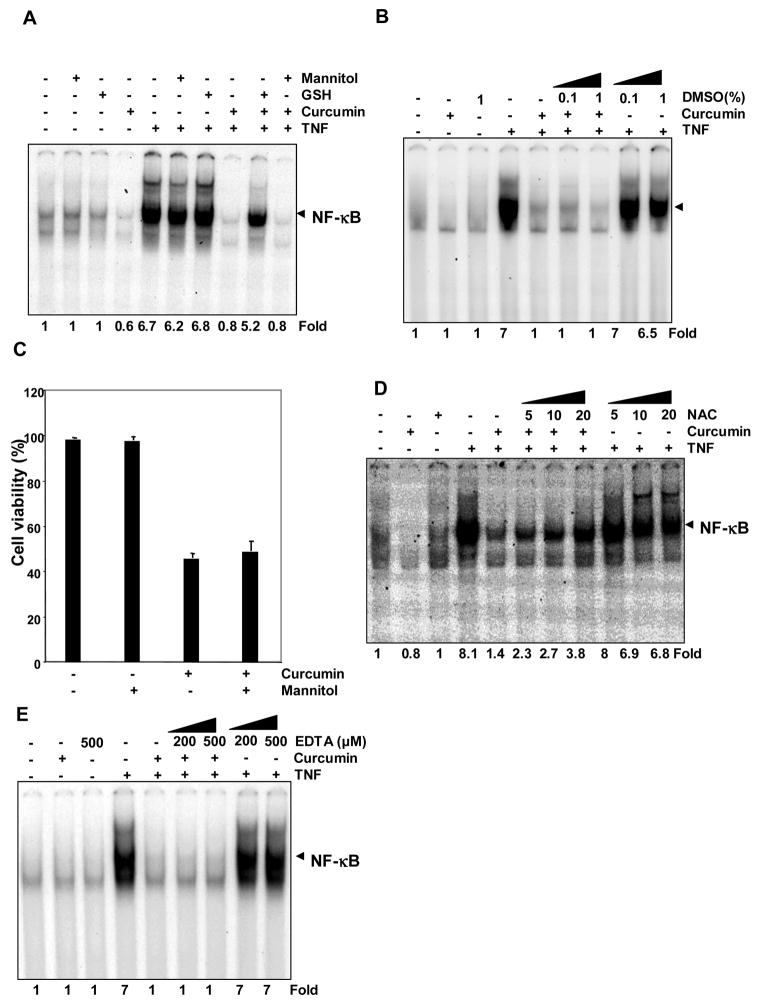
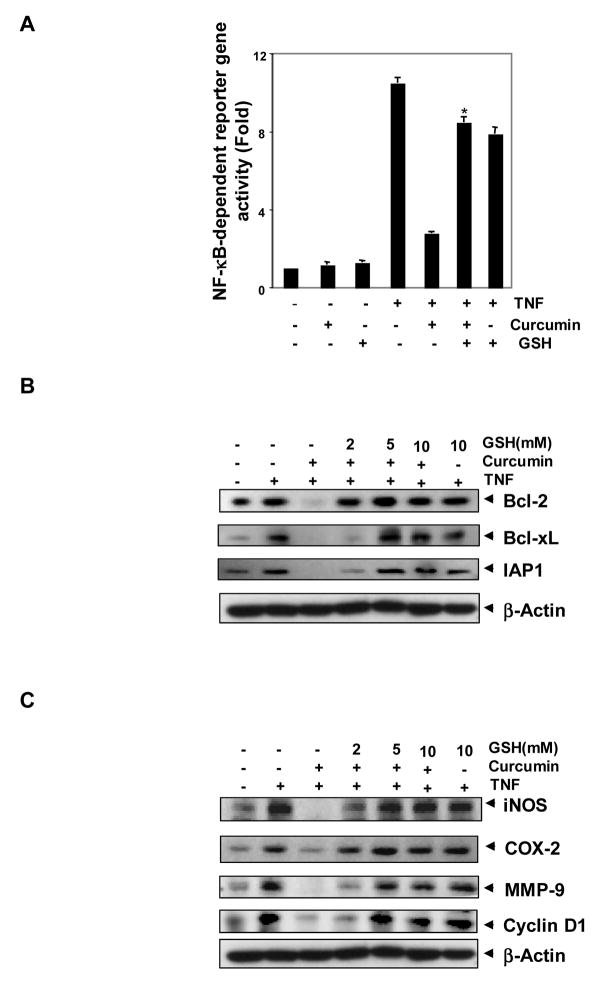
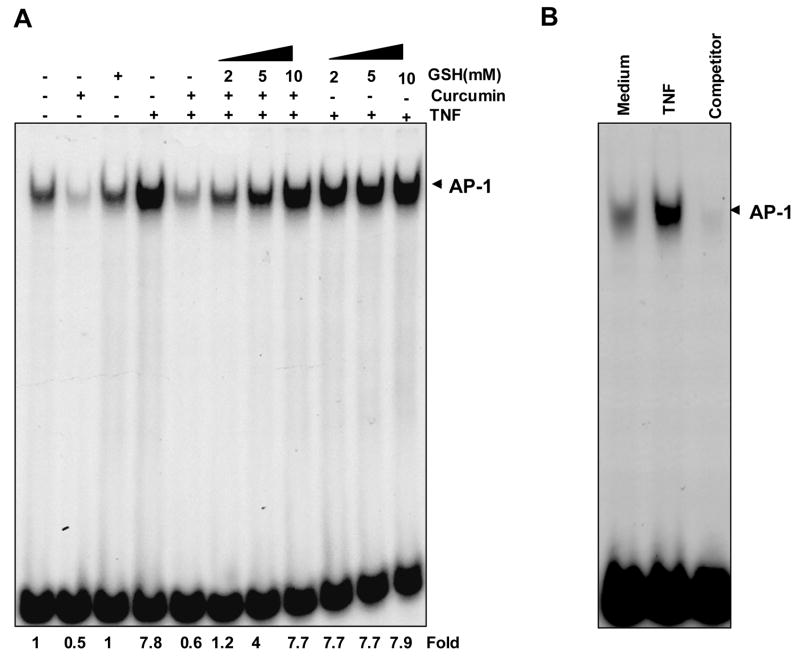
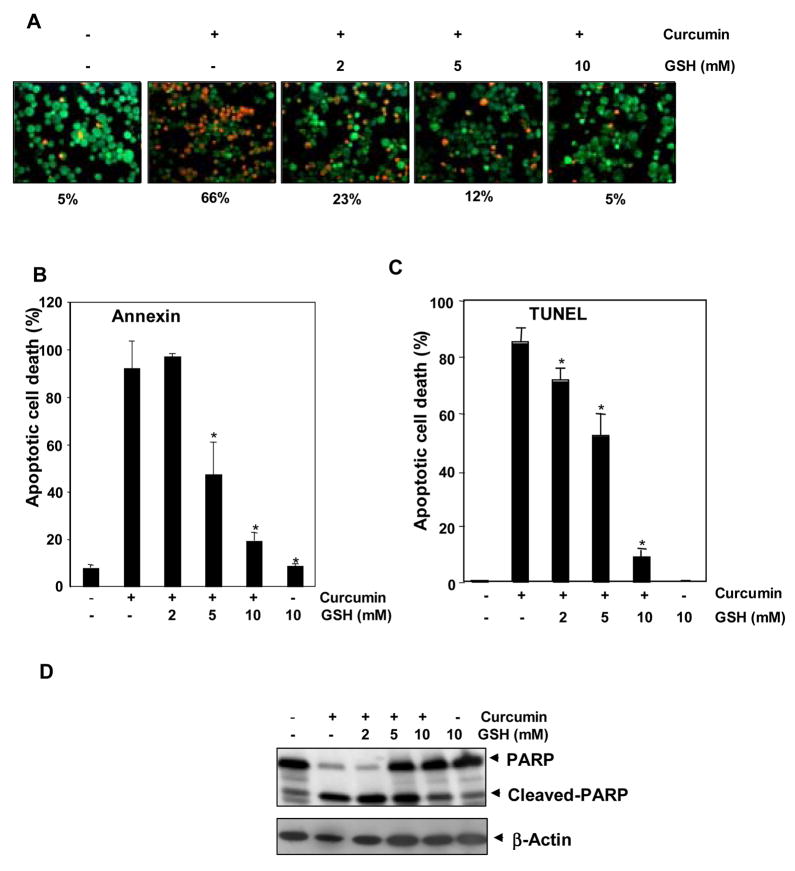
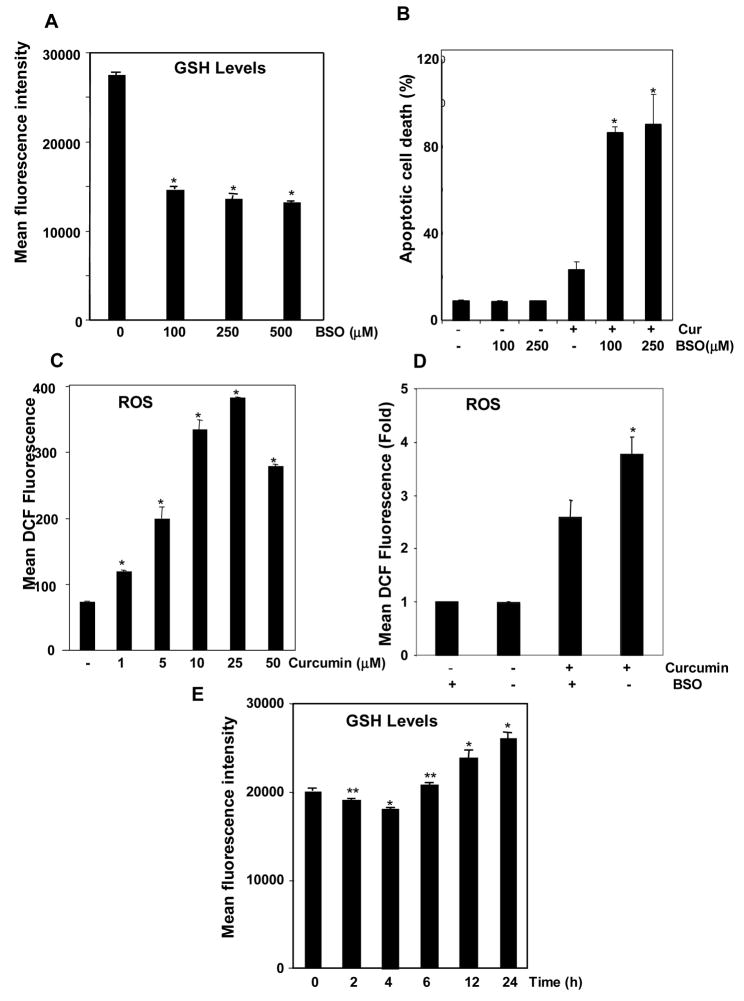
Extensive research within the past half-century has indicated that curcumin (diferuloylmethane), a yellow pigment in curry powder, exhibits antioxidant, anti-inflammatory, and proapoptotic activities. We investigated whether the anti-inflammatory and proapoptotic activities assigned to curcumin are mediated through its prooxidant/antioxidant mechanism. We found that TNF-mediated NF-kappaB activation was inhibited by curcumin; and glutathione reversed the inhibition. Similarly, suppression of TNF-induced AKT activation by curcumin was also abrogated by glutathione. The reducing agent also counteracted the inhibitory effects of curcumin on TNF-induced NF-kappaB-regulated antiapoptotic (Bcl-2, Bcl-xL, IAP1), proliferative (cyclin D1), and proinflammatory (COX-2, iNOS, and MMP-9) gene products. The suppression of TNF-induced AP-1 activation by curcumin was also reversed by glutathione. Also, the direct proapoptotic effects of curcumin were inhibited by glutathione and potentiated by depletion of intracellular glutathione by buthionine sulfoximine. Moreover, curcumin induced the production of reactive oxygen species and modulated intracellular GSH levels. Quenchers of hydroxyl radicals, however, were ineffective in inhibiting curcumin-mediated NF-kappaB suppression. Further, N-acetylcysteine partially reversed the effect of curcumin. Based on these results we conclude that curcumin mediates its apoptotic and anti-inflammatory activities through modulation of the redox status of the cell.
在过去半个世纪里的大量研究表明,姜黄素(双阿魏酰甲烷),一种咖喱粉中的黄色色素,具有抗氧化、抗炎和促凋亡活性。我们研究了赋予姜黄素的抗炎和促凋亡活性是否通过其促氧化/抗氧化机制介导。我们发现姜黄素抑制肿瘤坏死因子(TNF)介导的核因子κB(NF-κB)激活;而谷胱甘肽可逆转这种抑制作用。同样,谷胱甘肽也消除了姜黄素对TNF诱导的AKT激活的抑制作用。这种还原剂还抵消了姜黄素对TNF诱导的NF-κB调节的抗凋亡(Bcl-2、Bcl-xL、IAP1)、增殖(细胞周期蛋白D1)和促炎(环氧合酶-2、诱导型一氧化氮合酶和基质金属蛋白酶-9)基因产物的抑制作用。姜黄素对TNF诱导的激活蛋白-1(AP-1)激活的抑制作用也被谷胱甘肽逆转。此外,姜黄素的直接促凋亡作用被谷胱甘肽抑制,而被丁硫氨酸亚砜胺消耗细胞内谷胱甘肽所增强。而且,姜黄素诱导活性氧的产生并调节细胞内谷胱甘肽水平。然而,羟基自由基清除剂在抑制姜黄素介导的NF-κB抑制方面无效。此外,N-乙酰半胱氨酸部分逆转了姜黄素的作用。基于这些结果,我们得出结论,姜黄素通过调节细胞的氧化还原状态介导其凋亡和抗炎活性。