Jiang Zhi J, Castoe Todd A, Austin Christopher C, Burbrink Frank T, Herron Matthew D, McGuire Jimmy A, Parkinson Christopher L, Pollock David D
Department of Biological Sciences, Biological Computation and Visualization Center, Louisiana State University, Baton Rouge, LA, USA.
BMC Evol Biol. 2007 Jul 26;7:123. doi: 10.1186/1471-2148-7-123.
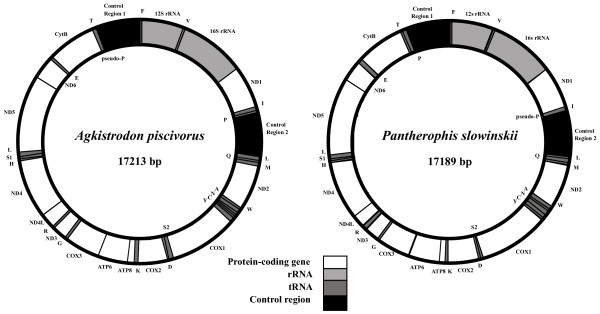
The mitochondrial genomes of snakes are characterized by an overall evolutionary rate that appears to be one of the most accelerated among vertebrates. They also possess other unusual features, including short tRNAs and other genes, and a duplicated control region that has been stably maintained since it originated more than 70 million years ago. Here, we provide a detailed analysis of evolutionary dynamics in snake mitochondrial genomes to better understand the basis of these extreme characteristics, and to explore the relationship between mitochondrial genome molecular evolution, genome architecture, and molecular function. We sequenced complete mitochondrial genomes from Slowinski's corn snake (Pantherophis slowinskii) and two cottonmouths (Agkistrodon piscivorus) to complement previously existing mitochondrial genomes, and to provide an improved comparative view of how genome architecture affects molecular evolution at contrasting levels of divergence.
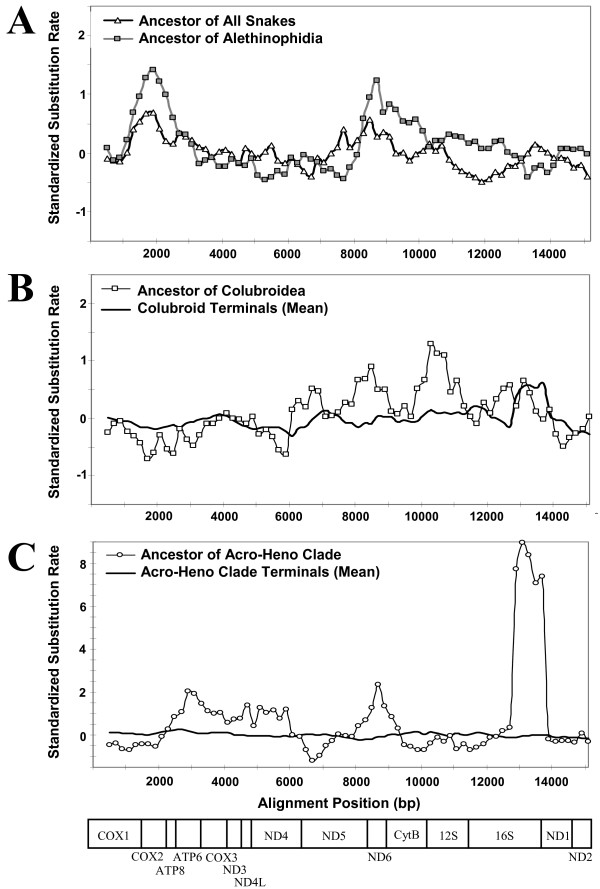
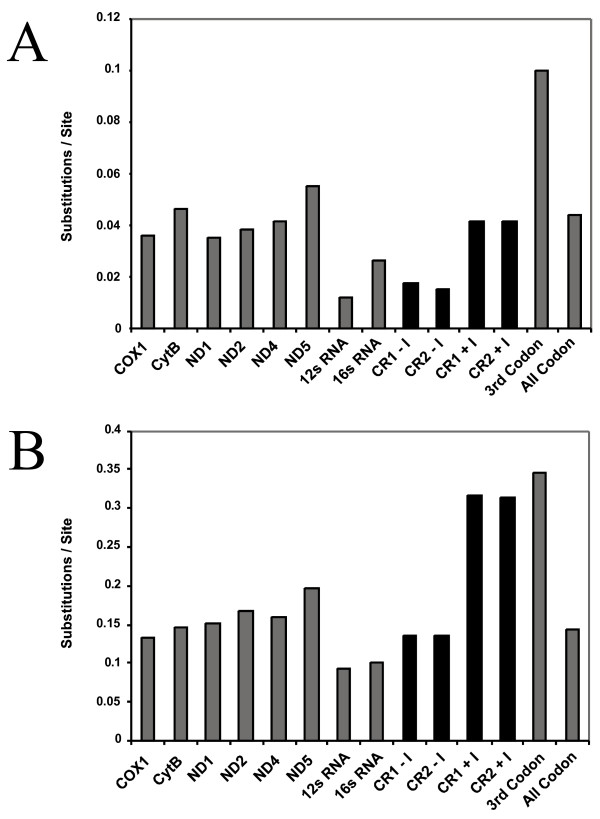
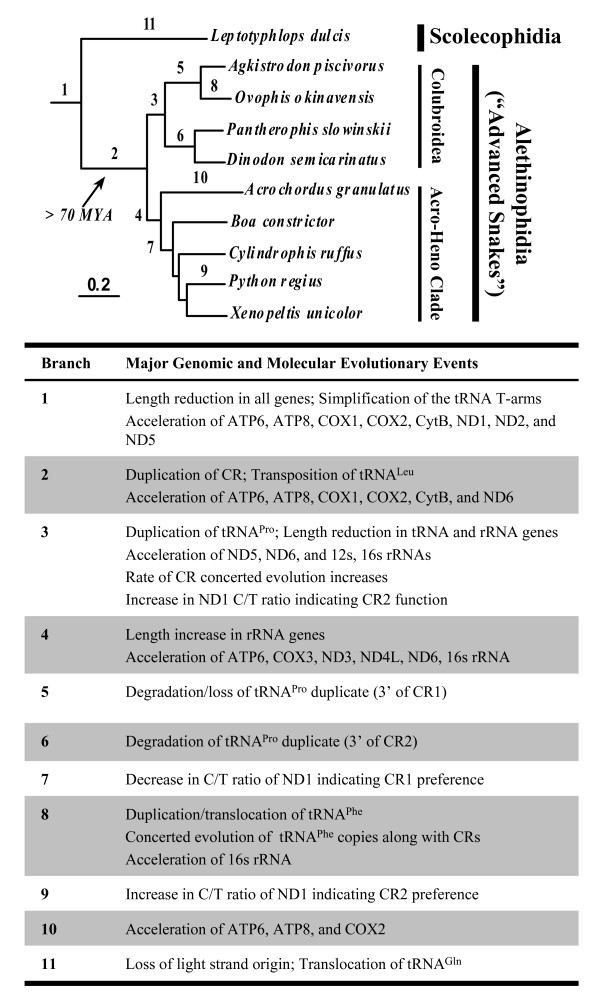
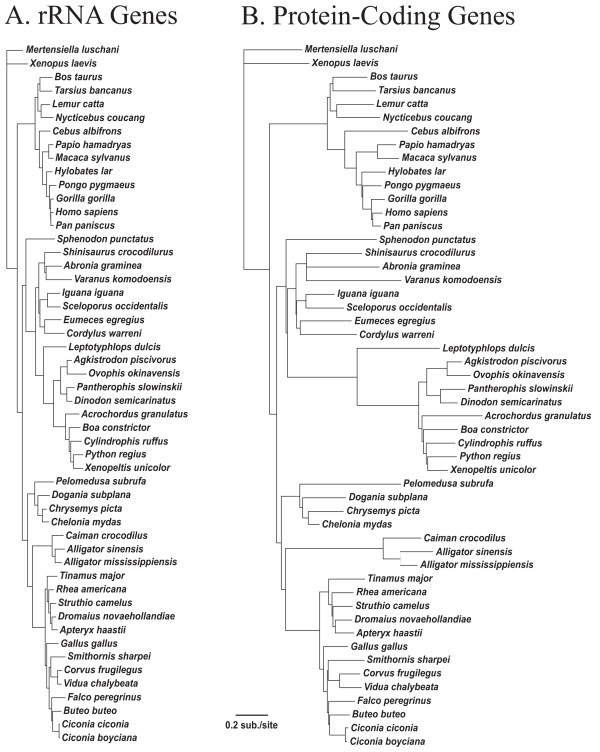
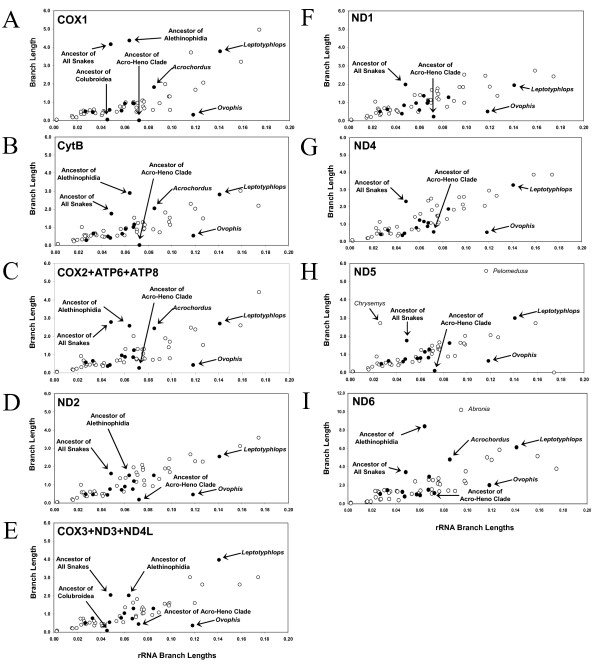
We present a Bayesian genetic approach that suggests that the duplicated control region can function as an additional origin of heavy strand replication. The two control regions also appear to have different intra-specific versus inter-specific evolutionary dynamics that may be associated with complex modes of concerted evolution. We find that different genomic regions have experienced substantial accelerated evolution along early branches in snakes, with different genes having experienced dramatic accelerations along specific branches. Some of these accelerations appear to coincide with, or subsequent to, the shortening of various mitochondrial genes and the duplication of the control region and flanking tRNAs.
Fluctuations in the strength and pattern of selection during snake evolution have had widely varying gene-specific effects on substitution rates, and these rate accelerations may have been functionally related to unusual changes in genomic architecture. The among-lineage and among-gene variation in rate dynamics observed in snakes is the most extreme thus far observed in animal genomes, and provides an important study system for further evaluating the biochemical and physiological basis of evolutionary pressures in vertebrate mitochondria.
蛇的线粒体基因组具有总体进化速率,这一速率在脊椎动物中似乎是最快的之一。它们还具有其他不寻常的特征,包括短的转运RNA和其他基因,以及一个自7000多万年前起源以来一直稳定维持的重复控制区。在这里,我们对蛇线粒体基因组的进化动态进行了详细分析,以更好地理解这些极端特征的基础,并探索线粒体基因组分子进化、基因组结构和分子功能之间的关系。我们对斯氏玉米蛇(Pantherophis slowinskii)和两种棉口蛇(Agkistrodon piscivorus)的完整线粒体基因组进行了测序,以补充先前已有的线粒体基因组,并提供一个改进的比较视角,了解基因组结构在不同分化水平上如何影响分子进化。
我们提出了一种贝叶斯遗传方法,该方法表明重复的控制区可以作为重链复制的另一个起始点。这两个控制区在种内与种间的进化动态似乎也有所不同,这可能与协同进化的复杂模式有关。我们发现,不同的基因组区域在蛇的早期分支中经历了显著的加速进化,不同的基因在特定分支中经历了急剧的加速。其中一些加速似乎与各种线粒体基因的缩短以及控制区和侧翼转运RNA的重复同时发生或在其之后。
蛇进化过程中选择强度和模式的波动对替换率产生了广泛不同的基因特异性影响,这些速率加速可能在功能上与基因组结构的异常变化有关。在蛇中观察到的谱系间和基因间速率动态变化是迄今为止在动物基因组中观察到的最极端的情况,为进一步评估脊椎动物线粒体进化压力的生化和生理基础提供了一个重要的研究系统。