Cho Jae-Ho, Boyman Onur, Kim Hee-Ok, Hahm Bumsuk, Rubinstein Mark P, Ramsey Chris, Kim David M, Surh Charles D, Sprent Jonathan
Department of Immunology, The Scripps Research Institute, La Jolla, CA 92037, USA.
J Exp Med. 2007 Aug 6;204(8):1787-801. doi: 10.1084/jem.20070740. Epub 2007 Jul 30.
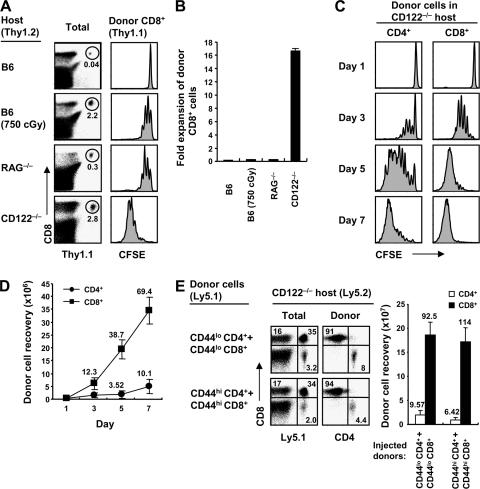
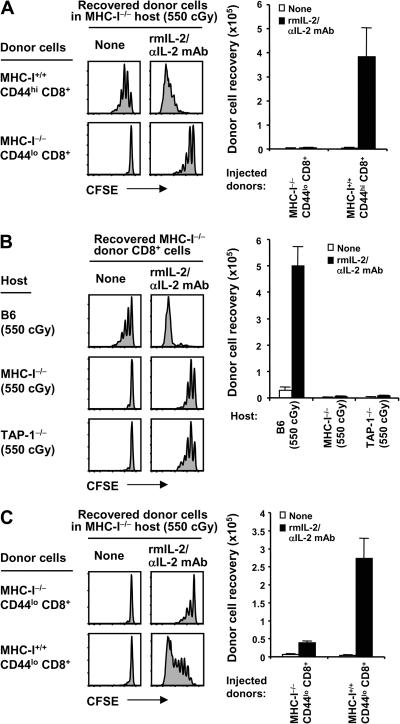
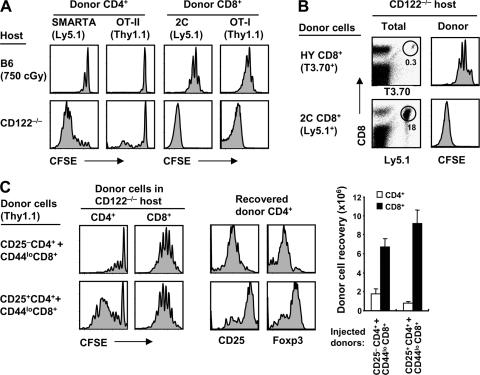
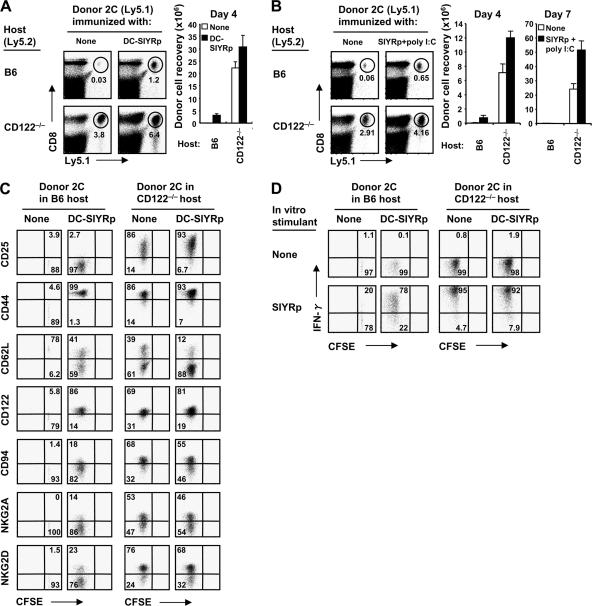
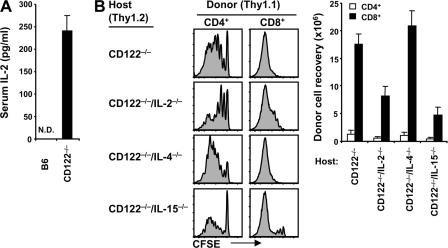
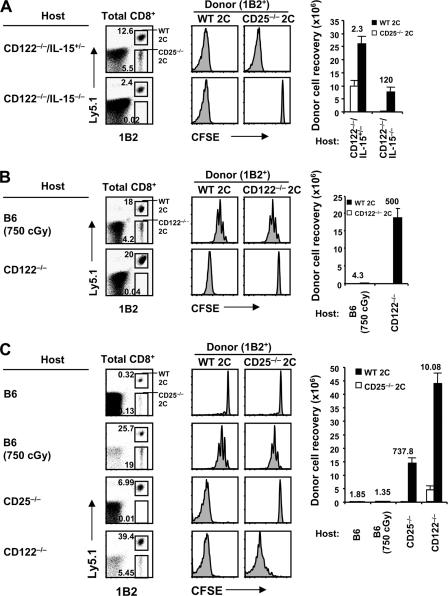
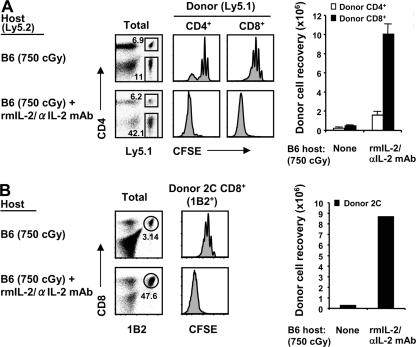
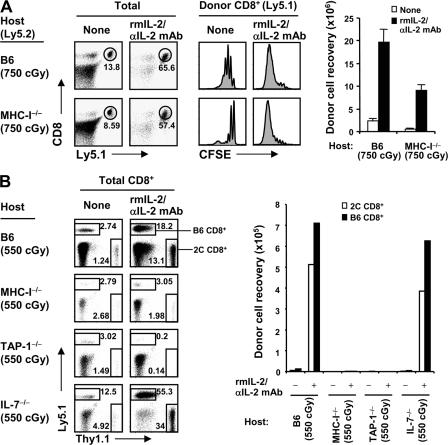
In conditions of T lymphopenia, interleukin (IL) 7 levels rise and, via T cell receptor for antigen-self-major histocompatibility complex (MHC) interaction, induce residual naive T cells to proliferate. This pattern of lymphopenia-induced "homeostatic" proliferation is typically quite slow and causes a gradual increase in total T cell numbers and differentiation into cells with features of memory cells. In contrast, we describe a novel form of homeostatic proliferation that occurs when naive T cells encounter raised levels of IL-2 and IL-15 in vivo. In this situation, CD8(+) T cells undergo massive expansion and rapid differentiation into effector cells, thus closely resembling the T cell response to foreign antigens. However, the responses induced by IL-2/IL-15 are not seen in MHC-deficient hosts, implying that the responses are driven by self-ligands. Hence, homeostatic proliferation of naive T cells can be either slow or fast, with the quality of the response to self being dictated by the particular cytokine (IL-7 vs. IL-2/IL-15) concerned. The relevance of the data to the gradual transition of naive T cells into memory-phenotype (MP) cells with age is discussed.
在T淋巴细胞减少的情况下,白细胞介素(IL)-7水平升高,并通过抗原-自身主要组织相容性复合体(MHC)相互作用的T细胞受体,诱导残留的初始T细胞增殖。这种淋巴细胞减少诱导的“稳态”增殖模式通常相当缓慢,会导致总T细胞数量逐渐增加,并分化为具有记忆细胞特征的细胞。相比之下,我们描述了一种新型的稳态增殖形式,它发生在初始T细胞在体内遇到升高水平的IL-2和IL-15时。在这种情况下,CD8(+) T细胞会大量扩增并迅速分化为效应细胞,因此与T细胞对外源抗原的反应非常相似。然而,在MHC缺陷宿主中未观察到由IL-2/IL-15诱导的反应,这意味着这些反应是由自身配体驱动的。因此,初始T细胞的稳态增殖可以是缓慢的或快速的,对自身反应的性质由相关的特定细胞因子(IL-7与IL-2/IL-15)决定。本文讨论了这些数据与初始T细胞随年龄逐渐转变为记忆表型(MP)细胞的相关性。