Sprent Jonathan, Boyman Onur
Immunology Division, Garvan Institute of Medical Research, Darlinghurst 2010, Australia.
St. Vincent's Clinical School, University of New South Wales, Sydney 1466, Australia.
Immune Netw. 2024 Jan 26;24(1):e5. doi: 10.4110/in.2024.24.e5. eCollection 2024 Feb.
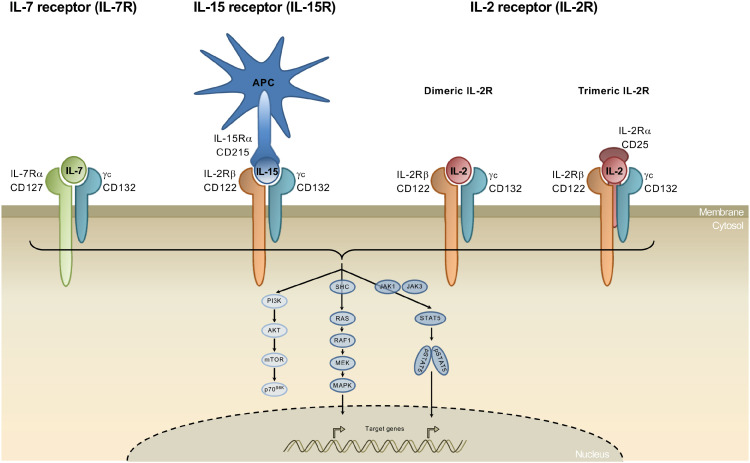
The key role of T cells in cancer immunotherapy is well established and is highlighted by the remarkable capacity of Ab-mediated checkpoint blockade to overcome T-cell exhaustion and amplify anti-tumor responses. However, total or partial tumor remission following checkpoint blockade is still limited to only a few types of tumors. Hence, concerted attempts are being made to devise new methods for improving tumor immunity. Currently, much attention is being focused on therapy with IL-2. This cytokine is a powerful growth factor for T cells and optimises their effector functions. When used at therapeutic doses for cancer treatment, however, IL-2 is highly toxic. Nevertheless, recent work has shown that modifying the structure or presentation of IL-2 can reduce toxicity and lead to effective anti-tumor responses in synergy with checkpoint blockade. Here, we review the complex interaction of IL-2 with T cells: first during normal homeostasis, then during responses to pathogens, and finally in anti-tumor responses.
T细胞在癌症免疫治疗中的关键作用已得到充分确立,抗体介导的检查点阻断能够克服T细胞耗竭并增强抗肿瘤反应,这一显著能力突出了T细胞的关键作用。然而,检查点阻断后的完全或部分肿瘤缓解仍然仅限于少数几种肿瘤类型。因此,人们正在协同努力设计新的方法来改善肿瘤免疫。目前,白细胞介素-2(IL-2)疗法备受关注。这种细胞因子是T细胞强大的生长因子,并能优化其效应功能。然而,当以治疗剂量用于癌症治疗时,IL-2具有高度毒性。尽管如此,最近的研究表明,修饰IL-2的结构或呈现方式可以降低毒性,并与检查点阻断协同作用产生有效的抗肿瘤反应。在此,我们综述IL-2与T细胞的复杂相互作用:首先是在正常稳态期间,其次是在对病原体的反应期间,最后是在抗肿瘤反应期间。