Tien Homer C, Battad Anthony, Bryce Elizabeth A, Fuller Jeffrey, Mulvey Michael, Bernard Kathy, Brisebois Ronald, Doucet Jay J, Rizoli Sandro B, Fowler Robert, Simor Andrew
The Trauma Program, and Department of Surgery, Sunnybrook Health Sciences Centre, H186-2075 Bayview Avenue, Toronto, Canada, M4N 3M5.
BMC Infect Dis. 2007 Aug 14;7:95. doi: 10.1186/1471-2334-7-95.
Military members, injured in Afghanistan or Iraq, have returned home with multi-drug resistant Acinetobacter baumannii infections. The source of these infections is unknown.
Retrospective study of all Canadian soldiers who were injured in Afghanistan and who required mechanical ventilation from January 1 2006 to September 1 2006. Patients who developed A. baumannii ventilator associated pneumonia (VAP) were identified. All A. baumannii isolates were retrieved for study patients and compared with A. baumannii isolates from environmental sources from the Kandahar military hospital using pulsed-field gel electrophoresis (PFGE).
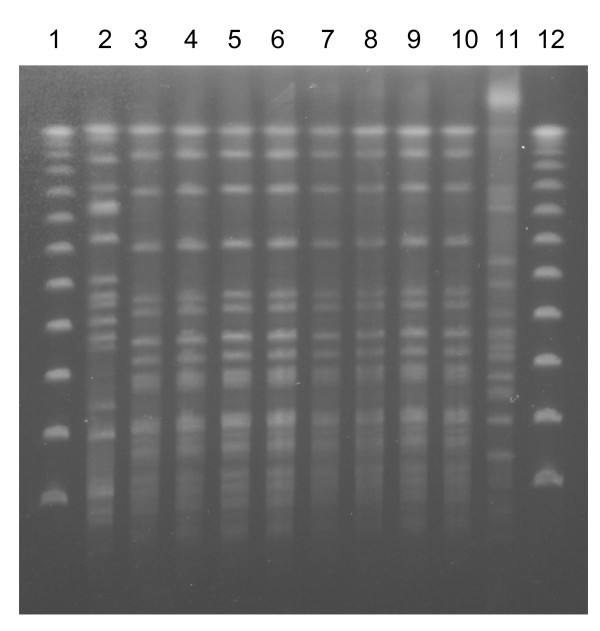
During the study period, six Canadian Forces (CF) soldiers were injured in Afghanistan, required mechanical ventilation and were repatriated to Canadian hospitals. Four of these patients developed A. baumannii VAP. A. baumannii was also isolated from one environmental source in Kandahar - a ventilator air intake filter. Patient isolates were genetically indistinguishable from each other and from the isolates cultured from the ventilator filter. These isolates were resistant to numerous classes of antimicrobials including the carbapenems.
These results suggest that the source of A. baumannii infection for these four patients was an environmental source in the military field hospital in Kandahar. A causal linkage, however, was not established with the ventilator. This study suggests that infection control efforts and further research should be focused on the military field hospital environment to prevent further multi-drug resistant A. baumannii infections in injured soldiers.
在阿富汗或伊拉克受伤的军人回国时感染了多重耐药鲍曼不动杆菌。这些感染的源头不明。
对2006年1月1日至2006年9月1日期间在阿富汗受伤且需要机械通气的所有加拿大士兵进行回顾性研究。确定发生鲍曼不动杆菌呼吸机相关性肺炎(VAP)的患者。收集所有研究患者的鲍曼不动杆菌分离株,并使用脉冲场凝胶电泳(PFGE)与坎大哈军事医院环境来源的鲍曼不动杆菌分离株进行比较。
在研究期间,6名加拿大部队(CF)士兵在阿富汗受伤,需要机械通气并被遣返回加拿大医院。其中4名患者发生了鲍曼不动杆菌VAP。在坎大哈的一个环境来源——呼吸机进气过滤器中也分离出了鲍曼不动杆菌。患者分离株在基因上彼此无法区分,且与从呼吸机过滤器培养的分离株也无法区分。这些分离株对包括碳青霉烯类在内的多种抗菌药物耐药。
这些结果表明,这4名患者的鲍曼不动杆菌感染源是坎大哈军事野战医院的一个环境来源。然而,未确定与呼吸机存在因果联系。本研究表明,感染控制措施和进一步研究应聚焦于军事野战医院环境,以防止受伤士兵进一步感染多重耐药鲍曼不动杆菌。