Center for Cardiovascular Sciences, Albany Medical College, Albany, New York, USA.
J Inflamm (Lond). 2007 Aug 14;4:16. doi: 10.1186/1476-9255-4-16.
The Amazonian medicinal plant Sangre de grado (Croton palanostigma) has traditional applications for the treatment of wound healing and inflammation. We sought to characterize two extracts (progrado and zangrado) in terms of safety and oligomeric proanthocyanidin chain length. Additionally progrado was evaluated for antioxidant activity and possible chondroprotective actions.
Acute oral safety and toxicity was tested in rats according under OECD protocol number 420. The profile of proanthocyanidin oligomers was determined by HPLC and progrado's antioxidant activity quantified by the ORAC, NORAC and HORAC assays. Human cartilage explants, obtained from surgical specimens, were used to assess chondroproteciton with activity related to direct inhibitory effects on human matrix metalloproteinase (MMP, gelatinolytic) activity using synovial fluid and chondrocytes activated with IL-1beta (10 ng/ml). Additionally, progrado (2-10 mug/ml) was tested for its ability to maintain optimal IGF-1 transcription and translation in cartilage explants and cultured chondrocytes.
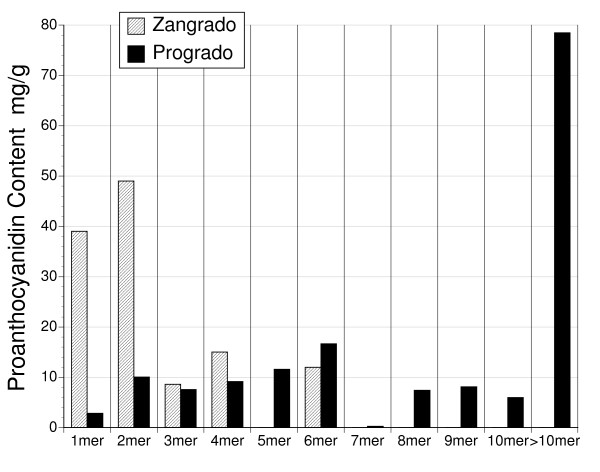
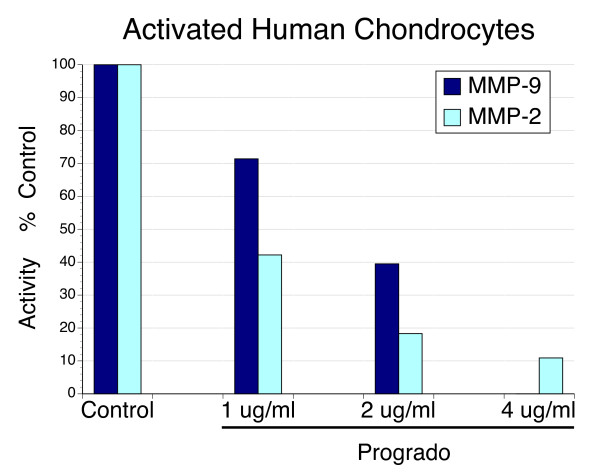
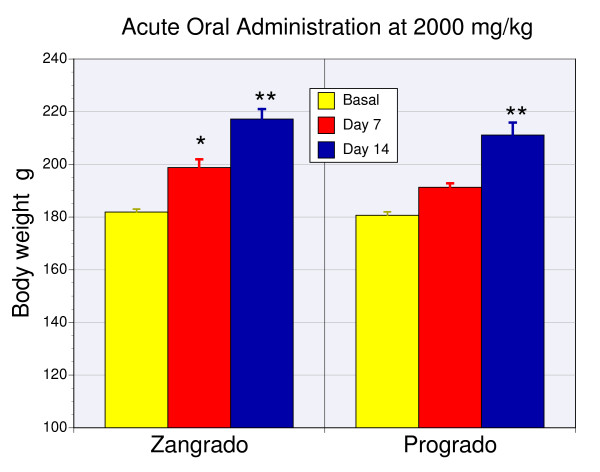
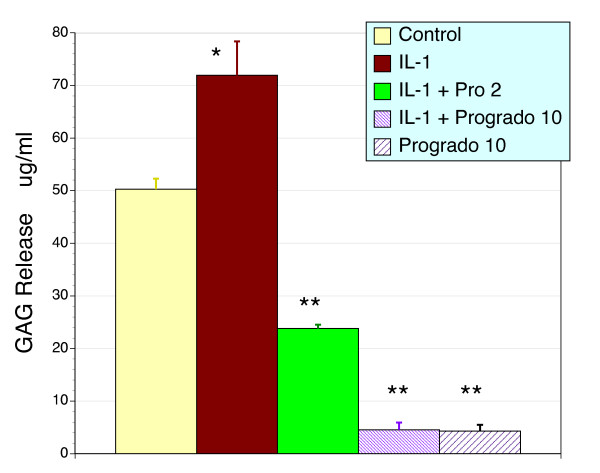
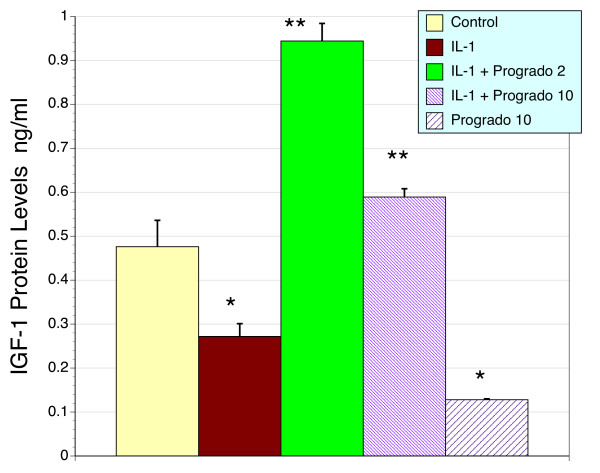
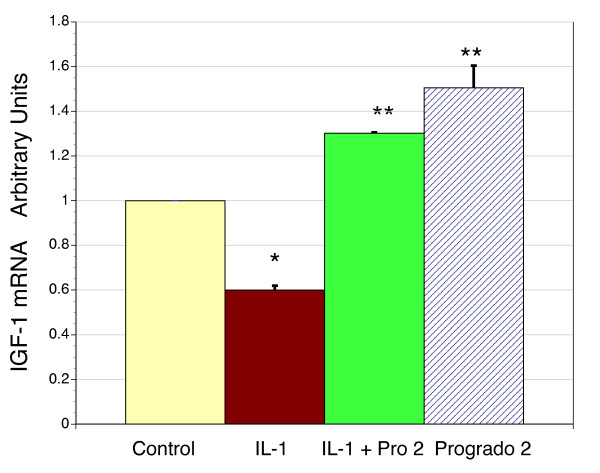
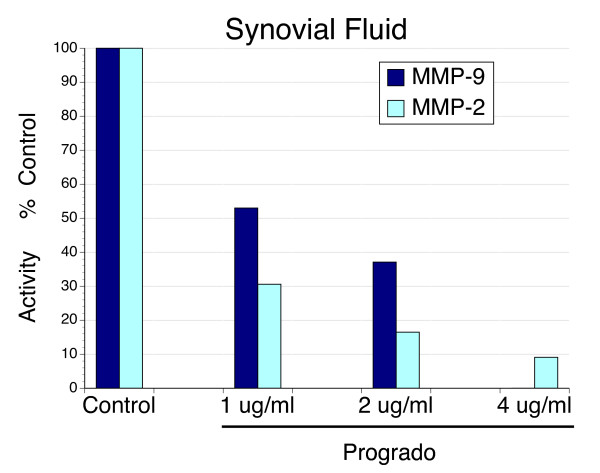
Both progrado and zangrado at doses up to 2000 mg/kg (po) displayed no evidence of toxicity. Oligomeric proanthocyanidin content was high for both progrado (158 mg/kg) and zangrado (124 mg/kg), with zangrado almost entirely composed of short oligomers (<6 mer), whereas the majority of oligomers in progrado exceeded 10 mers. Progrado was a remarkably potent antioxidant in the standardized tests ORAC, NORAC and HORAC. Progrado was exceptionally effective in reducing both basal and IL-1beta induced glycosaminoglycan release from human cartilage explants at concentrations that also directly blocked the gelatinolytic activity of MMP-2 and MMP-9. Progrado prevented IL-1beta induced suppression of IGF-1 production from human cartilage explants as well as stimulating basal IGF-1 production (P < 0.05). Comparable changes in IGF-1 gene expression were noted in cultured human chondrocytes.
Progrado has a promising safety profile, significant chondroprotective and antioxidant actions, directly inhibits MMP activity and promotes the production of the cartilage repair factor, IGF-1. This suggests that progrado may offer therapeutic benefits in joint health, wound healing and inflammation.
亚马逊药用植物 Sangre de grado(Croton palanostigma)具有治疗伤口愈合和炎症的传统应用。我们试图根据安全性和低聚原花青素链长来描述两种提取物(progrado 和 zangrado)。此外,还评估了 progrado 的抗氧化活性和可能的软骨保护作用。
根据 OECD 协议号 420 在大鼠中测试急性口服安全性和毒性。通过 HPLC 确定原花青素低聚物的分布,通过 ORAC、NORAC 和 HORAC 测定法测定 progrado 的抗氧化活性。使用来自手术标本的人软骨外植体评估活性,该活性与使用滑膜液和用 IL-1β(10ng/ml)激活的软骨细胞直接抑制人基质金属蛋白酶(MMP,明胶酶)活性相关。此外,还测试了 progrado(2-10μg/ml)在维持软骨外植体和培养软骨细胞中 IGF-1 转录和翻译的最佳水平的能力。
progrado 和 zangrado 两种提取物的剂量高达 2000mg/kg(po)时均未显示出毒性迹象。progrado(158mg/kg)和 zangrado(124mg/kg)中的低聚原花青素含量均很高,zangrado 几乎完全由短低聚物(<6mer)组成,而 progrado 中的大多数低聚物超过 10 个。Progrado 在标准化的 ORAC、NORAC 和 HORAC 测试中是一种非常有效的抗氧化剂。Progrado 非常有效地减少人软骨外植体中基础和 IL-1β 诱导的糖胺聚糖释放,同时直接阻断 MMP-2 和 MMP-9 的明胶酶活性。Progrado 可防止 IL-1β 诱导的人软骨外植体中 IGF-1 产生的抑制作用,并刺激基础 IGF-1 的产生(P<0.05)。在培养的人软骨细胞中也观察到 IGF-1 基因表达的类似变化。
progrado 具有良好的安全性、显著的软骨保护和抗氧化作用,直接抑制 MMP 活性并促进软骨修复因子 IGF-1 的产生。这表明 progrado 可能在关节健康、伤口愈合和炎症方面具有治疗益处。