Prinz William A
Laboratory of Cell Biochemistry and Biology, National Institute of Diabetes and Digestive and Kidney Diseases, National Institutes of Health, US Department of Health and Human Services, Bethesda, MD 20892, USA.
Prog Lipid Res. 2007 Nov;46(6):297-314. doi: 10.1016/j.plipres.2007.06.002. Epub 2007 Jul 18.
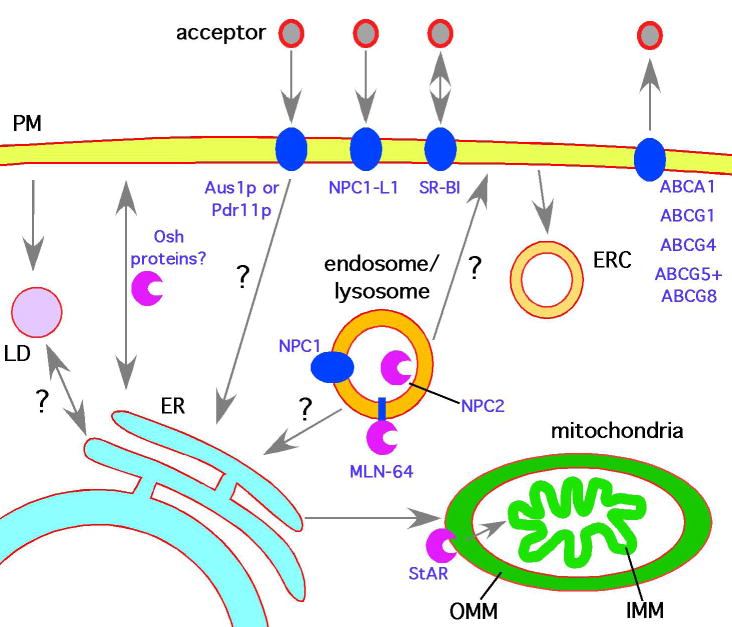
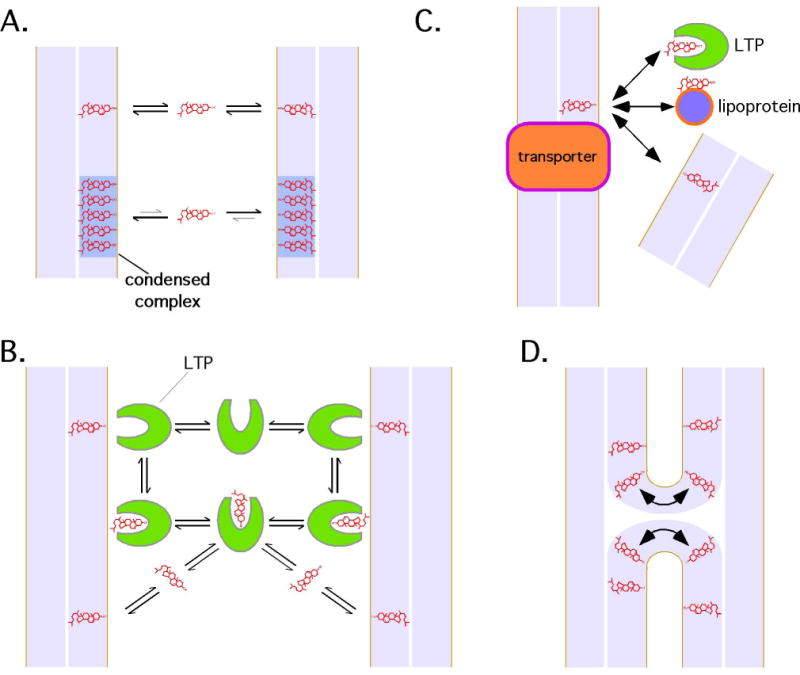
Sterols such as cholesterol are important components of cellular membranes. They are not uniformly distributed among organelles and maintaining the proper distribution of sterols is critical for many cellular functions. Both vesicular and non-vesicular pathways move sterols between membranes and into and out of cells. There is growing evidence that a number of non-vesicular transport pathways operate in cells and, in the past few years, a number of proteins have been proposed to facilitate this transfer. Some are soluble sterol transfer proteins that may move sterol between membranes. Others are integral membranes proteins that mediate sterol efflux, uptake from cells, and perhaps intracellular sterol transfer as well. In most cases, the mechanisms and regulation of these proteins remains poorly understood. This review summarizes our current knowledge of these proteins and how they could contribute to intracellular sterol trafficking and distribution.
诸如胆固醇之类的甾醇是细胞膜的重要组成部分。它们在细胞器之间并非均匀分布,维持甾醇的适当分布对许多细胞功能至关重要。囊泡运输途径和非囊泡运输途径都能使甾醇在膜之间移动,并进出细胞。越来越多的证据表明,细胞中存在多种非囊泡运输途径,在过去几年里,人们提出了一些蛋白质来促进这种转运。有些是可溶性甾醇转运蛋白,可能在膜之间移动甾醇。其他的是整合膜蛋白,介导甾醇流出、从细胞摄取,也许还介导细胞内甾醇转运。在大多数情况下,这些蛋白质的机制和调控仍知之甚少。本综述总结了我们目前对这些蛋白质的了解,以及它们如何促进细胞内甾醇的运输和分布。