Santarém Nuno, Silvestre Ricardo, Tavares Joana, Silva Marta, Cabral Sofia, Maciel Joana, Cordeiro-da-Silva Anabela
Departamento de Bioquímica, Faculdade de Farmácia, Universidade do Porto, Rua Aníbal Cunha 164, 4099-030 Porto, Portugal.
J Biomed Biotechnol. 2007;2007(6):85154. doi: 10.1155/2007/85154.
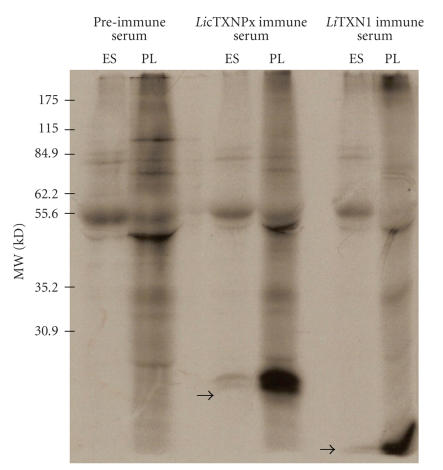
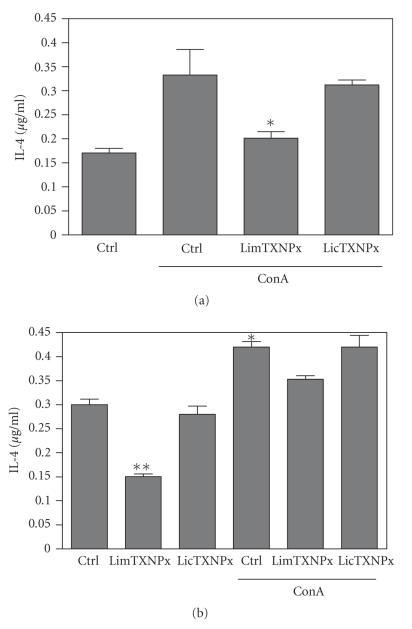
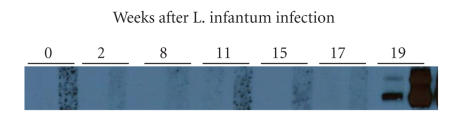
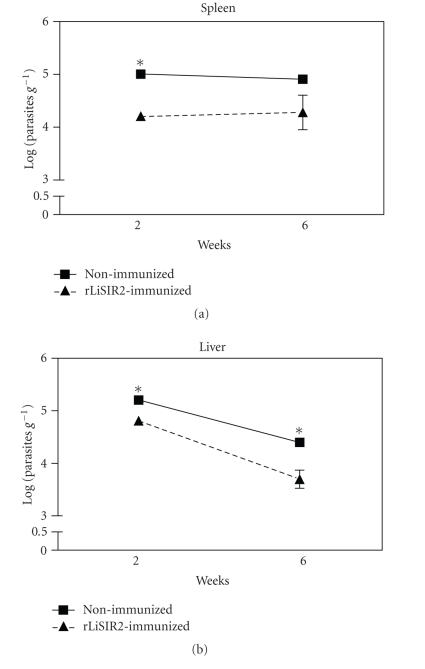
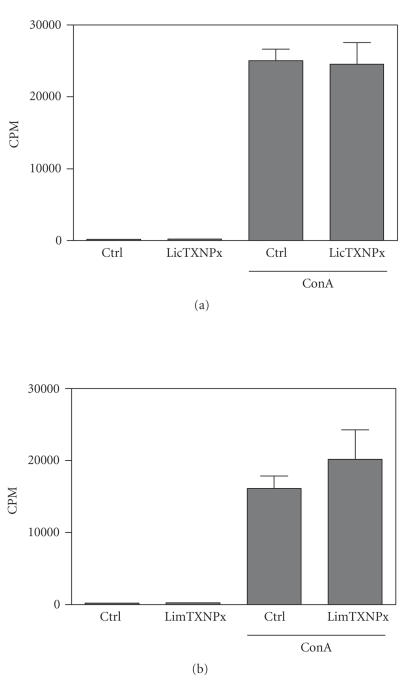
Leishmania infection consists in two sequential events, the host cell colonization followed by the proliferation/dissemination of the parasite. In this review, we discuss the importance of two distinct sets of molecules, the secreted and/or surface and the nonsecreted antigens. The importance of the immune response against secreted and surface antigens is noted in the establishment of the infection and we dissect the contribution of the nonsecreted antigens in the immunopathology associated with leishmaniasis, showing the importance of these panantigens during the course of the infection. As a further example of proteins belonging to these two different groups, we include several laboratorial observations on Leishmania Sir2 and LicTXNPx as excreted/secreted proteins and LmS3arp and LimTXNPx as nonsecreted/panantigens. The role of these two groups of antigens in the immune response observed during the infection is discussed.
利什曼原虫感染包括两个连续的事件,即宿主细胞定殖,随后是寄生虫的增殖/播散。在本综述中,我们讨论了两组不同分子的重要性,即分泌型和/或表面型分子以及非分泌型抗原。在感染的建立过程中,针对分泌型和表面型抗原的免疫反应的重要性已得到关注,并且我们剖析了非分泌型抗原在与利什曼病相关的免疫病理学中的作用,显示了这些泛抗原在感染过程中的重要性。作为属于这两个不同组别的蛋白质的另一个例子,我们纳入了关于利什曼原虫Sir2和LicTXNPx作为排泄/分泌蛋白以及LmS3arp和LimTXNPx作为非分泌型/泛抗原的若干实验室观察结果。讨论了这两组抗原在感染期间观察到的免疫反应中的作用。