Waghela S D, Rurangirwa F R, Mahan S M, Yunker C E, Crawford T B, Barbet A F, Burridge M J, McGuire T C
Kenya Agricultural Research Institute, Kabete.
J Clin Microbiol. 1991 Nov;29(11):2571-7. doi: 10.1128/jcm.29.11.2571-2577.1991.
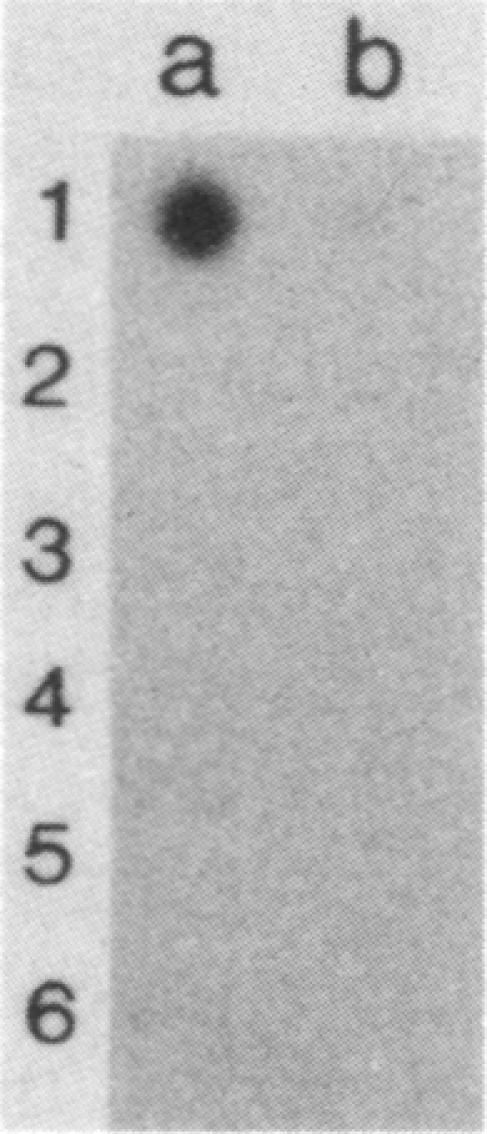
Heartwater, caused by Cowdria ruminantium and transmitted by ticks of the genus Amblyomma, is a constraint to ruminant animal production in sub-Saharan Africa. This rickettsial disease could spread from endemically infected areas of sub-Saharan Africa and certain Caribbean islands to other countries, including the United States, in which Amblyomma ticks exist. To detect C. ruminantium in tick vectors and animals, we made DNA probes from C. ruminantium DNA isolated from endothelial cell cultures. Two clones were evaluated; pCS20 from Crystal Springs (Zimbabwe) strain DNA had a 1,306-bp insert, and pCR9 from Kiswani (Kenya) strain DNA had a 754-bp insert. Both DNA probes detected 1 ng of Crystal Springs DNA; however, the pCS20 probe had a 10-fold-greater ability to discriminate between C. ruminantium DNA and DNA from other organisms. Also, the pCS20 probe did not hybridize to 400 ng (highest amount tested) of DNA from bovine cells, 3 protozoa, 3 rickettsiae, and 12 bacteria. In all experiments, C. ruminantium DNA was detected in midguts from 99 of 160 Amblyomma variegatum nymphs infected as larvae and in midguts from 38 of 80 adult ticks infected as nymphs but not in midguts from control nymphs and adults. The presence of C. ruminantium in nymphs and adults was confirmed by transmission of heartwater to goats. The DNA sequences of both probes were determined; synthetic oligonucleotides from pCS20 are recommended as DNA probes for C. ruminantium.