Chen Yaoyu, Rollins Jarod, Paigen Beverly, Wang Xiaosong
The Jackson Laboratory, Bar Harbor, ME 04609, USA.
Cell Metab. 2007 Sep;6(3):164-79. doi: 10.1016/j.cmet.2007.07.001.
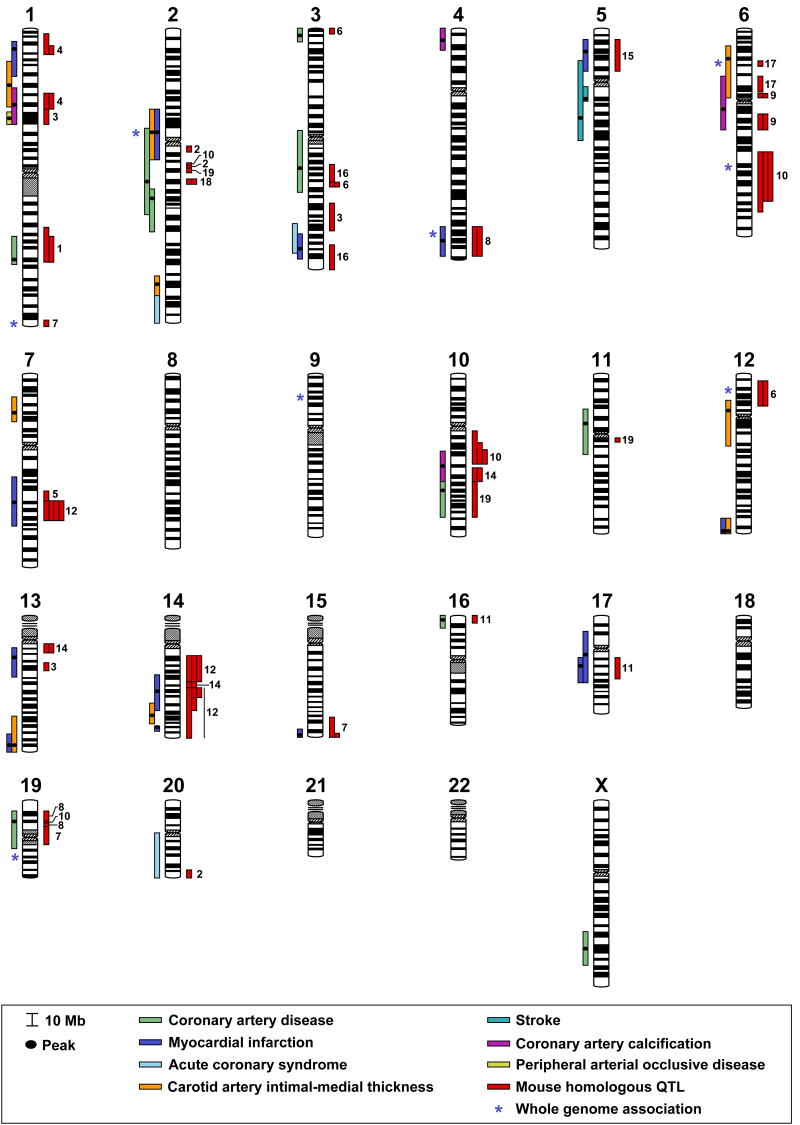
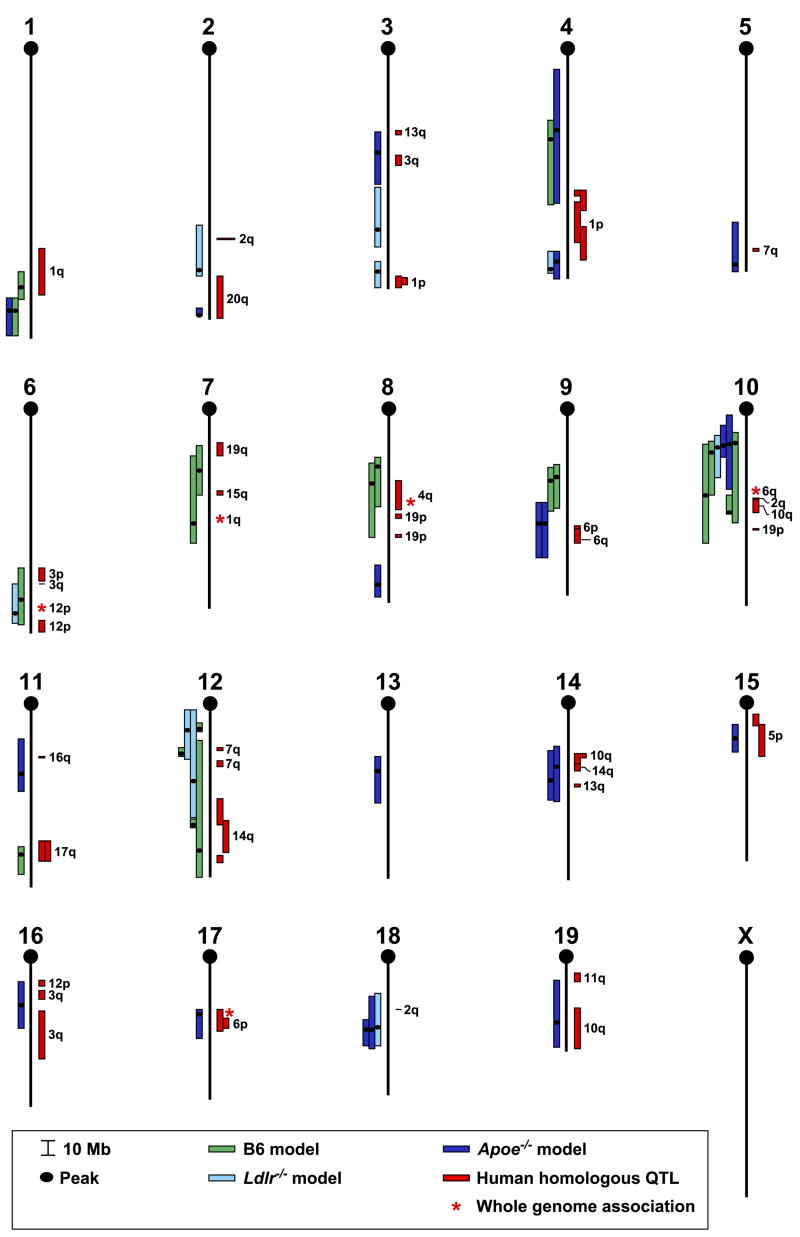
Atherosclerosis is a complex disease involving genetic and environmental risk factors, acting on their own or in synergy. Within the general population, polymorphisms within genes in lipid metabolism, inflammation, and thrombogenesis are probably responsible for the wide range of susceptibility to myocardial infarction, a fatal consequence of atherosclerosis. Genetic linkage studies have been carried out in both humans and mouse models to identify these polymorphisms. Approximately 40 quantitative trait loci for atherosclerotic disease have been found in humans, and approximately 30 in mice. Recently, genome-wide association studies have been used to identify atherosclerosis-susceptibility polymorphisms. Although discovering new atherosclerosis genes through these approaches remains challenging, the pace at which these polymorphisms are being found is accelerating due to rapidly improving bioinformatics resources and biotechnologies. The outcome of these efforts will not only unveil the molecular basis of atherosclerosis but also facilitate the discovery of drug targets and individualized medication against the disease.
动脉粥样硬化是一种复杂的疾病,涉及遗传和环境风险因素,这些因素可单独作用或协同作用。在普通人群中,脂质代谢、炎症和血栓形成相关基因的多态性可能是导致心肌梗死(动脉粥样硬化的致命后果)易感性广泛差异的原因。已在人类和小鼠模型中开展了遗传连锁研究,以识别这些多态性。在人类中已发现约40个动脉粥样硬化疾病的数量性状基因座,在小鼠中约为30个。最近,全基因组关联研究已被用于识别动脉粥样硬化易感性多态性。尽管通过这些方法发现新的动脉粥样硬化相关基因仍然具有挑战性,但由于生物信息学资源和生物技术的迅速发展,发现这些多态性的速度正在加快。这些努力的成果不仅将揭示动脉粥样硬化的分子基础,还将促进针对该疾病的药物靶点发现和个体化药物治疗。