Harrysson Ola L A, Hosni Yasser A, Nayfeh Jamal F
Department of Industrial and Systems Engineering, North Carolina State University, Campus Box 7906, Raleigh, USA.
BMC Musculoskelet Disord. 2007 Sep 13;8:91. doi: 10.1186/1471-2474-8-91.
Conventional knee and hip implant systems have been in use for many years with good success. However, the custom design of implant components based on patient-specific anatomy has been attempted to overcome existing shortcomings of current designs. The longevity of cementless implant components is highly dependent on the initial fit between the bone surface and the implant. The bone-implant interface design has historically been limited by the surgical tools and cutting guides available; and the cost of fabricating custom-designed implant components has been prohibitive.
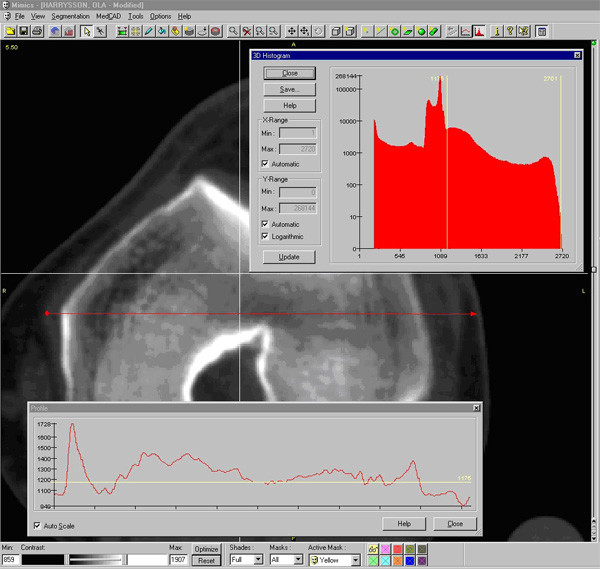
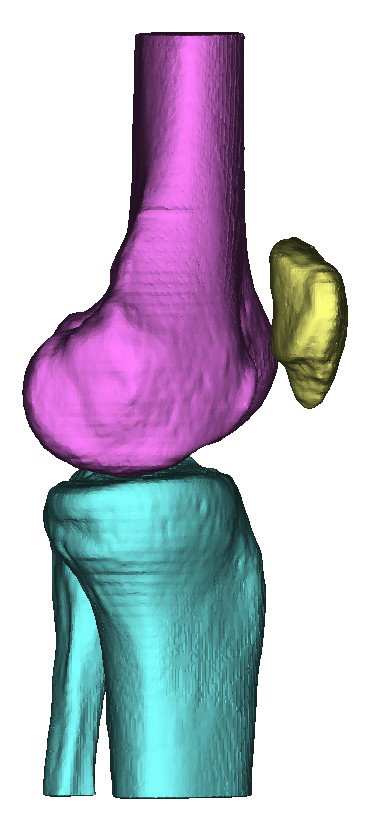
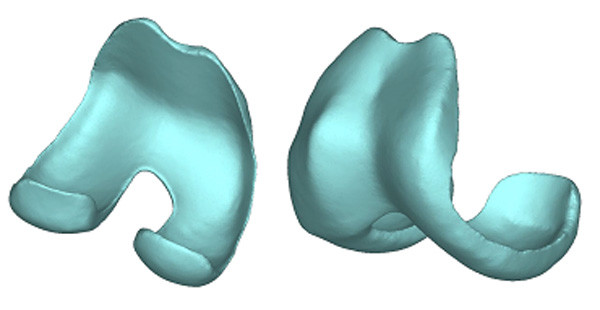
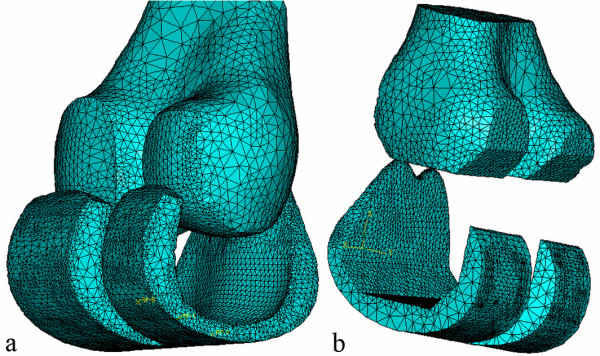
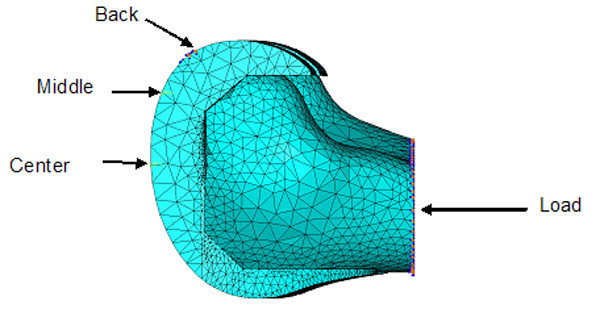
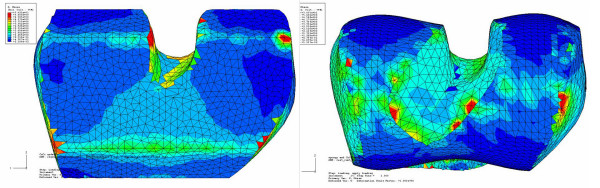
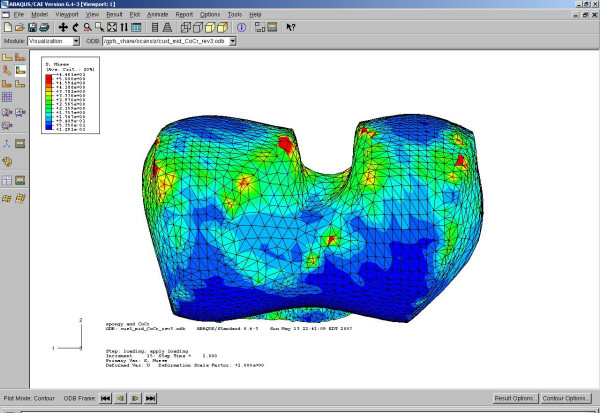
This paper describes an approach where the custom design is based on a Computed Tomography scan of the patient's joint. The proposed design will customize both the articulating surface and the bone-implant interface to address the most common problems found with conventional knee-implant components. Finite Element Analysis is used to evaluate and compare the proposed design of a custom femoral component with a conventional design.
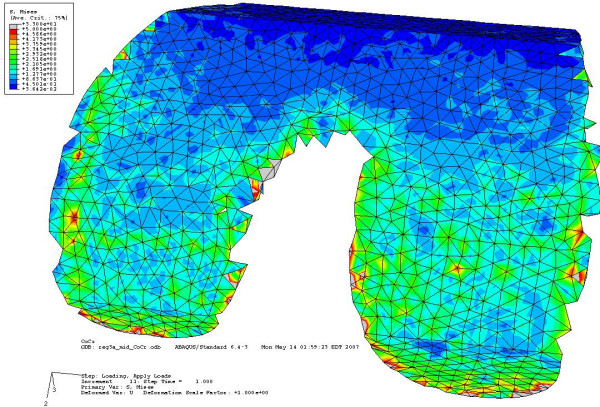
The proposed design shows a more even stress distribution on the bone-implant interface surface, which will reduce the uneven bone remodeling that can lead to premature loosening.
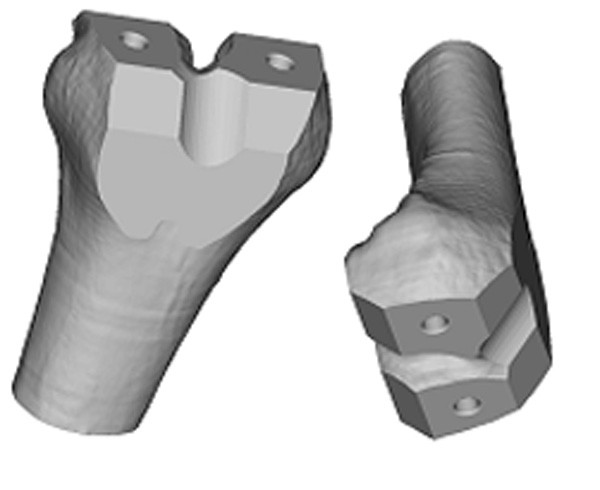
The proposed custom femoral component design has the following advantages compared with a conventional femoral component. (i) Since the articulating surface closely mimics the shape of the distal femur, there is no need for resurfacing of the patella or gait change. (ii) Owing to the resulting stress distribution, bone remodeling is even and the risk of premature loosening might be reduced. (iii) Because the bone-implant interface can accommodate anatomical abnormalities at the distal femur, the need for surgical interventions and fitting of filler components is reduced. (iv) Given that the bone-implant interface is customized, about 40% less bone must be removed. The primary disadvantages are the time and cost required for the design and the possible need for a surgical robot to perform the bone resection. Some of these disadvantages may be eliminated by the use of rapid prototyping technologies, especially the use of Electron Beam Melting technology for quick and economical fabrication of custom implant components.
传统的膝关节和髋关节植入系统已使用多年,取得了良好的效果。然而,基于患者特定解剖结构定制植入部件的设计,旨在克服现有设计的不足之处。非骨水泥植入部件的使用寿命高度依赖于骨表面与植入物之间的初始贴合度。从历史上看,骨-植入物界面设计受到可用手术工具和切割导向器的限制;定制设计的植入部件的制造成本也过高。
本文描述了一种基于患者关节计算机断层扫描进行定制设计的方法。所提出的设计将定制关节表面和骨-植入物界面,以解决传统膝关节植入部件中最常见的问题。使用有限元分析来评估和比较定制股骨部件的设计与传统设计。
所提出的设计在骨-植入物界面表面显示出更均匀的应力分布,这将减少可能导致过早松动的不均匀骨重塑。
与传统股骨部件相比,所提出的定制股骨部件设计具有以下优点。(i)由于关节表面紧密模仿股骨远端的形状,无需对髌骨进行表面处理或改变步态。(ii)由于产生的应力分布,骨重塑均匀,过早松动的风险可能降低。(iii)因为骨-植入物界面可以适应股骨远端的解剖异常,减少了手术干预和填充部件安装的需求。(iv)鉴于骨-植入物界面是定制的,所需去除的骨量减少约40%。主要缺点是设计所需的时间和成本,以及可能需要手术机器人进行骨切除。使用快速成型技术,特别是使用电子束熔炼技术快速经济地制造定制植入部件,可能会消除其中一些缺点。