Prigge Justin R, Schmidt Edward E
Veterinary Molecular Biology, Molecular Biosciences, Montana State University, 960 Technology Blvd, Bozeman, MT 59717, USA.
BMC Mol Biol. 2007 Sep 14;8:76. doi: 10.1186/1471-2199-8-76.
Huntington's disease, spinal and bulbar muscular atrophy, and spinocerebellar ataxia 17 (SCA17) are caused by expansions in the polyglutamine (polyQ) repeats in Huntingtin protein (Htt), androgen receptor protein (AR), and TATA-binding protein (TBP), respectively. Htt-associated protein 1 (HAP1), a component of neuronal cytoplasmic stigmoid bodies (STBs), can sequester polyQ-expanded Htt and AR in STBs, thereby antagonizing formation of the nuclear aggregates associated with apoptotic neuron loss and disease progression.
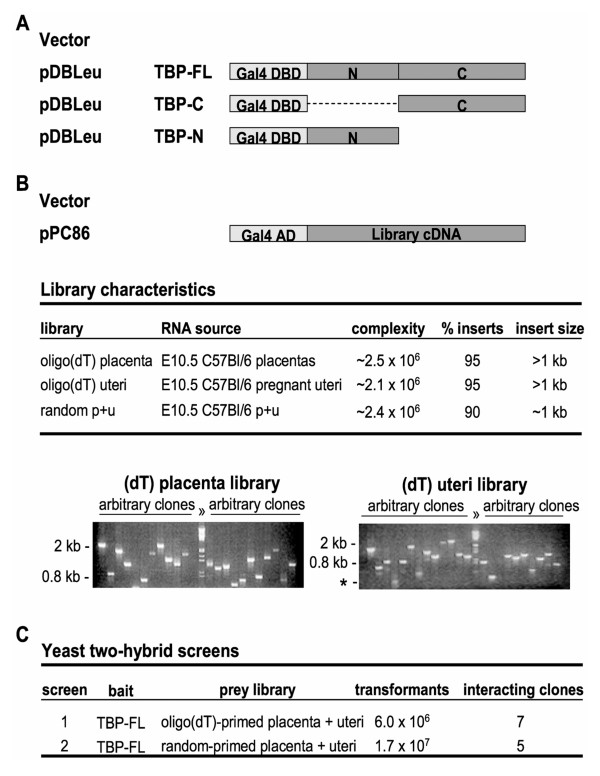
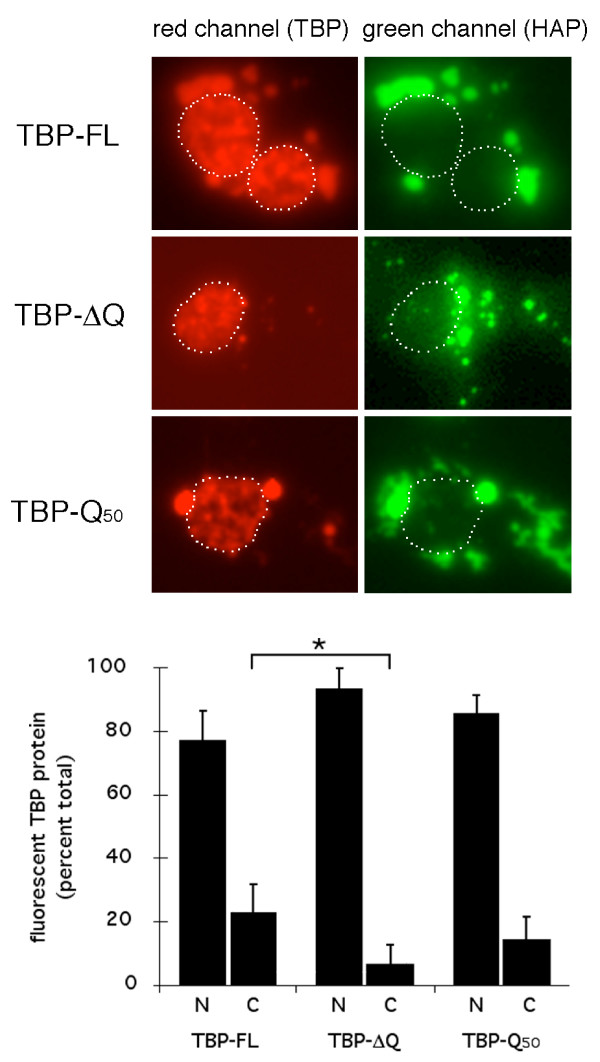
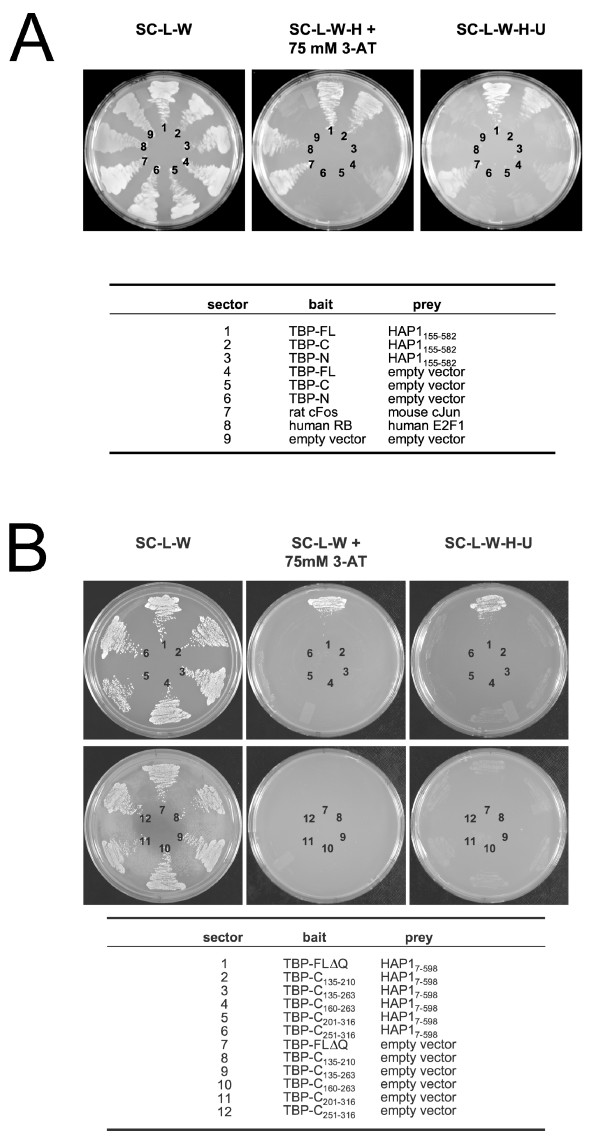
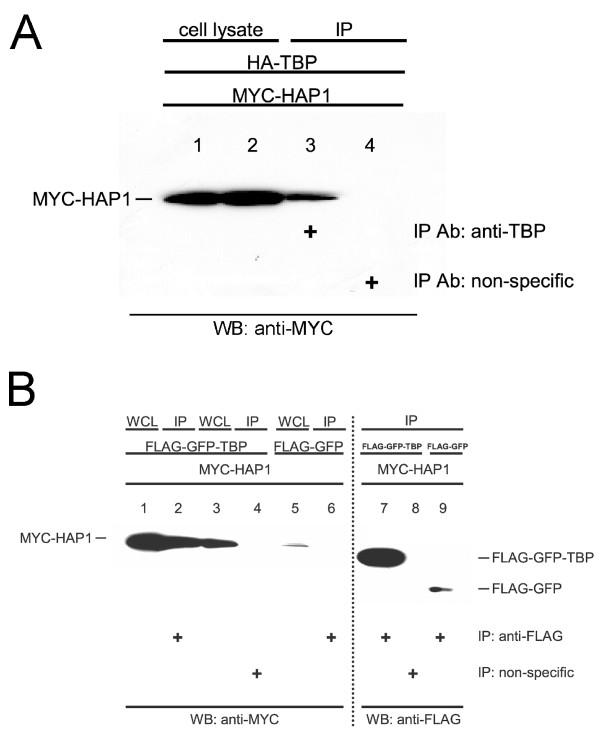
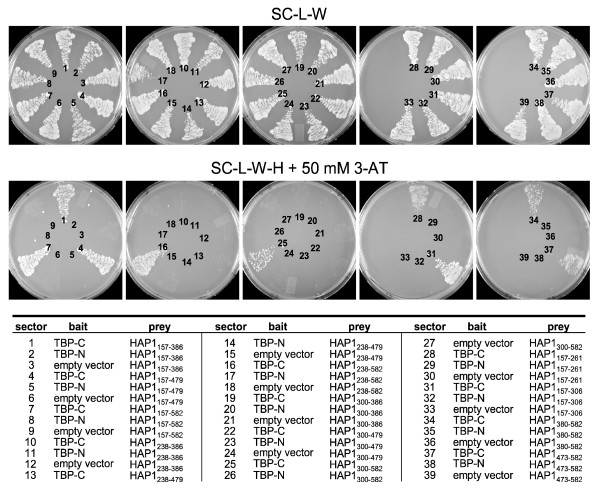
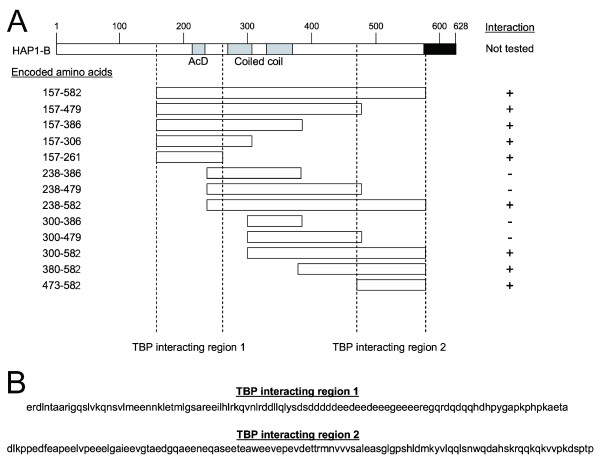
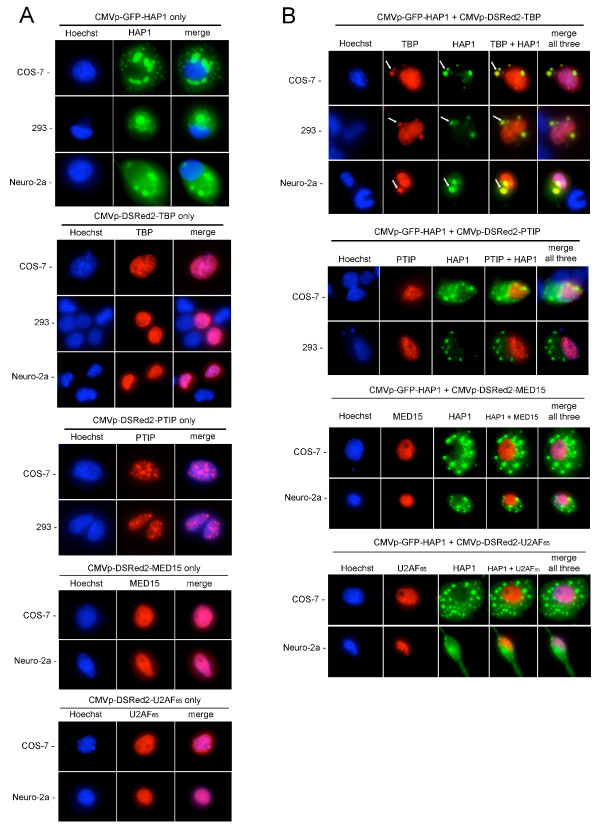
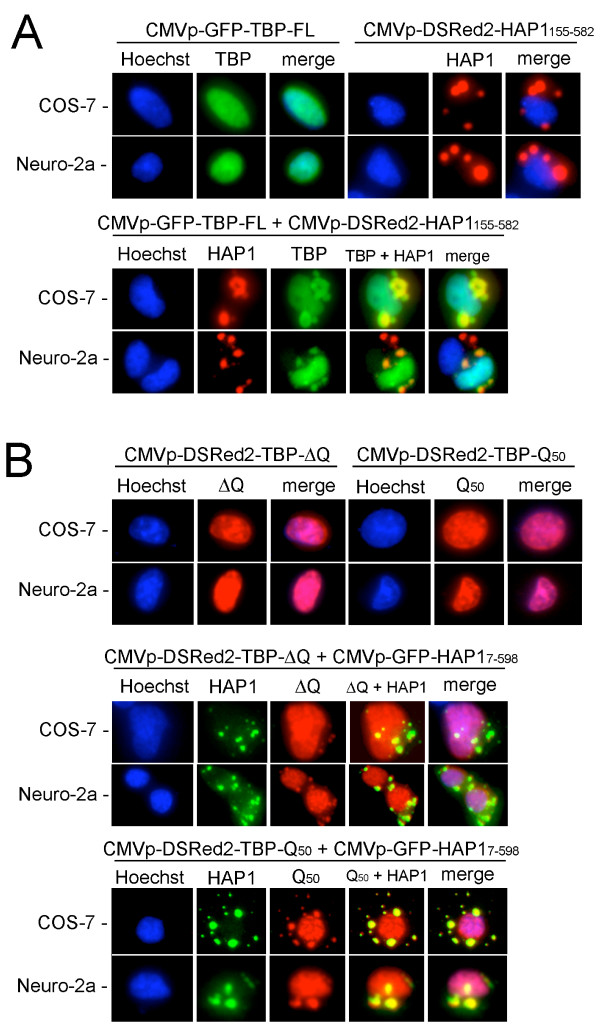
Clones of HAP1 were isolated from unbiased two-hybrid screens for proteins that interact with TBP. Domain mapping showed that regions between amino acids 157 and 261 and between amino acids 473 and 582 of mouse HAP1 both bind specifically to the conserved C-terminal TBP(CORE) domain, away from the TBP N-terminal polyQ region. When fluorescently tagged versions of HAP1 or TBP were expressed independently in COS-7, 293, or Neuro-2a cells, all TBP localized to the nucleus and all HAP1 assembled into cytoplasmic stigmoid-like bodies (STLBs). When co-expressed, a portion of the TBP was assembled into the HAP1 STLBs while the remainder was localized to the nucleus. Although the TBP N terminus, including the polyQ region, was unnecessary for TBP-HAP1 interaction, in mammalian cells, removal of the TBP Q(repeat) reduced the proportion of TBP that assembled into STLBs, whereas expansion of the Q(repeat) had no significant affect on TBP subcellular localization.
HAP1 can sequester a subset of TBP protein away from the nucleus; extranuclear TBP sequestration is quantitatively influenced by the TBP polyQ repeat. These results suggest HAP1 could provide protection from SCA17 neuropathology.
亨廷顿舞蹈症、脊髓延髓肌肉萎缩症和脊髓小脑共济失调17型(SCA17)分别由亨廷顿蛋白(Htt)、雄激素受体蛋白(AR)和TATA结合蛋白(TBP)中聚谷氨酰胺(polyQ)重复序列的扩增引起。亨廷顿相关蛋白1(HAP1)是神经元细胞质类淀粉样小体(STB)的一个组成部分,它可以将polyQ扩增的Htt和AR隔离在STB中,从而对抗与凋亡性神经元丢失和疾病进展相关的核聚集体的形成。
从与TBP相互作用的蛋白质的无偏向性双杂交筛选中分离出HAP1克隆。结构域定位显示,小鼠HAP1氨基酸157至261之间以及氨基酸473至582之间的区域均特异性结合保守的C端TBP(CORE)结构域,远离TBP的N端polyQ区域。当在COS-7、293或Neuro-2a细胞中独立表达荧光标记的HAP1或TBP时,所有TBP均定位于细胞核,所有HAP1均组装成细胞质类淀粉样小体(STLB)。共表达时,一部分TBP组装到HAP1的STLB中,其余部分定位于细胞核。虽然包括polyQ区域在内的TBP N端对于TBP-HAP1相互作用并非必需,但在哺乳动物细胞中,去除TBP的Q(重复序列)会降低组装到STLB中的TBP比例,而Q(重复序列)的扩增对TBP的亚细胞定位没有显著影响。
HAP1可以将一部分TBP蛋白隔离在细胞核外;核外TBP隔离在数量上受TBP polyQ重复序列的影响。这些结果表明HAP1可能为预防SCA17神经病理学提供保护。