Zhong Hua, Han Baohui, Tourkova Irina L, Lokshin Anna, Rosenbloom Alan, Shurin Michael R, Shurin Galina V
Shanghai Chest Hospital, Shanghai, China.
Clin Cancer Res. 2007 Sep 15;13(18 Pt 1):5455-62. doi: 10.1158/1078-0432.CCR-07-0517.
The main goal of this study was to provide the "proof-of-principle" that low-dose paclitaxel is able to change the tumor microenvironment and improve the outcome of intratumoral dendritic cell vaccine in a murine lung cancer model.
We evaluated the antitumor potential and changes in the intratumoral milieu of a combination of low-dose chemotherapy and dendritic cell vaccine in the Lewis lung carcinoma model in vivo.
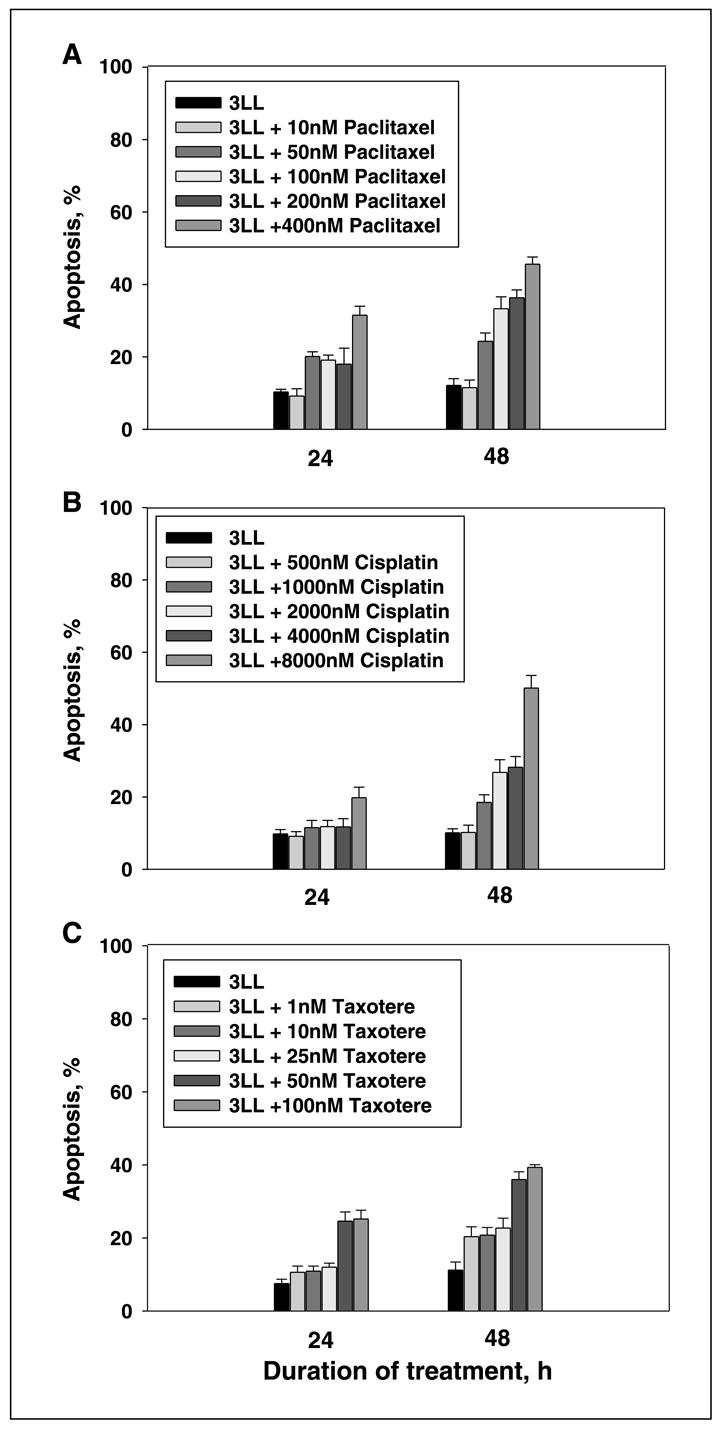
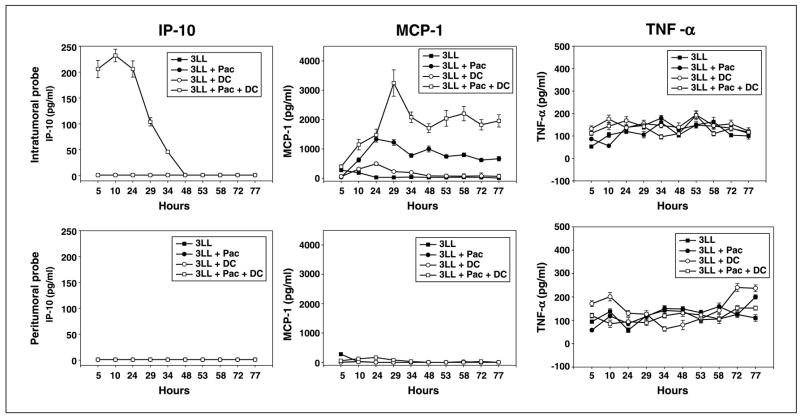
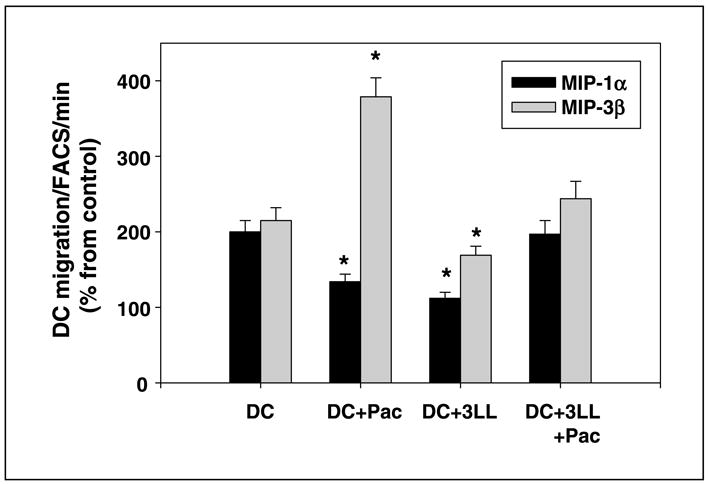
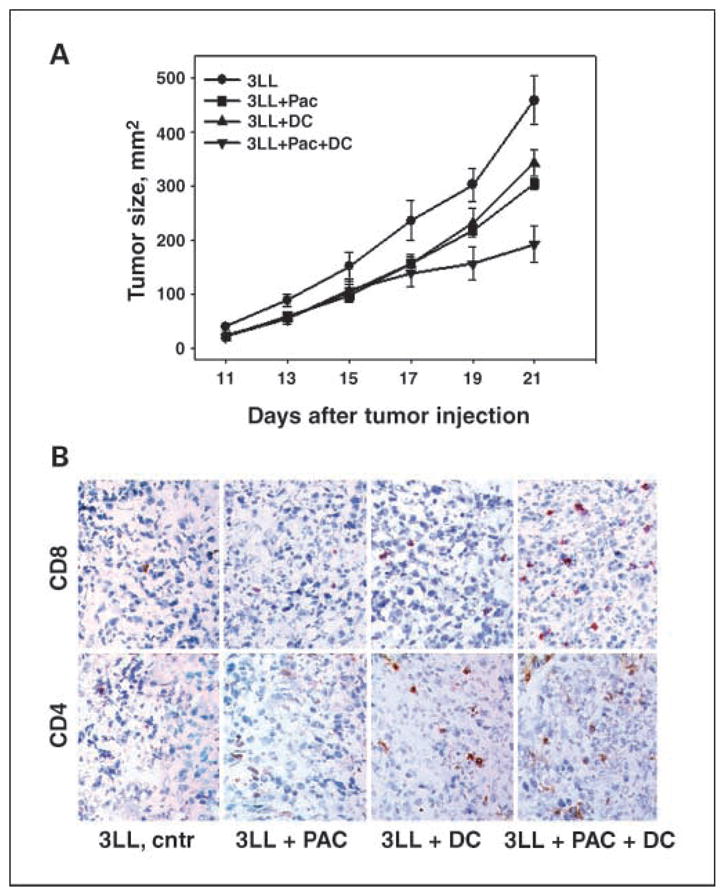
The low-dose paclitaxel, which induced apoptosis in approximately 10% of tumor cells, was not toxic to bone marrow cells and dendritic cells and stimulated dendritic cell maturation and function in vitro. Although tumor cells inhibited dendritic cell differentiation in vitro, this immunosuppressive effect was abrogated by the pretreatment of tumor cells with low-dose paclitaxel. Based on these data, we next tested whether pretreatment of tumor-bearing mice with low-dose paclitaxel in vivo would improve the antitumor potential of dendritic cell vaccine administered intratumorally. Significant inhibition of tumor growth in mice treated with low-dose paclitaxel plus intratumoral dendritic cell vaccine, associated with increased tumor infiltration by CD4(+) and CD8(+) T cells and elevated tumor-specific IFN-gamma production by draining lymph node cells, was revealed. Using a novel intratumoral microdialysis technique and Luminex technology for collecting and characterizing soluble factors released within the tumor bed for several days in live freely moving animals, we showed that low-dose paclitaxel altered the cytokine network at the tumor site.
Our data indicate that low-dose chemotherapy before intratumoral delivery of dendritic cells might be associated with beneficial alterations of the intratumoral microenvironment and thus support antitumor immunity.
本研究的主要目标是提供“原理证明”,即低剂量紫杉醇能够改变肿瘤微环境,并改善小鼠肺癌模型中瘤内树突状细胞疫苗的疗效。
我们在体内的Lewis肺癌模型中评估了低剂量化疗与树突状细胞疫苗联合应用的抗肿瘤潜力以及瘤内环境的变化。
低剂量紫杉醇可诱导约10%的肿瘤细胞凋亡,对骨髓细胞和树突状细胞无毒,并在体外刺激树突状细胞成熟和功能。尽管肿瘤细胞在体外抑制树突状细胞分化,但低剂量紫杉醇预处理肿瘤细胞可消除这种免疫抑制作用。基于这些数据,我们接下来测试了在体内用低剂量紫杉醇预处理荷瘤小鼠是否会提高瘤内注射树突状细胞疫苗的抗肿瘤潜力。结果显示,低剂量紫杉醇联合瘤内树突状细胞疫苗治疗的小鼠肿瘤生长受到显著抑制,同时伴有CD4(+)和CD8(+) T细胞肿瘤浸润增加以及引流淋巴结细胞产生的肿瘤特异性IFN-γ升高。我们使用一种新型的瘤内微透析技术和Luminex技术,在自由活动的活体动物中收集和表征肿瘤床内数天释放的可溶性因子,结果表明低剂量紫杉醇改变了肿瘤部位的细胞因子网络。
我们的数据表明,在瘤内递送树突状细胞之前进行低剂量化疗可能与瘤内微环境的有益改变相关,从而支持抗肿瘤免疫。