Wilmanski Jeanette M, Petnicki-Ocwieja Tanja, Kobayashi Koichi S
Department of Cancer Immunology and AIDS, Dana-Farber Cancer Institute, Harvard Medical School, Dana 1420A, 44 Binney Street, Boston, MA 02115, USA.
J Leukoc Biol. 2008 Jan;83(1):13-30. doi: 10.1189/jlb.0607402. Epub 2007 Sep 17.
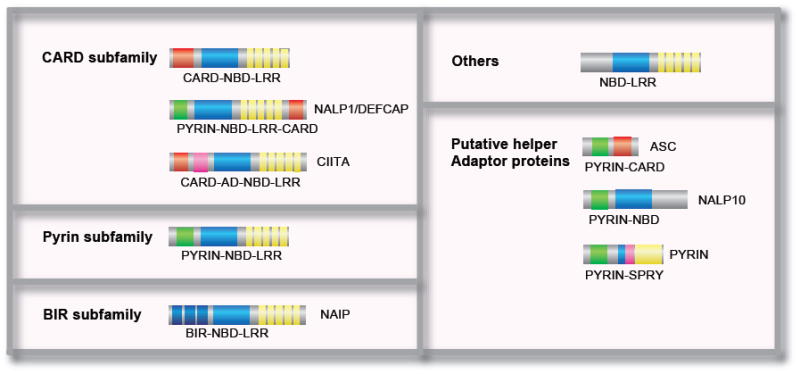
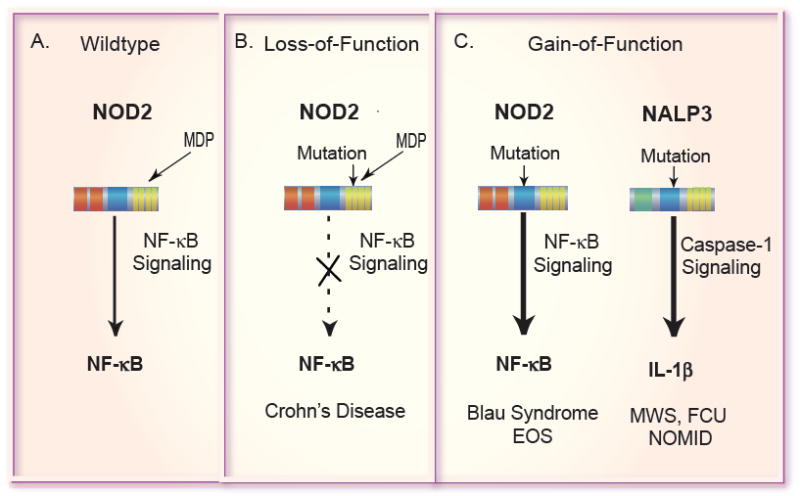
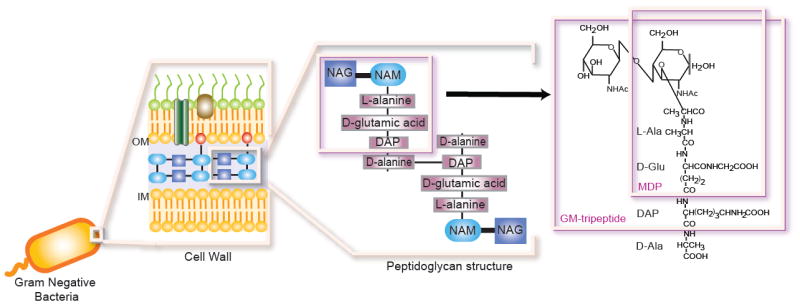
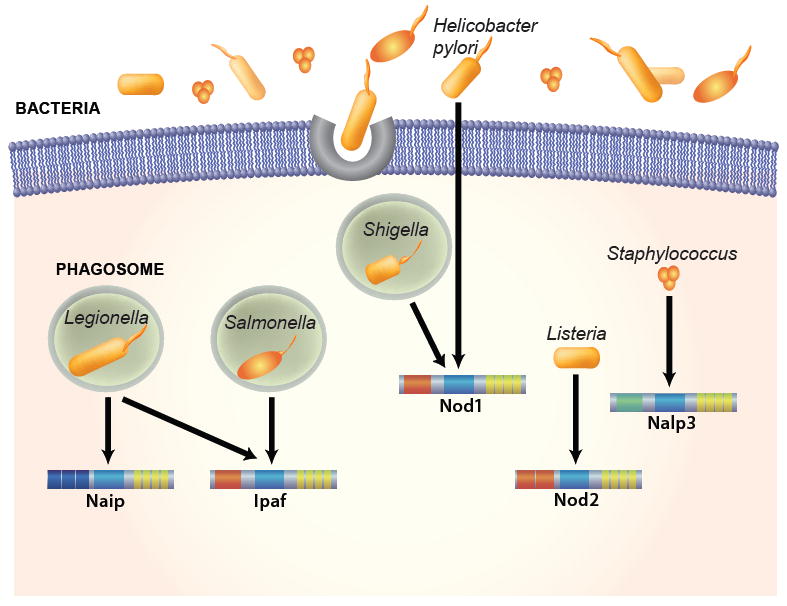
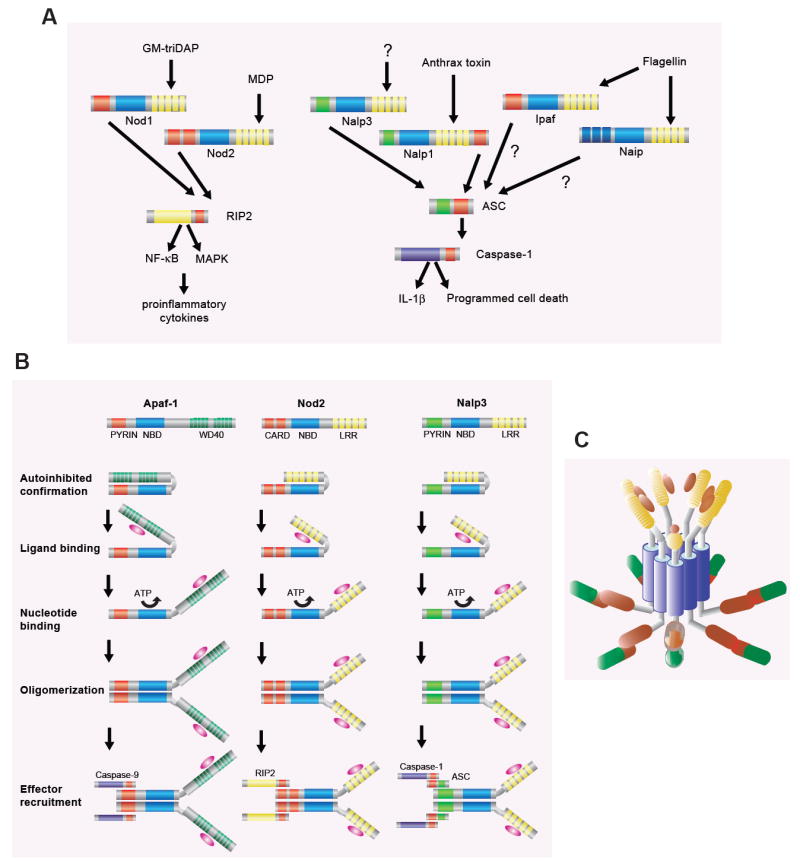
The innate immune system is the first line of defense against microorganisms and is conserved in plants and animals. The nucleotide-binding domain, leucine rich containing (NLR) protein family is a recent addition to the members of innate immunity effector molecules. These proteins are characterized by a central oligomerization domain, termed nucleotide-binding domain (NBD) and a protein interaction domain, leucine-rich repeats (LRRs) at the C terminus. It has been shown that NLR proteins are localized to the cytoplasm and recognize microbial products. To date, it is known that Nod1 and Nod2 detect bacterial cell wall components, whereas Ipaf and Naip detect bacterial flagellin, and NACHT/LRR/Pyrin 1 has been shown to detect anthrax lethal toxin. NLR proteins comprise a diverse protein family (over 20 in humans), indicating that NLRs have evolved to acquire specificity to various pathogenic microorganisms, thereby controlling host-pathogen interactions. Activation of NLR proteins results in inflammatory responses mediated by NF-kappaB, MAPK, or Caspase-1 activation, accompanied by subsequent secretion of proinflammatory cytokines. Mutations in several members of the NLR protein family have been linked to inflammatory diseases, suggesting these molecules play important roles in maintaining host-pathogen interactions and inflammatory responses. Therefore, understanding NLR signaling is important for the therapeutic intervention of various infectious and inflammatory diseases.
先天免疫系统是抵御微生物的第一道防线,在植物和动物中都存在。核苷酸结合结构域富含亮氨酸的(NLR)蛋白家族是先天免疫效应分子成员中的新成员。这些蛋白质的特征是具有一个中央寡聚化结构域,称为核苷酸结合结构域(NBD)和一个蛋白质相互作用结构域,即位于C末端的富含亮氨酸重复序列(LRR)。已表明NLR蛋白定位于细胞质并识别微生物产物。迄今为止,已知Nod1和Nod2检测细菌细胞壁成分,而Ipaf和Naip检测细菌鞭毛蛋白,并且已表明NACHT/LRR/Pyrin 1检测炭疽致死毒素。NLR蛋白构成一个多样化的蛋白家族(人类中有超过20种),这表明NLR已经进化以获得对各种致病微生物的特异性,从而控制宿主与病原体的相互作用。NLR蛋白的激活导致由NF-κB、MAPK或半胱天冬酶-1激活介导的炎症反应,并伴有随后促炎细胞因子的分泌。NLR蛋白家族的几个成员中的突变与炎症性疾病有关,这表明这些分子在维持宿主与病原体的相互作用和炎症反应中起重要作用。因此,了解NLR信号传导对于各种感染性和炎症性疾病的治疗干预很重要。