Panchal Heena, Wansbury Olivia, Parry Suzanne, Ashworth Alan, Howard Beatrice
The Breakthrough Breast Cancer Research Centre, Institute of Cancer Research 237 Fulham Road, London SW3 6JB, UK.
BMC Dev Biol. 2007 Sep 19;7:105. doi: 10.1186/1471-213X-7-105.
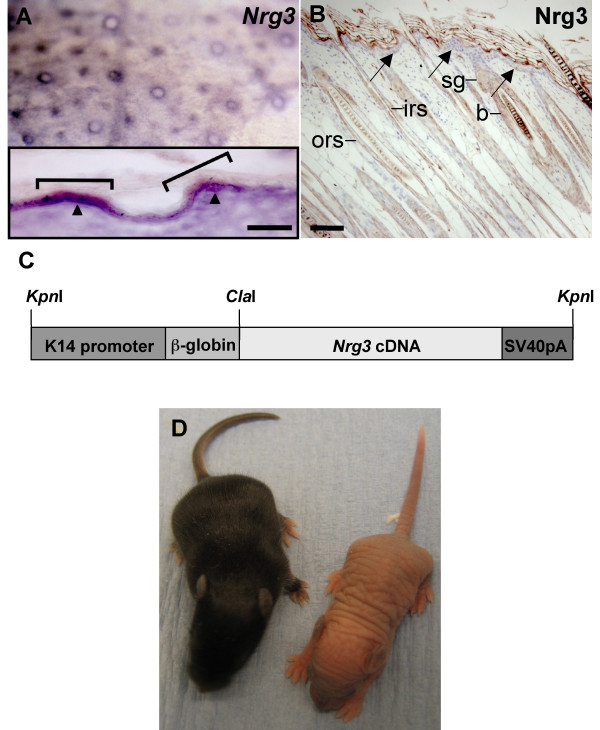
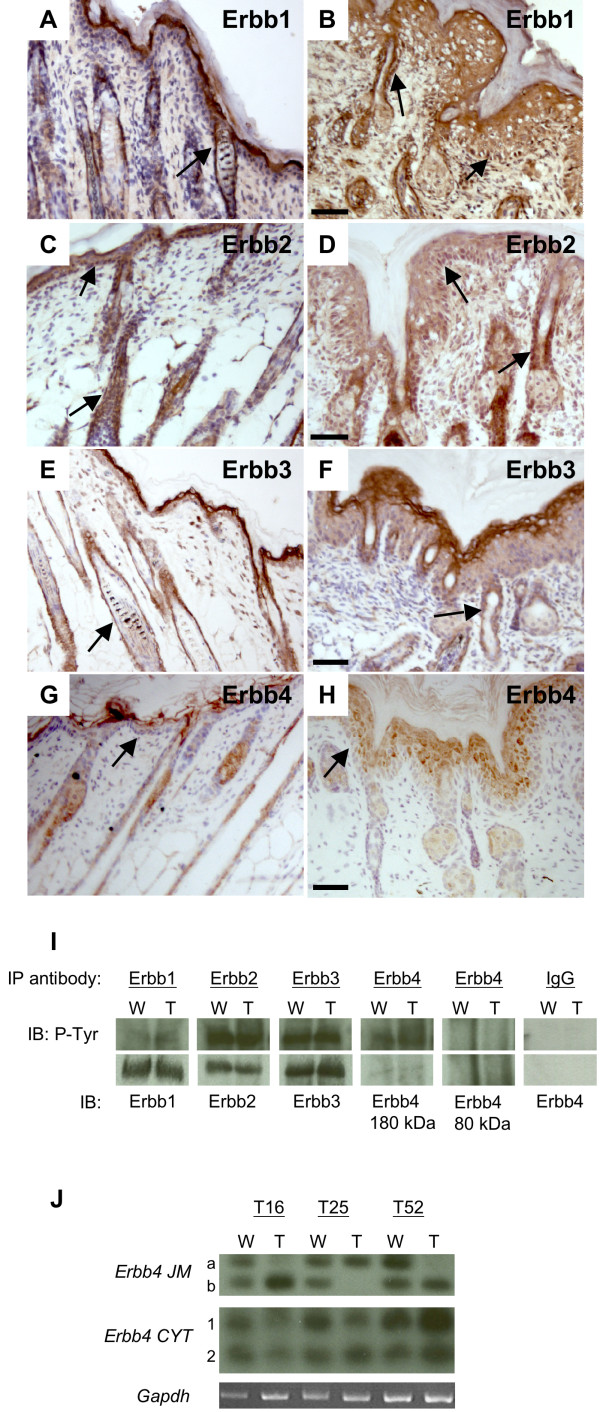
The Neuregulin family of ligands and their receptors, the Erbb tyrosine kinases, have important roles in epidermal and mammary gland development as well as during carcinogenesis. Previously, we demonstrated that Neuregulin3 (Nrg3) is a specification signal for mammary placode formation in mice. Nrg3 is a growth factor, which binds and activates Erbb4, a receptor tyrosine kinase that regulates cell proliferation and differentiation. To understand the role of Neuregulin3 in epidermal morphogenesis, we have developed a transgenic mouse model that expresses Nrg3 throughout the basal layer (progenitor/stem cell compartment) of mouse epidermis and the outer root sheath of developing hair follicles.
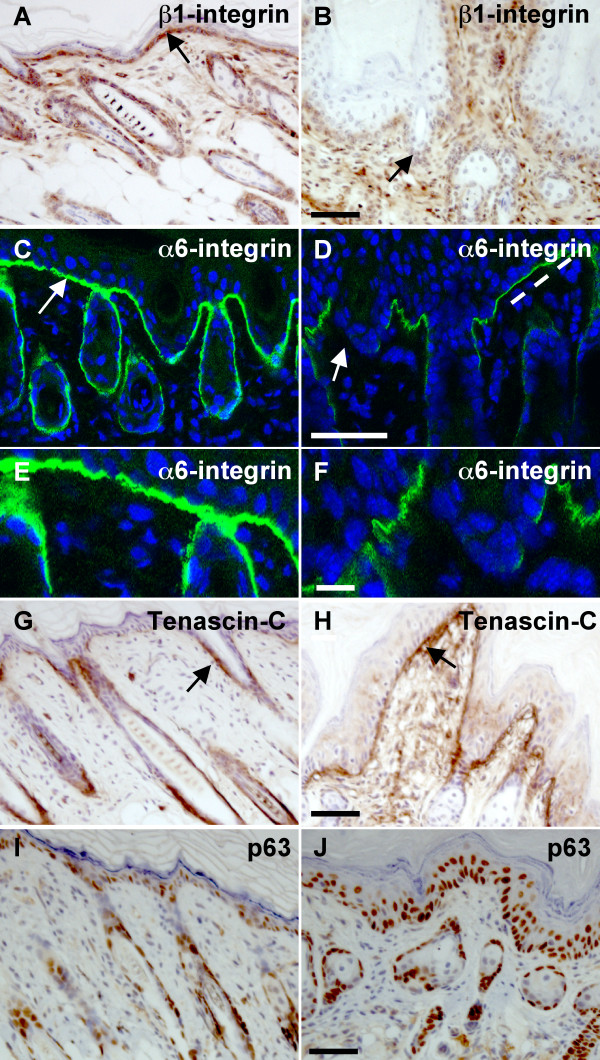
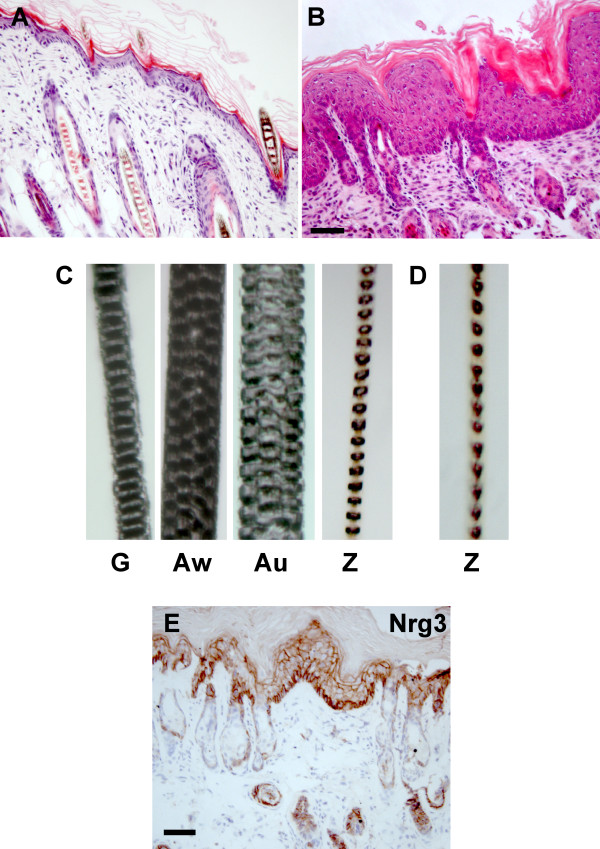
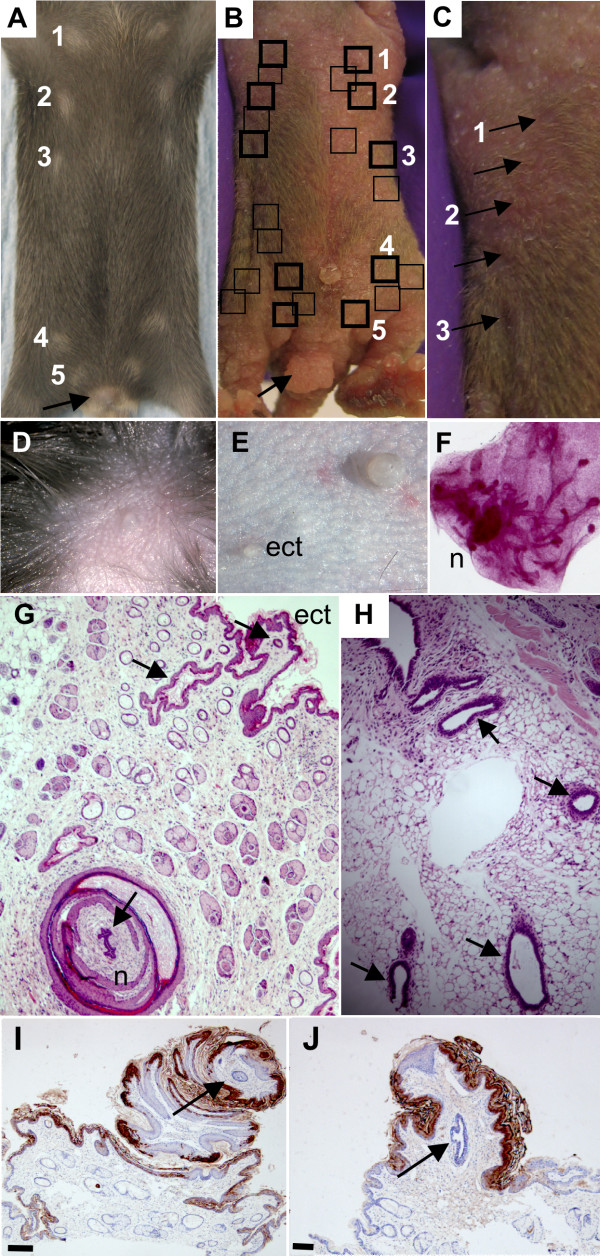
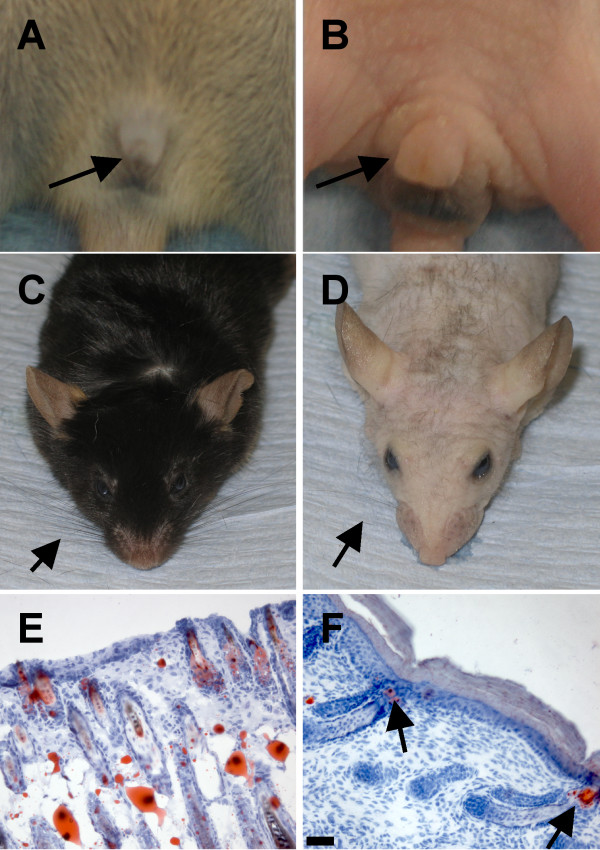
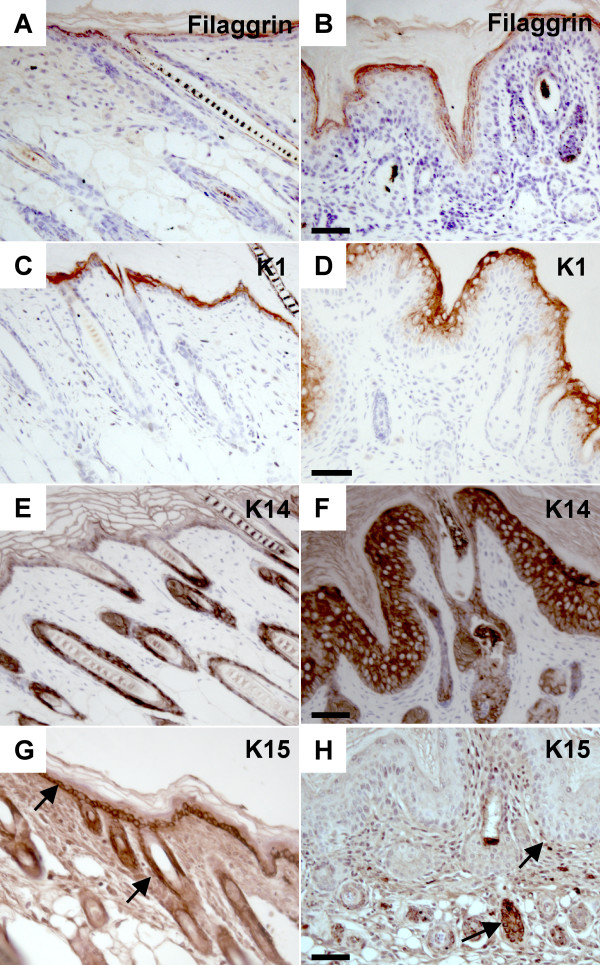
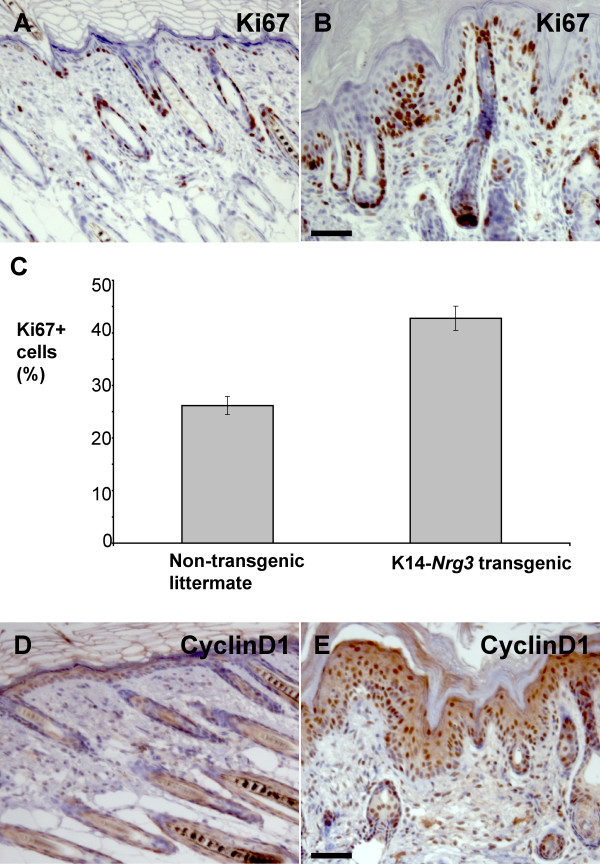
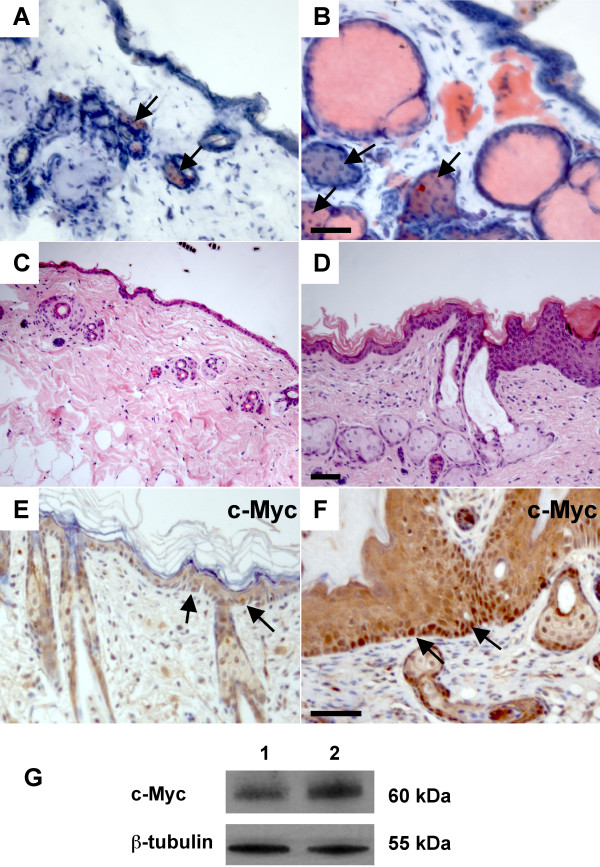
Transgenic females formed supernumerary nipples and mammary glands along and adjacent to the mammary line providing strong evidence that Nrg3 has a role in the initiation of mammary placodes along the body axis. In addition, alterations in morphogenesis and differentiation of other epidermal appendages were observed, including the hair follicles. The transgenic epidermis is hyperplastic with excessive sebaceous differentiation and shows striking similarities to mouse models in which c-Myc is activated in the basal layer including decreased expression levels of the adhesion receptors, alpha6-integrin and beta1-integrin.
These results indicate that the epidermis is sensitive to Nrg3 signaling, and that this growth factor can regulate cell fate of pluripotent epidermal cell populations including that of the mammary gland. Nrg3 appears to act, in part, by inducing c-Myc, altering the proliferation and adhesion properties of the basal epidermis, and may promote exit from the stem cell compartment. The results we describe provide significant insight into how growth factors, such as Nrg3, regulate epidermal homeostasis by influencing the balance between stem cell renewal, lineage selection and differentiation.
神经调节蛋白配体家族及其受体(Erbb 酪氨酸激酶)在表皮和乳腺发育以及致癌过程中发挥着重要作用。此前,我们证明神经调节蛋白 3(Nrg3)是小鼠乳腺基板形成的特异性信号。Nrg3 是一种生长因子,它结合并激活 Erbb4,后者是一种调节细胞增殖和分化的受体酪氨酸激酶。为了了解神经调节蛋白 3 在表皮形态发生中的作用,我们构建了一种转基因小鼠模型,该模型在小鼠表皮的基底层(祖细胞/干细胞区室)和发育中的毛囊外根鞘中均表达 Nrg3。
转基因雌性小鼠沿着乳腺线及其相邻部位形成了多余的乳头和乳腺,这有力地证明了 Nrg3 在沿身体轴的乳腺基板起始过程中发挥作用。此外,还观察到其他表皮附属器的形态发生和分化发生了改变,包括毛囊。转基因表皮增生,皮脂腺分化过度,并且与在基底层激活 c-Myc 的小鼠模型表现出惊人的相似性,包括黏附受体α6-整合素和β1-整合素的表达水平降低。
这些结果表明表皮对 Nrg3 信号敏感,并且这种生长因子可以调节多能表皮细胞群体的细胞命运,包括乳腺细胞。Nrg3 似乎部分通过诱导 c-Myc、改变基底表皮的增殖和黏附特性来发挥作用,并且可能促进干细胞区室的退出。我们所描述的结果为生长因子(如 Nrg3)如何通过影响干细胞更新、谱系选择和分化之间的平衡来调节表皮稳态提供了重要见解。